

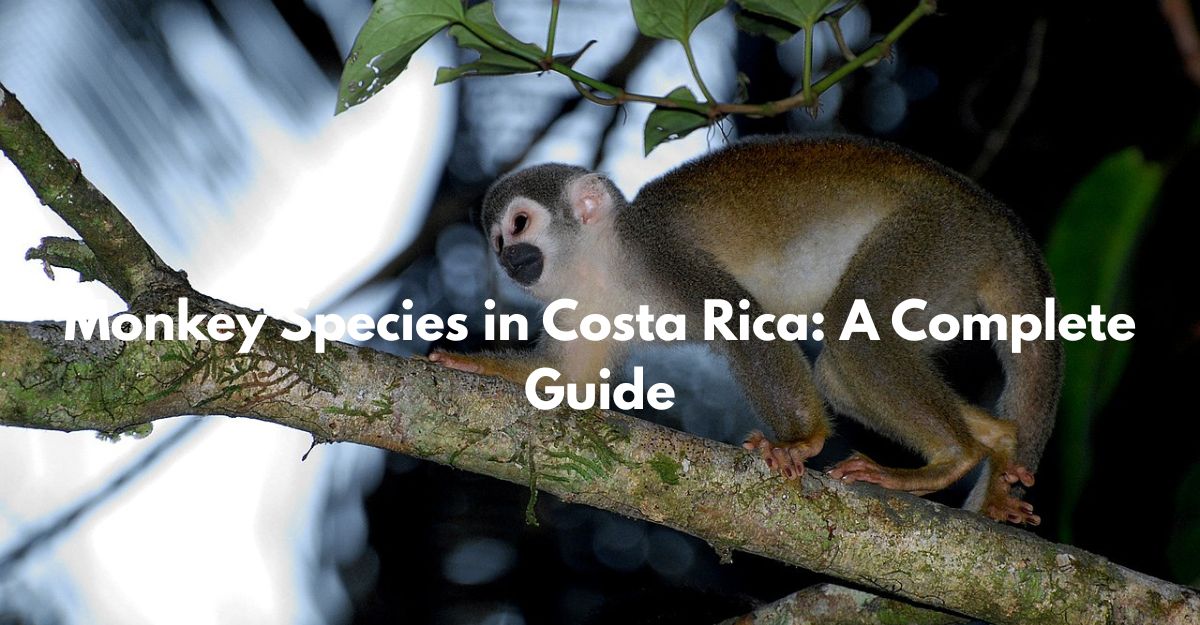
Costa Rica has a saying that there are more monkeys than people in the country. Once you step into the rainforest, you will understand why. The trees shake, loud calls echo through the canopy, and small faces peek out from the leaves.
If you love wildlife, Costa Rica offers one of the richest primate experiences on the planet. This small country holds an incredible variety of ecosystems packed into a tight space, and that gives monkeys plenty of room to thrive.
There are four monkey species in Costa Rica, and each one has its own personality. Some are loud and dramatic. Others are shy and quick. A few are clever enough to open zippers and outsmart tourists guarding their snacks.
This guide walks you through every monkey species in Costa Rica, their habits, their homes, and where you can see them for yourself. Whether you are planning a trip or simply curious about these fascinating animals, you will find everything you need right here.
The Mantled Howler Monkey
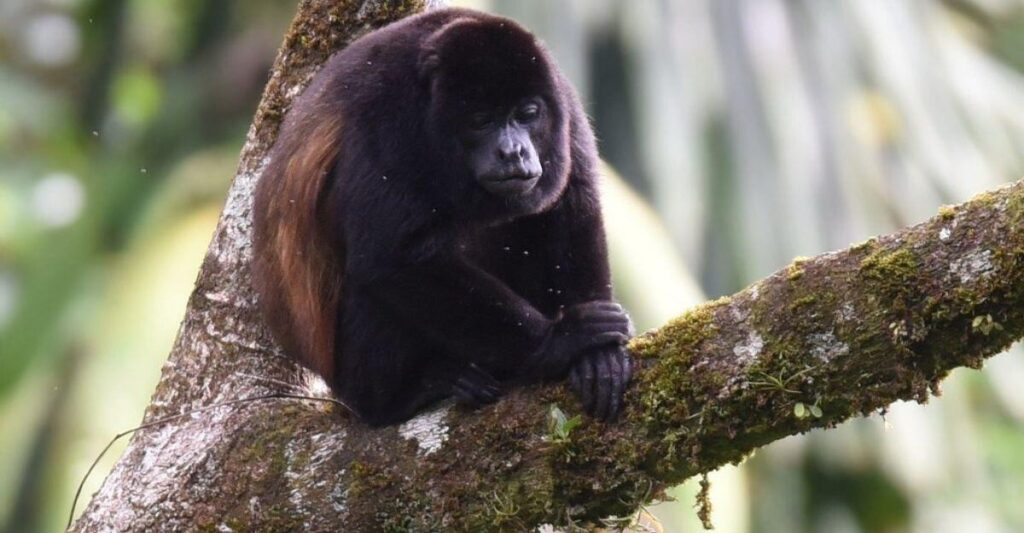
The mantled howler monkey is the loudest of the four monkey species in Costa Rica, and possibly the loudest land animal on Earth. Its deep, guttural call can travel for miles through dense forest, and it usually calls out at dawn and dusk.
This sound comes from a special enlarged bone in its throat called the hyoid bone. It works like a natural megaphone, letting the monkey project its voice far beyond what its body size would suggest.
Despite the frightening noise, howler monkeys are gentle and completely vegetarian. They spend most of their day eating leaves, shoots, and fruit high up in the canopy. They rarely climb down to the ground.
Howler monkeys live in troops and travel together through the treetops. They are found almost everywhere in Costa Rica, which makes them the easiest species to spot. Locals often call them “congos” because of their deep, jungle drum like calls.
If a person stands underneath a troop for too long, the monkeys may simply urinate down at them. It sounds strange, but it works as an effective way to clear out unwanted visitors.
Sadly, howler monkey numbers have dropped sharply in recent years due to habitat loss. Cutting down forests for roads and buildings breaks their travel routes through the canopy, forcing them onto the ground or across power lines, where they face serious danger.
The White Faced Capuchin Monkey
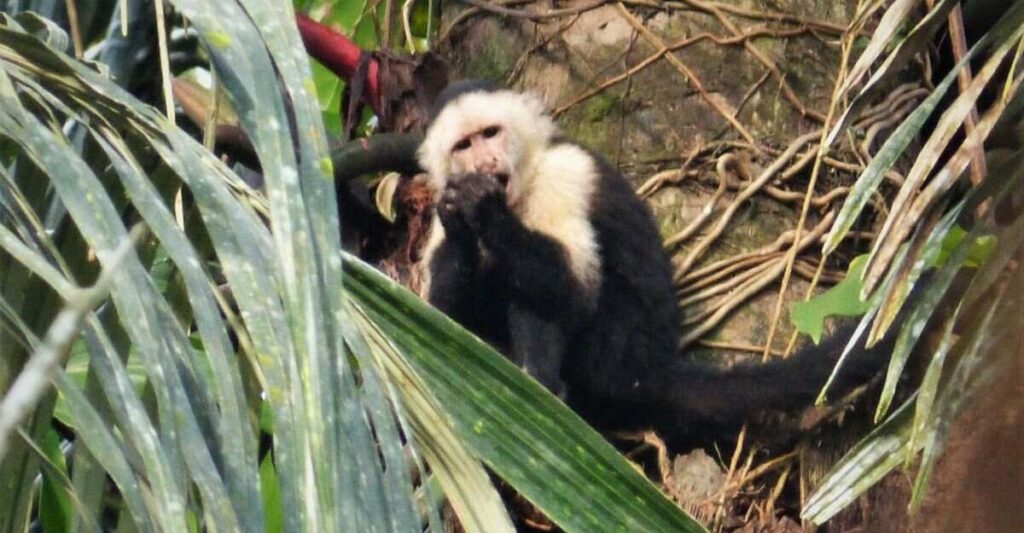
The white faced capuchin monkey is often called the smartest of Costa Rica’s monkey species. These animals are curious, quick thinking, and endlessly mischievous, which makes them a favorite among visitors.
You can recognize a capuchin by its black body and pale white face and chest. It looks a bit like it is wearing a tiny hood, which is actually where its name comes from. The coloring resembles the robes worn by Capuchin friars.
They are territorial and will defend their space by baring their teeth and shaking branches at intruders. This behavior can look intimidating, but it is mostly for show.
Their diet includes fruit, insects, small lizards, and even bird eggs. Capuchins have also been seen using tools, such as cracking open shells with rocks or handling venomous snakes with surprising caution.
Because of their sharp minds, capuchins have learned to interact closely with humans, sometimes too closely. Feeding them is illegal in Costa Rica, since human food can seriously harm their health and change their natural behavior.
You can find white faced capuchins across most of the country, including popular parks like Manuel Antonio and Cahuita.
The Central American Squirrel Monkey
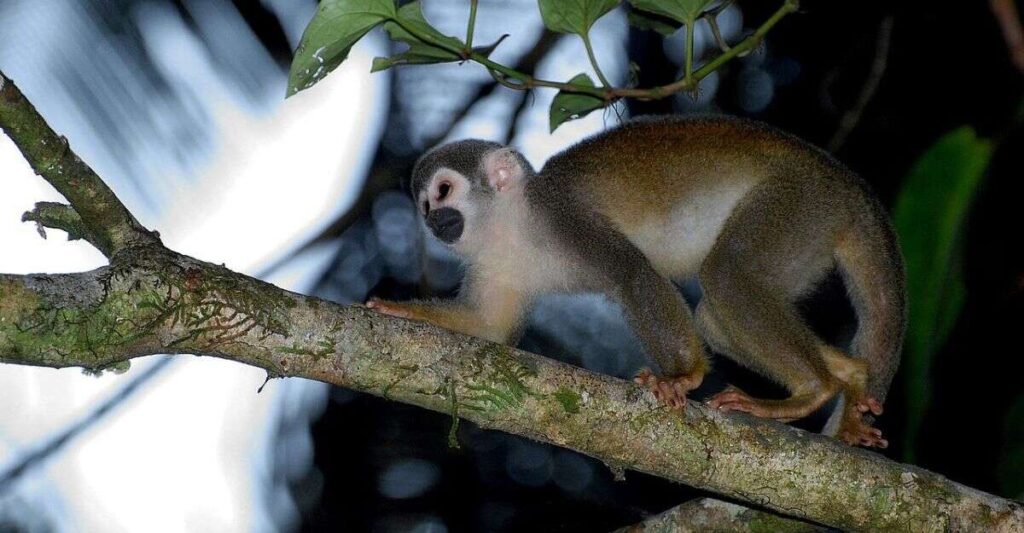
The Central American squirrel monkey is the smallest and one of the most endangered monkey species in Costa Rica. It weighs less than most house cats and moves through the trees with quick, energetic bursts.
This species has a distinctive look, with a reddish orange back, yellow limbs, a black crown, and bright white markings around its face. Locals often call it “mono titi,” a name that reflects its small size and playful nature.
Squirrel monkeys live in large troops, sometimes reaching seventy individuals. Within the group, a strict social hierarchy exists, built mostly around the females. Males tend to stay near the edges of the group rather than at its center.
Unlike other monkeys in Costa Rica, squirrel monkeys cannot use their tails to grip branches. Their tails help with balance instead, similar to how a tightrope walker uses a pole. Even without a gripping tail, they move through the canopy with remarkable speed and precision.
This species has the smallest range of any monkey in Costa Rica. It only lives in the central and southern Pacific coastal regions, including areas around Manuel Antonio and the Osa Peninsula. Habitat loss and major storms have made this limited range even more vulnerable, which is why conservation groups work hard to protect its remaining forest corridors.
Geoffroy’s Spider Monkey
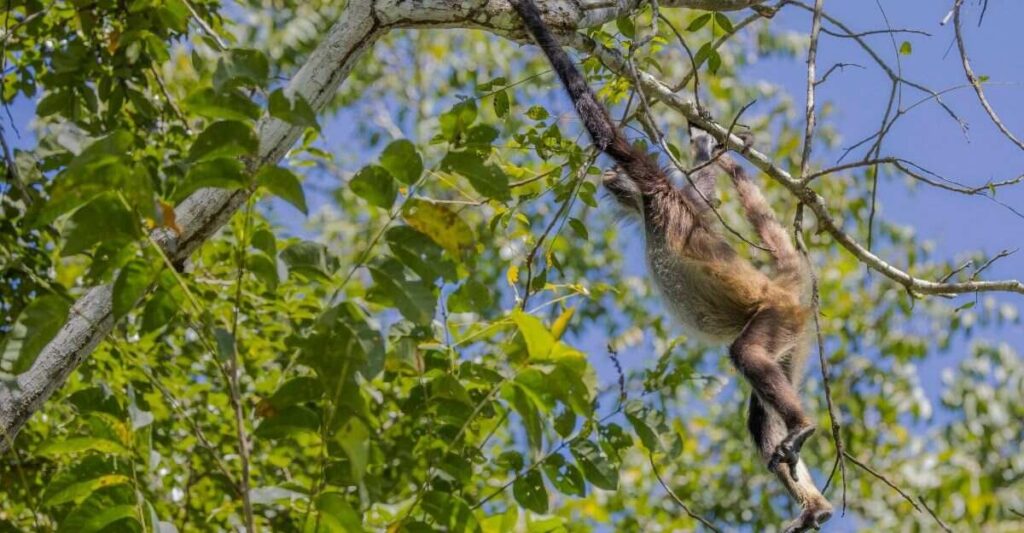
Geoffroy’s spider monkey is the largest and, according to many researchers, the most intelligent of Costa Rica’s primates. Its long limbs and prehensile tail make it an incredible acrobat of the forest canopy.
A spider monkey’s tail is strong enough to support its entire body weight. It functions almost like a fifth limb, letting the animal swing gracefully from branch to branch while searching for fruit, seeds, and young leaves.
This species faces serious threats. Spider monkeys are considered endangered due to habitat destruction and, in some areas, poaching. Sadly, poachers sometimes target adult monkeys in order to capture their babies for illegal trade.
On the Nicoya Peninsula, spider monkeys have nearly disappeared, and efforts to reintroduce them in protected reserves have faced significant challenges. These monkeys are highly sensitive to environmental changes, which makes recovery slower compared to other species.
Spider monkeys tend to avoid heavily disturbed areas, so spotting one in the wild is considered a special experience. Conservationists view their presence as a strong sign of a healthy, undisturbed ecosystem.
Comparing the Four Monkey Species in Costa Rica
The table below gives you a quick side by side look at all four monkeys, making it easier to tell them apart during your trip.
| Monkey Species | Size | Diet | Where to Find Them |
| Mantled Howler Monkey | Large, up to 17 lbs | Leaves, shoots, fruit | Nationwide, except Cocos Island |
| White Faced Capuchin | Medium, around 6 to 8 lbs | Fruit, insects, small animals | Manuel Antonio, Cahuita, Osa Peninsula |
| Central American Squirrel Monkey | Small, under 2 lbs | Fruit, insects | South and Central Pacific coast only |
| Geoffroy’s Spider Monkey | Large, up to 18 lbs | Fruit, seeds, leaves | Rainforest interiors, Osa Peninsula |
Best Places to See Monkeys in Costa Rica
If you want to see all four monkey species in Costa Rica during one trip, a few destinations stand out. Manuel Antonio National Park is famous for offering a chance to spot every species in a single visit, thanks to its mix of beach, rainforest, and mangrove habitats.
Corcovado National Park on the Osa Peninsula is another excellent choice, especially for spotting spider monkeys and squirrel monkeys in a less crowded setting. The park protects one of the last large stretches of lowland rainforest in Central America.
For a different experience, river safaris in Palo Verde National Park and boat tours through the Sarapiqui River give you a chance to see howler and capuchin monkeys along the water’s edge. Guided walks at Mistico Hanging Bridges near Arenal also offer great sightings without a long hike.
Wherever you go, patience helps. Monkeys move quickly and blend into the trees, so a slow walk and a quiet approach will improve your chances significantly.
Practical Tips for Watching Monkeys Responsibly
Feeding monkeys might feel harmless, but it causes real damage. Human food upsets their digestion and can make them sick over time. It also teaches them to approach people directly, which raises the risk of aggressive behavior and injuries on both sides.
Keep a respectful distance and let the monkeys behave naturally. Binoculars or a zoom lens work well for a closer look without disturbing them. Avoid loud noises, since sudden sounds can stress the animals and disrupt their normal routines.
Supporting local conservation groups and staying on marked trails also helps protect their habitat for future generations. Small actions from visitors add up to a meaningful difference over time.
Conclusion
Costa Rica offers a rare chance to observe four distinct monkey species living side by side in incredible natural surroundings. From the thunderous calls of the howler monkey to the acrobatic grace of the spider monkey, each species adds something special to the country’s rainforests.
Understanding their behavior and habitats not only makes your trip more rewarding but also supports the ongoing effort to protect these animals. Next time you hear a deep howl echo through the trees or spot a flash of orange fur overhead, you will know exactly which monkey species in Costa Rica you have found.
Frequently Asked Questions
How many monkey species live in Costa Rica?
Costa Rica has four native monkey species. These are the howler, capuchin, squirrel, and spider monkey.
Which monkey is the loudest in Costa Rica?
The mantled howler monkey is the loudest. Its call can travel for miles through the forest.
Where is the best place to see monkeys in Costa Rica?
Manuel Antonio National Park is the top choice. You can often spot all four species there in a single day.
Are monkeys in Costa Rica dangerous to humans?
Monkeys usually avoid conflict with people. They may act defensive if threatened or fed, so keeping a safe distance is best.
Which monkey species in Costa Rica is the most endangered?
The squirrel monkey and the spider monkey face the biggest conservation challenges. Habitat loss remains their main threat.
