

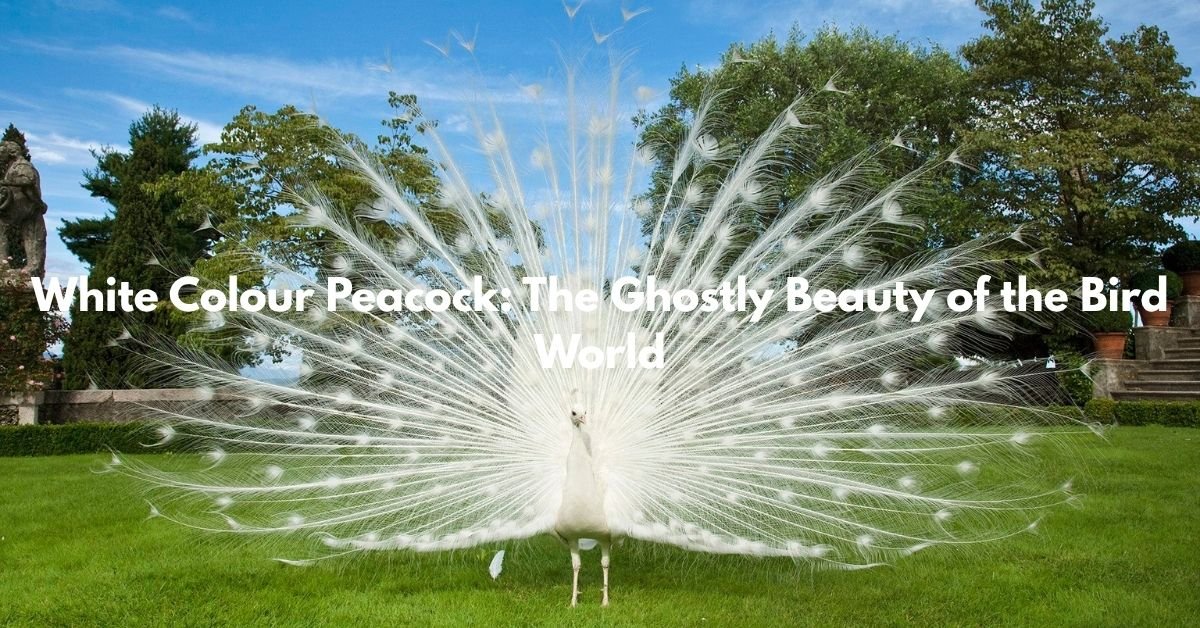
A white colour peacock looks like something out of a fairy tale. Its feathers glow like fresh snow, and when it spreads its tail, the whole display shimmers instead of flashing bright blue and green.
Many people believe this bird is albino. Others think it belongs to a completely separate species. Neither idea is fully correct, and the real story is even more interesting.
In this article, you will learn what actually causes a white colour peacock to appear, how it differs from an albino bird, how rare it truly is, and where you can go to see one for yourself. We will also look at how these birds are bred, how they behave, and why they hold such deep symbolic meaning across cultures.
By the end, you will understand this stunning bird far better than most people who have only seen its picture online.
What Is A White Colour Peacock?
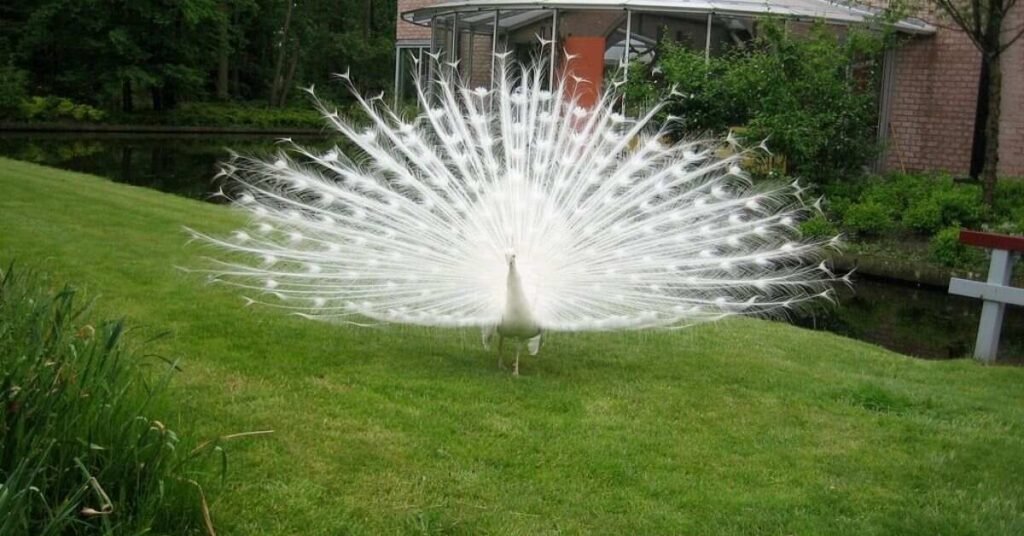
A white colour peacock is not a separate species of bird. It is a color variation of the Indian Blue Peafowl, the same species most people picture when they think of a peacock.
Three species of peafowl exist in the world. These are the Indian peafowl, the Congo peafowl, and the green peafowl. The white color variation appears almost only within the Indian peafowl group.
This snow white version comes from a natural genetic change. The bird’s body still produces some pigment, but the pigment fails to reach the feathers properly. The result is a pure white bird with a soft, glowing appearance.
Interestingly, a white peacock is not born white. Chicks hatch with pale yellow down feathers. As the bird grows over the next one to three years, the yellow fades and pure white feathers slowly take over. By adulthood, the transformation is complete.
Because this trait is genetic, breeders can pass it down reliably from parent to chick, which is why white peafowl now appear in zoos and private collections around the world.
Is A White Colour Peacock The Same As An Albino Peacock?
This is the most common question people ask, and the answer is no. A white colour peacock and an albino peacock are two very different things, even though they look similar from a distance.
The easiest way to tell them apart is by looking at the eyes. This single detail settles the debate almost instantly.
| Feature | White (Leucistic) Peacock | Albino Peacock |
| Eye color | Blue or normal dark color | Pink or red |
| Feather color | Pure white | White, sometimes slightly yellowish |
| Skin and beak | Normal or slightly pale | Very pale pink |
| Pigment production | Present but blocked in feathers | Completely absent |
| Vision quality | Normal | Often weaker |
| Rarity | Rare, but stable through breeding | Extremely rare and unpredictable |
The condition behind most white peafowl is called leucism. Leucism causes a partial loss of pigment in feathers and skin, but it leaves the eyes untouched. That is why a white colour peacock almost always has strikingly blue eyes.
Albinism works differently. It removes pigment from the entire body, including the eyes. This is why true albino birds have pink or red eyes, since blood vessels become visible without any pigment to hide them.
Genuine albino peacocks do exist, but they are far rarer than leucistic white peacocks, and their poor eyesight tends to make survival harder for them in the wild.
How Rare Is A White Colour Peacock?
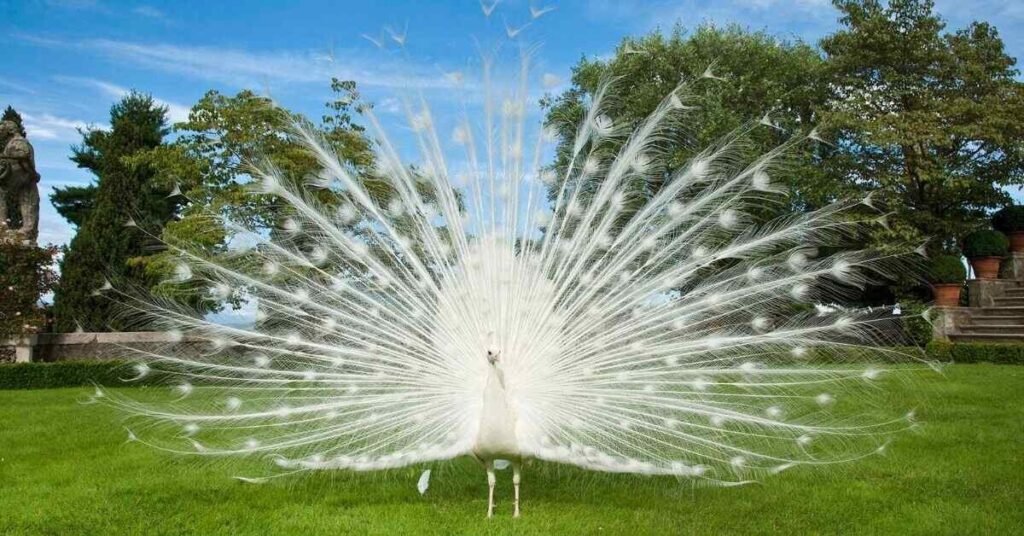
Seeing a white colour peacock in person feels special, and that feeling is backed by real numbers. These birds are genuinely uncommon.
Some estimates suggest that only one in about thirty thousand peacocks will naturally carry the white gene. That number does not account for selective breeding, which has made white peafowl far easier to find in captivity than they would ever be in the wild.
Nobody knows the exact global population of white peafowl today. The overall Indian Blue Peafowl population is estimated at over one hundred thousand birds, but leucistic individuals likely represent only a small fraction of that number.
In the wild, a bright white bird stands out immediately to predators. This makes survival difficult and helps explain why almost all white peafowl alive today live in protected environments such as zoos, sanctuaries, and private breeding farms rather than open forests.
Breeders have also learned to pair two birds that both carry the recessive white gene. Doing this increases the chance of producing white chicks, which has slowly grown the population within captivity even though wild sightings remain extremely rare.
Do White Peacocks Get Any Advantage From Their Color?
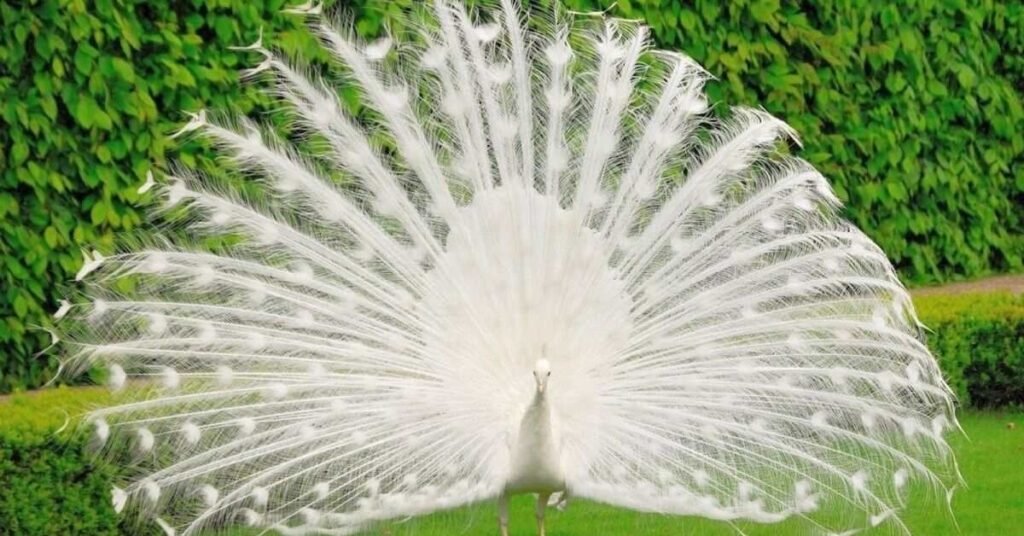
In most animals, an unusual trait sticks around because it offers some kind of survival benefit. That is not really the case here. A white colour peacock gains almost no advantage from its coloring, and in some ways, it is at a disadvantage.
Normal peacocks rely on their blue, green, and brown feathers to blend into forest surroundings when needed. Bright white feathers do the opposite. They make the bird easy to spot from a distance, which increases the risk of attracting predators in a wild setting.
Albino peacocks face an added challenge. Because albinism can weaken eyesight, these birds may struggle to notice approaching danger or to spot the insects and small creatures that make up much of their natural diet.
Leucistic white peacocks fare much better overall. Their eyesight remains normal since the eyes are not affected by the condition. Their main challenge is simply standing out visually rather than facing any internal health issue.
This is exactly why nearly every white peacock alive today lives in a protected environment. Humans find the bird beautiful and are willing to protect it, something nature alone would rarely allow to happen consistently in the wild.
Read about it more: https://a-z-animals.com/blog/white-peacocks-pictures-and-why-theyre-so-rare/
Where Can You See A White Colour Peacock?
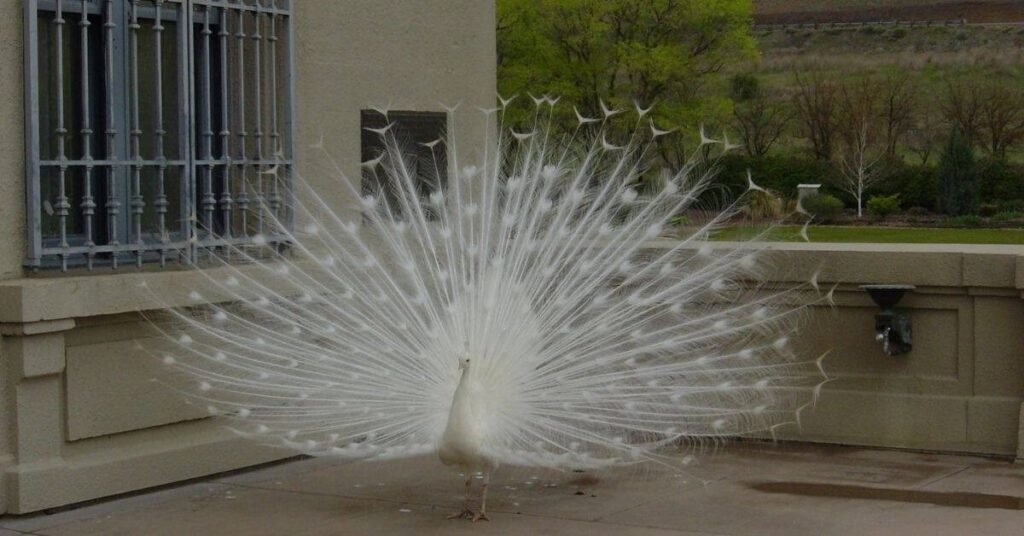
Most people who want to see a white colour peacock in real life visit a zoo, botanical garden, or a private peafowl farm rather than searching for one in the wild.
Zoos with dedicated bird collections often keep a few white peafowl alongside the traditional blue variety, since visitors are drawn to the striking contrast between the two.
Peafowl breeding farms are another reliable option. Many farms specialize in raising several peafowl color varieties, including white, purple, and black shouldered types, and often allow public tours or private visits.
Botanical gardens in warmer climates sometimes let peafowl roam freely across the grounds. Since white peafowl breed true when paired correctly, a garden that started with a few birds may eventually build a small resident flock over the years.
If you plan to visit somewhere hoping to see one, it helps to call ahead and confirm that white peafowl are currently on site, since flocks and breeding pairs can change from season to season.
Symbolism And Cultural Meaning Of White Peacocks
Beyond biology, the white colour peacock carries deep symbolic weight in many cultures. Its pale, glowing feathers have long been linked with purity, elegance, and new beginnings.
In several Asian traditions, the peacock already represents beauty, protection, and immortality. A white version of the bird tends to amplify that meaning, often standing for spiritual clarity or divine grace.
In Western settings, the bird has become a popular symbol at weddings. Its snowy feathers pair naturally with bridal themes, and some venues even keep live white peafowl on the grounds for ceremonies and photography.
Artists and writers have also used the white peacock as a metaphor for rare beauty or quiet transformation, partly because the bird itself literally transforms from a plain yellow chick into a brilliant white adult.
This blend of natural rarity and symbolic meaning is part of why the white colour peacock continues to fascinate people well beyond the world of bird enthusiasts and breeders.
Caring For White Peafowl: What Owners Should Know
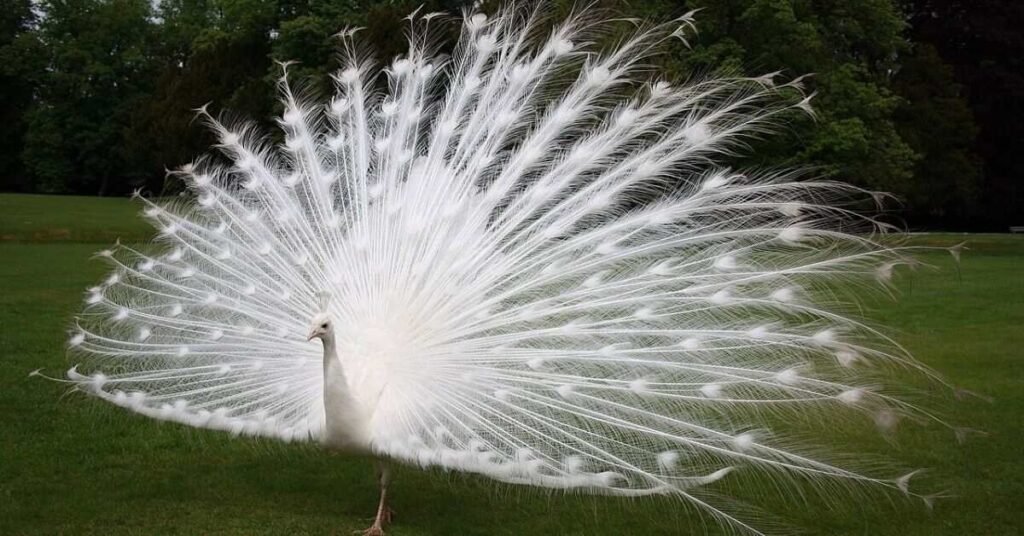
People interested in keeping peafowl, including the white variety, should understand a few practical points before bringing birds home.
White peafowl require the same basic care as any other peafowl variety. They need enough outdoor space to roam, a secure shelter from predators and harsh weather, and a balanced diet of grains, greens, and occasional insects.
Because their feathers offer no camouflage, extra care around predator-proofing the enclosure matters even more than it would for standard blue peafowl. A secure fence and a covered roosting area go a long way toward keeping the birds safe overnight.
Breeding pairs should be chosen carefully if the goal is to produce more white chicks. Since the trait is recessive, pairing two white birds together, or two birds that both carry the gene, gives the most reliable results.
Owners should also expect a wait before the true color shows. Remember that chicks hatch pale yellow and only turn fully white after one to three years, so patience matters during the early stages of raising them.
White Colour Peacock Versus Other Rare Peafowl Varieties
Breeders have developed several unusual peafowl varieties over the years, and the white colour peacock is often compared to a few of these other rare types.
The pied peacock, sometimes called a silver pied, carries patches of white mixed with normal blue or green coloring. This happens when the leucistic gene is only partially expressed, leaving some areas fully colored and others completely white.
The purple peacock and the opal peacock are two other selectively bred color morphs. These varieties are not white at all, but they show how breeders have worked with genetics over many generations to produce unusual, eye catching color combinations beyond the traditional blue.
Compared to these other morphs, the fully white variety remains the most recognizable and the most sought after. Its clean, single tone appearance stands apart from the mixed patterns seen in pied birds, which is part of why it draws so much attention at farms and exhibitions.
Understanding these related varieties helps explain why the white type is not an isolated oddity. It is part of a wider pattern of genetic color variation that peafowl breeders have studied and refined for decades.
Conclusion
The white colour peacock is proof that nature can still surprise us in the most graceful ways. It is not albino, and it is not a separate species. It is a rare, naturally occurring color variation of the Indian Blue Peafowl, shaped by a recessive gene that quietly strips color from its feathers while leaving its bright blue eyes untouched.
From its slow transformation as a chick to its striking, ghost like tail display as an adult, this bird continues to capture attention wherever it appears. Whether you encounter one at a zoo, a breeding farm, or a garden, few sights in the bird world feel quite as magical.
Every detail about this bird, from its slow color change to its quiet ghost like elegance, reminds us how much variety still exists in the natural world, even within a single well known species.
If wildlife facts like these interest you, keep exploring more rare and fascinating creatures right here on our platform.
Frequently Asked Questions
Is a white colour peacock a real species?
No, it is not a separate species. It is a color variation of the Indian Blue Peafowl caused by a genetic condition called leucism.
How can you tell a white peacock from an albino peacock?
Check the eyes. A white leucistic peacock has blue or normal dark eyes, while a true albino peacock has pink or red eyes.
Are white peacocks born white?
No, they hatch with pale yellow down feathers and gradually turn white as they mature over one to three years.
Can white peacocks survive in the wild?
Survival is harder for them because their bright color removes their natural camouflage, which is why most live in protected settings like zoos and farms.
Do white peacocks cost more than regular peacocks?
Because of their rarity, they are generally considered a novelty and are in higher demand among breeders and collectors compared to standard colored peafowl.
