

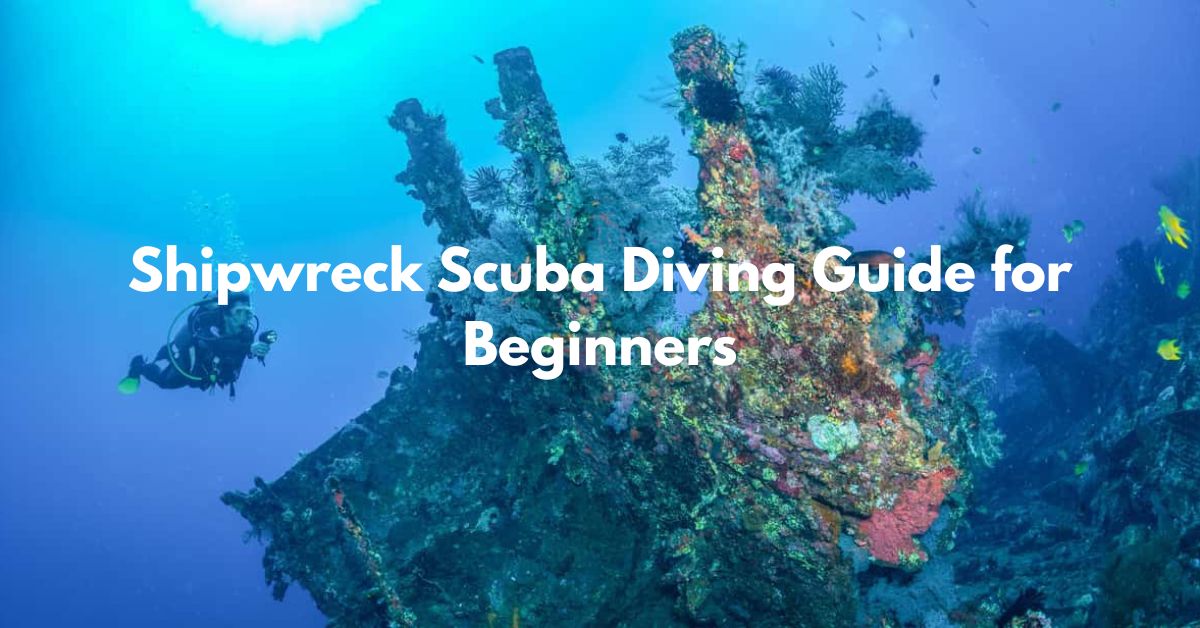
Shipwreck scuba diving is one of the most exciting ways to explore the ocean. It takes you to hidden worlds where history and marine life come together. Sunken ships rest quietly under the sea, covered with coral and surrounded by fish.
Many divers feel a sense of mystery when they visit these underwater sites. Each wreck has its own story. Some ships sank during wars, while others met accidents or were placed underwater on purpose.
Shipwreck scuba diving is not just about adventure. It also helps people learn about history and ocean life. These wrecks become homes for many sea creatures. This makes them important for marine ecosystems.
What Is Shipwreck Scuba Diving?
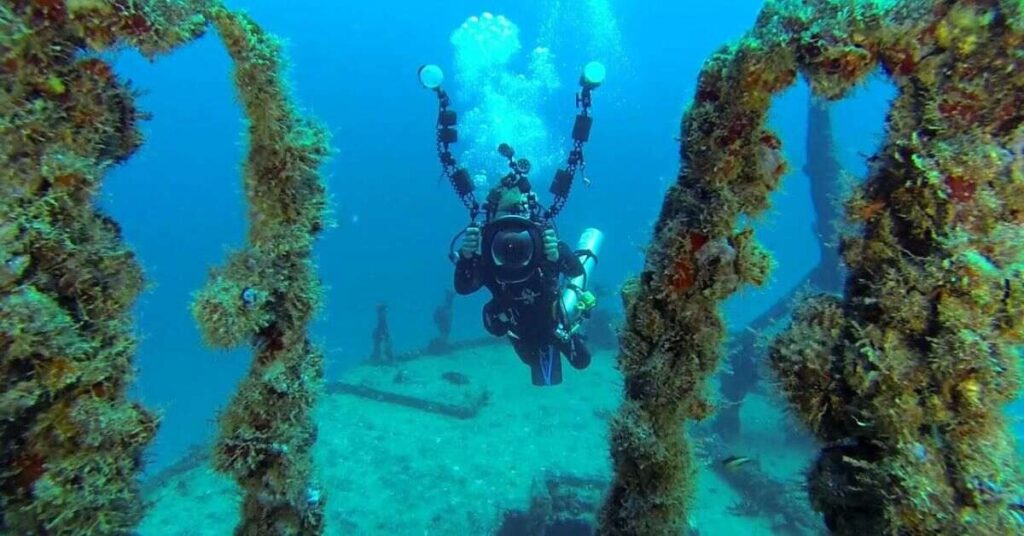
Shipwreck scuba diving, also known as wreck diving, is the activity of exploring sunken ships, boats, aircraft, and other man-made structures underwater. These wrecks can be found all over the world, from shallow tropical lagoons to deep cold-water seas.
Others went down in storms, collisions, or accidents. Many modern wrecks are deliberately sunk to create artificial reefs that attract marine life and offer new dive sites.
Over time, these sunken structures transform completely. Coral grows across their hulls. Fish make their homes in every corner. Soft sponges and anemones decorate the decks. What was once a working vessel becomes a vibrant underwater ecosystem.
Wrecks come in many sizes and styles. Some are small fishing boats in shallow water. Others are enormous military vessels that stretch hundreds of metres along the seabed. Each one offers a different experience and a different story to discover.
Types of Shipwreck Scuba Diving
Not all wreck diving is the same. There are different levels of exploration, and each one requires a different level of skill and training.
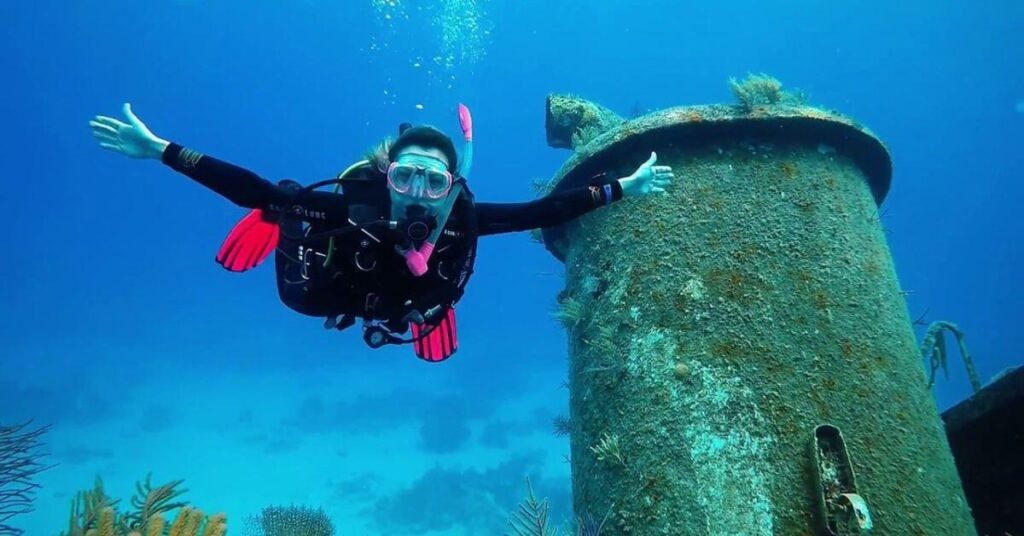
Non-Penetration Diving is the most beginner-friendly type. Divers swim around the outside of the wreck. They explore the hull, deck, and superstructure without going inside. This type of diving carries the least risk and is suitable for open water certified divers.
Full Penetration Diving is for experienced and specially trained divers. This involves going deep into the wreck, far beyond the entry point and into areas with no natural light. It requires specialist wreck diving certification, proper equipment like underwater torches, guide lines, and redundant air supplies.
Here is a quick comparison of the three types:
| Type | Skill Level | Certification Needed | Light Available |
| Non-Penetration | Beginner | Open Water | Natural light throughout |
| Limited Penetration | Intermediate | Wreck Diver Specialty | Natural light at entry |
| Full Penetration | Advanced | Technical / Wreck Specialty | Dive lights required |
Knowing which type suits your current skill level is very important. Always dive within your training and never attempt penetration diving without proper preparation.
Why Shipwreck Scuba Diving Is So Special
There are many reasons why shipwreck scuba diving attracts divers from all over the world. It is more than just looking at a sunken boat.
First, there is the history. Many of the world’s most famous wrecks are from World War II. You see tanks, motorcycles, rifles, and personal belongings that have sat undisturbed for over 80 years.
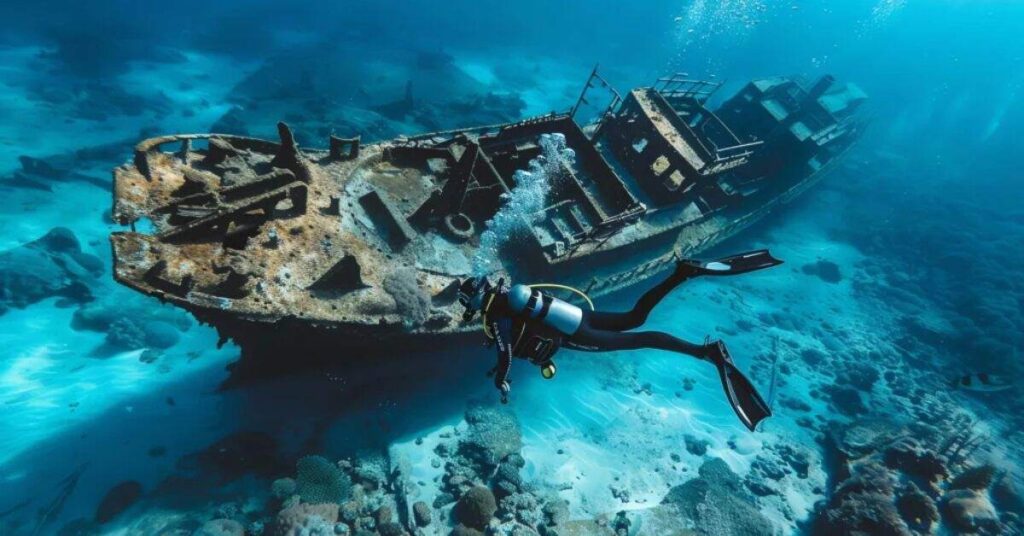
Second, there is the marine life. Shipwrecks act as artificial reefs. They attract an extraordinary range of sea creatures. Soft corals coat every surface. Giant groupers patrol the decks. Sea turtles glide past. Rays rest on the sand nearby. Schools of barracuda circle the masts. The biodiversity around a good wreck often rivals that of a natural reef.
Third, there is the sense of mystery and adventure. Every wreck has a story. Some went down in dramatic battles. Others sank in unexpected storms. As you explore, you piece together what happened. You spot hidden cargo, read the shape of the hull, and try to imagine what life was like on board.
This unique combination of history, wildlife, and adventure is what makes shipwreck scuba diving one of the most popular diving specialties in the world.
Best Shipwreck Scuba Diving Destinations in the World
The world is full of incredible wreck dive sites. Here are some of the most celebrated destinations that every shipwreck scuba diving enthusiast should know about.
SS Thistlegorm, Red Sea, Egypt
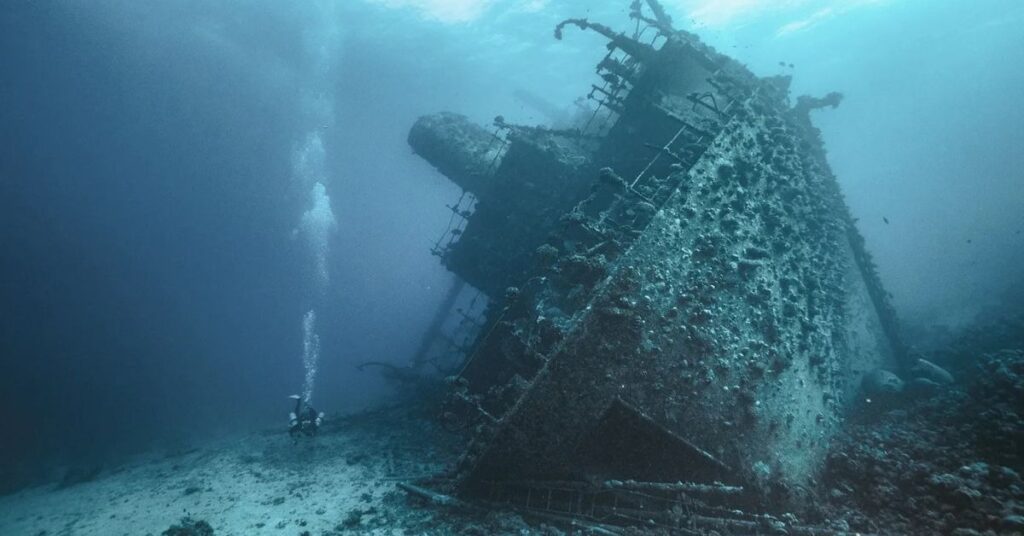
The SS Thistlegorm is widely considered one of the greatest wreck dives on the planet. This British merchant navy ship was sunk by German bombers in 1941 while carrying war supplies to Allied forces. It sat lost on the seabed for over a decade before the legendary oceanographer Jacques Cousteau rediscovered it in the 1950s.
The Thistlegorm sits at advanced recreational depth and is best accessed via a liveaboard dive trip from Sharm El-Sheikh. Marine life is excellent here too, with napoleonfish, trevally, and occasional hammerhead sharks visiting the site.
SS Yongala, Queensland, Australia
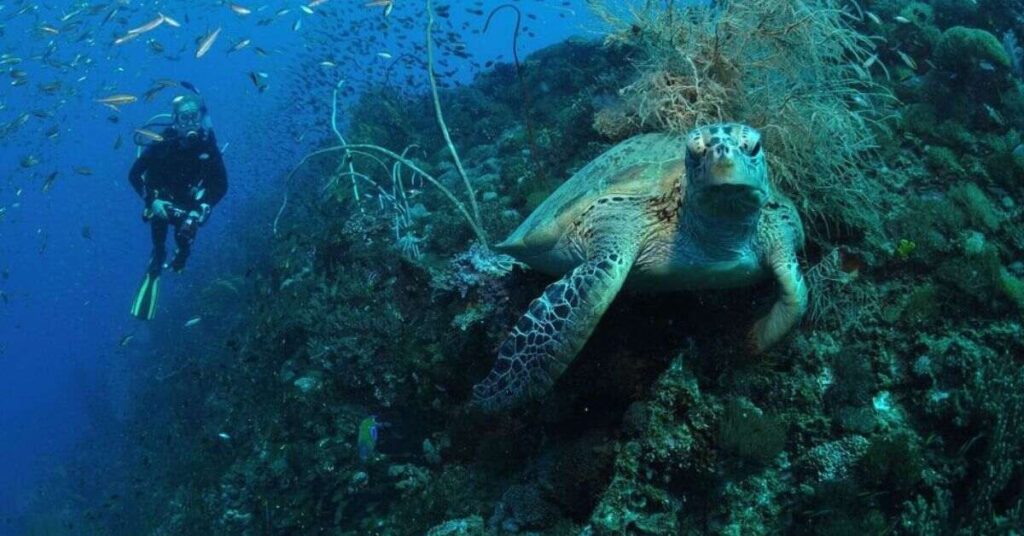
The SS Yongala sank in a cyclone in 1911, claiming all 122 lives on board. Today it holds the title of one of the most spectacular wreck dives in the world.
This 110-metre steamship lies on its starboard side at depths between 14 and 28 metres, making it accessible to divers of various skill levels. However, what makes the Yongala truly legendary is its extraordinary marine life. Giant groupers, marble rays, sea turtles, bull sharks, tiger sharks, eagle rays, sea snakes, and clouds of fish call this wreck home.
Penetration is not allowed at the Yongala, but there is more than enough to see on the outside. The diversity and scale of wildlife here is simply breathtaking.
Chuuk Lagoon (Truk Lagoon), Micronesia
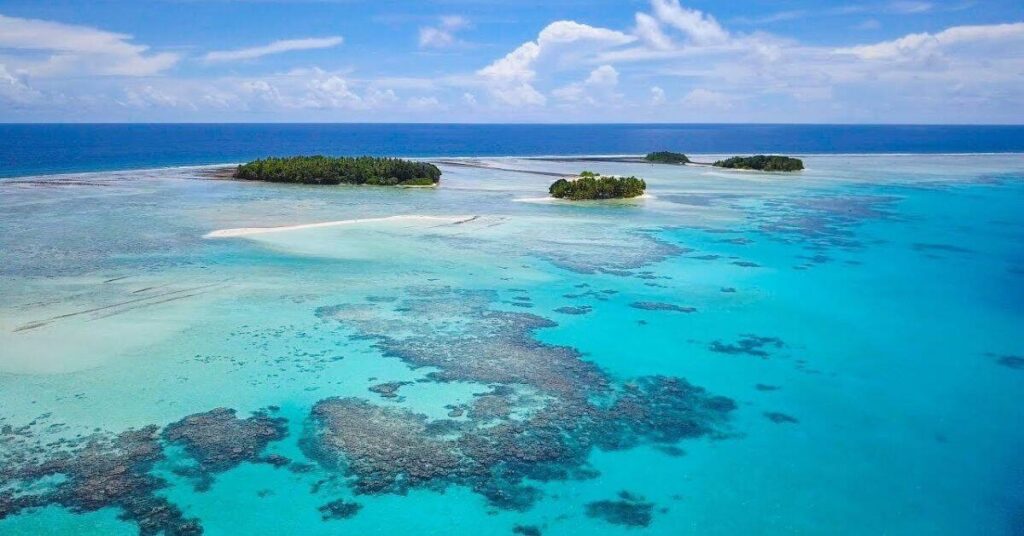
Chuuk Lagoon is known as the greatest shipwreck scuba diving destination in the world. During Operation Hailstorm in 1944, American forces destroyed the entire Japanese naval fleet anchored in this lagoon. Today, the lagoon holds over 60 shipwrecks and dozens of sunken aircraft.
The Fujikawa Maru is one of the most famous vessels here. Its holds contain Zero fighter planes, ammunition, trucks, and an enormous engine room spread across three floors. The outside is carpeted in stunning corals and teeming with reef fish.
USAT Liberty, Bali, Indonesia
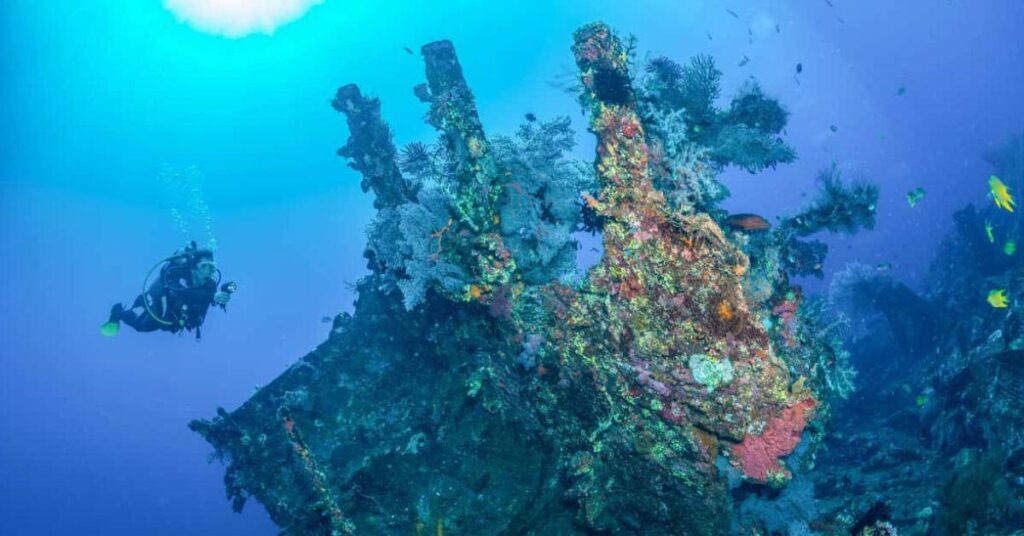
The USAT Liberty is one of the most accessible wreck dives in the world. This American warship was torpedoed by a Japanese submarine in 1942 and beached on the shore of Tulamben, Bali. In 1963, a volcanic eruption pushed it into the shallow water just offshore.
Today, the top of the wreck sits in just three metres of water, making it perfect for snorkellers too. The deepest section lies at 28 metres. The wreck is 120 metres long and completely covered in extraordinary coral growth, sponges, and marine life.
SS President Coolidge, Vanuatu
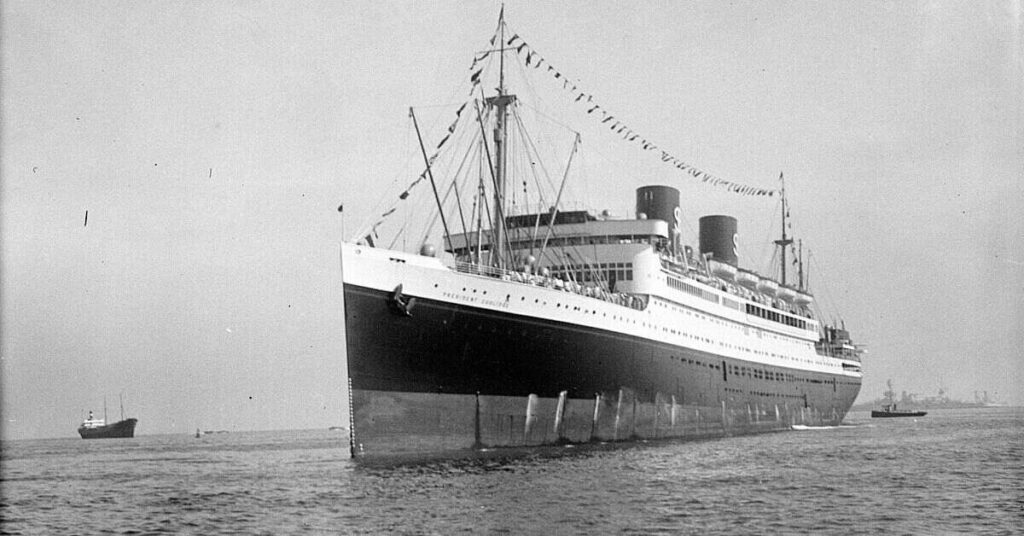
The SS President Coolidge started life as a luxury cruise liner and became a troopship during World War II. In 1942, she struck friendly mines and sank off Vanuatu. Almost all crew members survived.
Today she lies between 20 and 70 metres deep and is over 180 metres long. It is one of the largest accessible wrecks in the world. Divers can explore multiple decks, holds, cannons, guns, trucks, and even a famous decorative tile known as “The Lady.”
Essential Gear for Shipwreck Scuba Diving
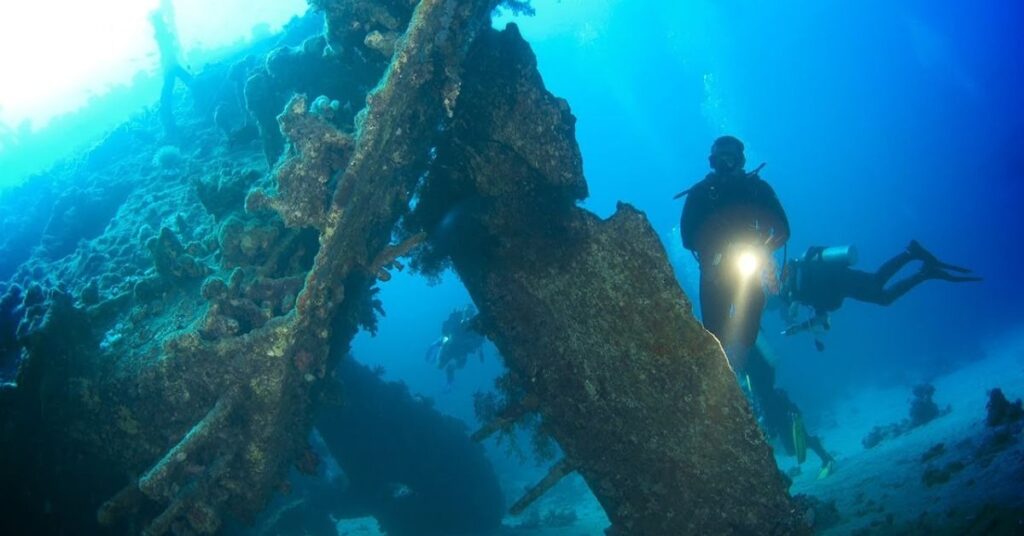
Going shipwreck scuba diving requires some additional equipment beyond standard scuba gear. Being well-prepared makes the dive safer and more enjoyable.
A powerful dive torch is essential. Even on non-penetration dives, the interior of a wreck can be dark and shadowy. A good torch lets you see into crevices, spot camouflaged creatures, and safely navigate around structures.
A cutting tool such as dive shears or a knife is important safety equipment. Fishing lines, old nets, and ropes often snag on wrecks.
A surface marker buoy (SMB) allows your boat crew to see where you surface. This is particularly important on dive sites with boat traffic.
A penetration reel and guideline are used for limited and full penetration diving.
Gloves protect your hands from sharp metal edges and rough coral. Check local regulations first, as some protected sites do not allow gloves.
Getting Certified for Shipwreck Scuba Diving
You do not need a special certification to swim around the outside of a wreck. Any Open Water certified diver can explore the exterior.
The PADI Wreck Diver Specialty is the most popular certification for wreck enthusiasts. The course covers wreck navigation, hazard identification, proper use of guide lines, buoyancy control in tight spaces, and the use of dive lights. You complete four open-water dives with a PADI instructor.
For full penetration diving beyond the sunlight zone, you need technical diving training.
Always ensure your certification matches the type of wreck diving you plan to do. Attempting penetration dives without training is genuinely dangerous and should never be done.
Important Safety Tips for Shipwreck Scuba Diving
Shipwreck scuba diving is an incredible activity, but it does carry some unique risks. Follow these safety practices to keep every dive enjoyable and safe.
Always attend the dive briefing carefully. The dive guide will explain the layout of the wreck, the depth, the current direction, and any specific hazards. This information is critical.
Never enter a wreck without proper training. The interior of a shipwreck can be disorienting. Passageways can narrow unexpectedly. Without training, these situations become very dangerous.
Check your air supply frequently. Inside a wreck, you cannot simply swim straight up to surface in an emergency. You must follow your planned exit route. Keep a close eye on your tank pressure.
Respect the wreck. Many wrecks are protected historical sites and war graves. Do not remove artefacts or disturb the structure. Touch nothing and take only photographs.
Watch for entanglement hazards. Old fishing nets, ropes, and lines frequently get caught on wrecks. Move slowly and stay alert.
The Role of Shipwrecks in Marine Conservation
One of the most fascinating aspects of shipwreck scuba diving is the relationship between wrecks and marine biodiversity. Wrecks do not damage the ocean. In many cases, they actively support it.
Coral larvae settle on the metal surfaces. Sponges and anemones follow. Small fish arrive to shelter and feed. Within years, a once-bare wreck transforms into a rich, thriving reef system.
Many conservation organisations and dive operators now deliberately sink decommissioned ships to create new reef habitat in areas where natural reefs have been damaged. These artificial reef projects provide real ecological benefits and new dive destinations.
The USS Oriskany, a former US Navy aircraft carrier, was deliberately sunk in the Gulf of Mexico in 2006. It is now the largest artificial reef in the world and home to tuna, grouper, amberjack, and many other species.
By exploring these sites responsibly, shipwreck scuba divers play an important role in raising awareness of marine conservation.
Practical Tips Before You Book Your First Wreck Dive
Before you head to your first shipwreck scuba diving destination, keep these practical tips in mind.
Research the wreck you plan to dive in advance. Know its depth, its history, and any specific hazards or rules. This preparation will help you get more from the dive.
Choose a reputable dive operator with experience on that specific wreck. A knowledgeable local dive guide knows the best entry points, the safest routes, and the most rewarding spots to explore.
Consider a liveaboard dive trip for destinations with multiple wrecks, such as the Red Sea or Chuuk Lagoon. Staying on a live-aboard boat gives you access to more dives per day and lets you fully explore large sites like the Thistlegorm.
The USAT Liberty in Bali is a perfect first wreck. Once you are comfortable, you can progress to deeper and more complex wrecks.
Conclusion
Shipwreck scuba diving offers an experience unlike anything else in the underwater world. It combines adventure, history, and nature in a way that is deeply moving and endlessly fascinating.
From the ghostly corridors of the SS Thistlegorm in the Red Sea to the fish-filled hull of the Yongala off the coast of Australia, every wreck tells a powerful story. These sunken ships are no longer just relics of the past. They are living ecosystems, home to extraordinary marine life, and windows into human history.
FAQs
What is shipwreck scuba diving?
Shipwreck scuba diving is exploring sunken ships or structures underwater while observing history and marine life.
Is shipwreck scuba diving safe for beginners?
Yes, beginners can safely explore the outside of wrecks with basic certification and proper guidance.
Do I need special training for wreck diving?
You need special training only if you plan to enter inside the wreck, not for exploring the outside.
What marine life can be seen on wreck dives?
You can see fish, corals, turtles, rays, and sometimes sharks around shipwrecks.
What equipment is important for wreck diving?
A dive torch, cutting tool, and proper buoyancy control are important for safe wreck diving.
