

Have you ever seen a bird with glossy black feathers and wondered what type it was? The world of blackbird varieties is much more diverse than most people think. From the common backyard visitor to rare mountain dwellers, these fascinating birds come in many forms.
Understanding blackbird varieties helps us appreciate the rich diversity of nature around us. Whether you live in North America, Europe, or Asia, chances are you have encountered at least one type of blackbird. This guide will help you identify different blackbird varieties and learn about their unique characteristics.
What Are Blackbirds and Why Do They Matter
When we talk about blackbird varieties, we need to understand that not all black birds are actually blackbirds. Scientists use the term blackbird to describe specific bird families.
In North America, true blackbirds belong to the Icteridae family. This family includes species like red-winged blackbirds, yellow-headed blackbirds, and grackles. These birds often have colorful patches on their otherwise black feathers.
In Europe and Asia, blackbirds belong to the Turdidae family. These are thrushes, and they include the common blackbird and its Asian relatives. The distinction matters because these two groups evolved separately and are not closely related despite their similar appearance.
Blackbird varieties play important roles in ecosystems. They help control insect populations, spread seeds, and serve as food for predators. Many species also have beautiful songs that have inspired musicians and poets for centuries.
North American Blackbird Varieties
North America hosts several distinct blackbird varieties that you can spot in different habitats across the continent.
Red-winged blackbird
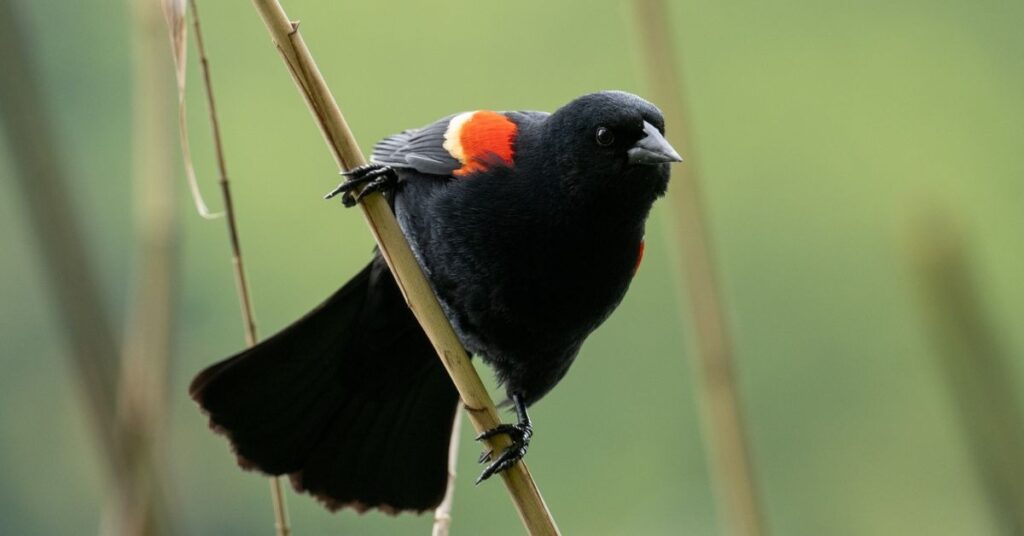
The red-winged blackbird stands as one of the most common species. Males display striking red shoulder patches with yellow borders. Females look completely different with brown streaked feathers. These birds prefer wetlands, marshes, and areas near water. You will find them throughout North America from Alaska to Central America. Their population numbers between 130 and 190 million birds.
Yellow-headed blackbird
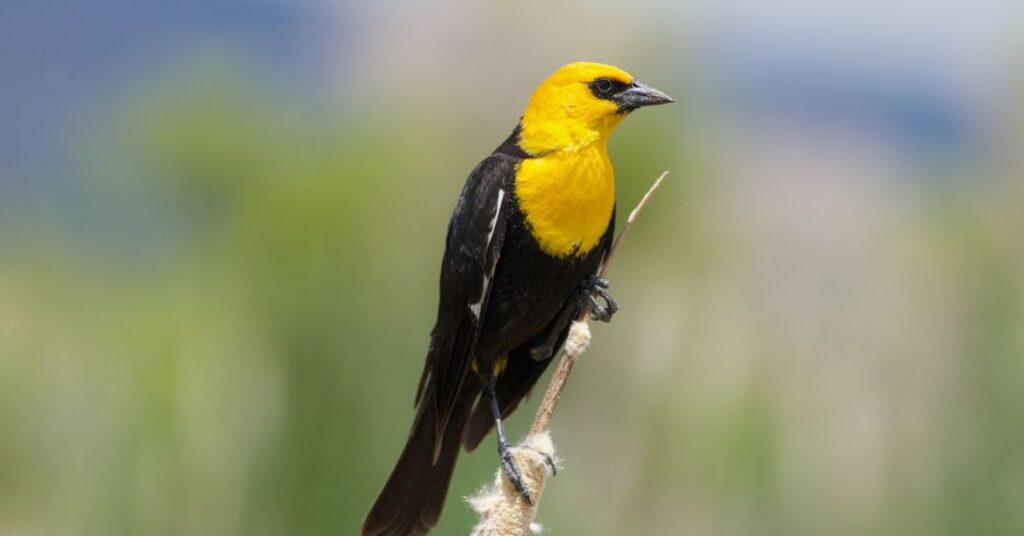
The yellow-headed blackbird catches attention with its bright yellow head and chest contrasting against black body feathers. Males are larger and more colorful than females. These birds live in western prairies and wetlands. They make unusual calls that sound more like squeaks than songs.
Brewer’s blackbird
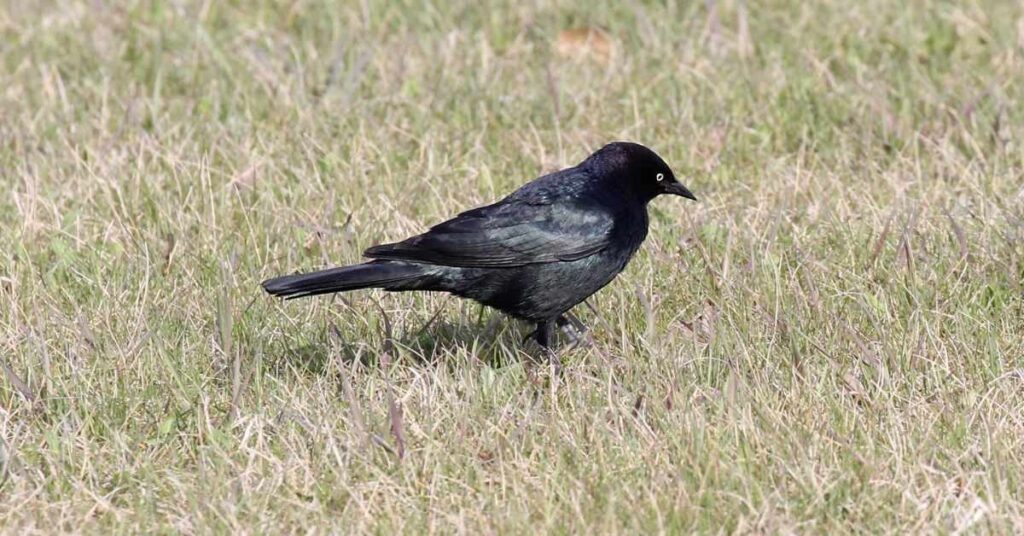
The Brewer’s blackbird inhabits western North America from coast to mountains. Males have glossy black feathers with purple and green highlights. Their pale yellow eyes stand out against dark plumage. Females appear brownish without the iridescent colors. These adaptable birds thrive in urban parks, agricultural areas, and open fields.
Rusty blackbird
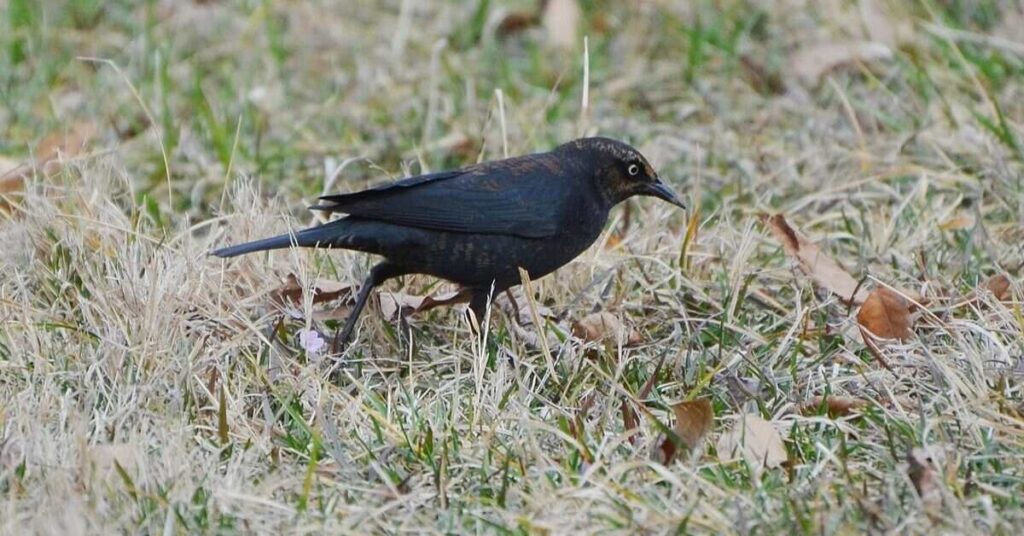
The rusty blackbird gets its name from the rust-colored patches that appear on its feathers outside breeding season. During breeding, males are solid black with yellow eyes. These birds face population decline and prefer areas near water. They nest in northern bogs and spend winters in southeastern swamps.
Tricolored blackbird
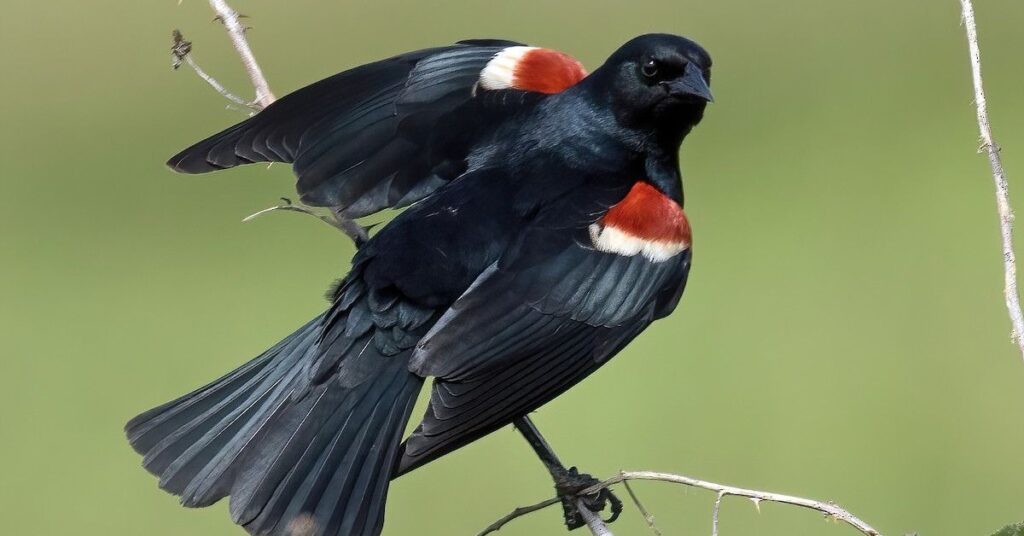
The tricolored blackbird looks similar to the red-winged blackbird but has white stripes below the red shoulder patch instead of yellow. This species lives mainly in California and forms huge breeding colonies. Historical records show colonies with hundreds of thousands of birds, though numbers have decreased significantly.
Grackles and Cowbirds
Several blackbird varieties in North America have special characteristics that set them apart from typical blackbirds.
Common grackle
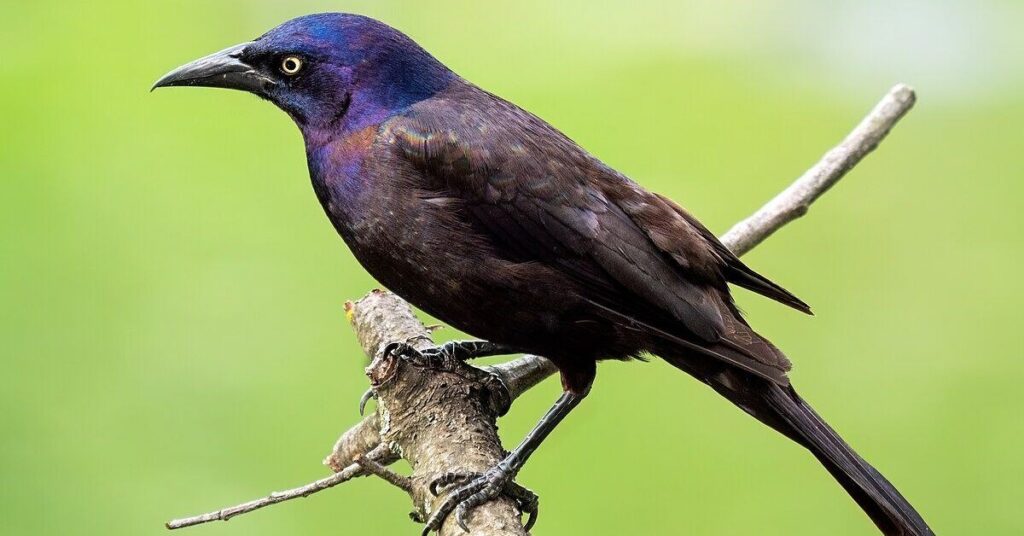
The common grackle is a large blackbird with stunning iridescent feathers. Their plumage shimmers with purple, blue, and green colors in sunlight. They have long keel-shaped tails and bright yellow eyes. Common grackles adapt well to both urban and rural environments. Males have longer tails than females.
Great-tailed grackle
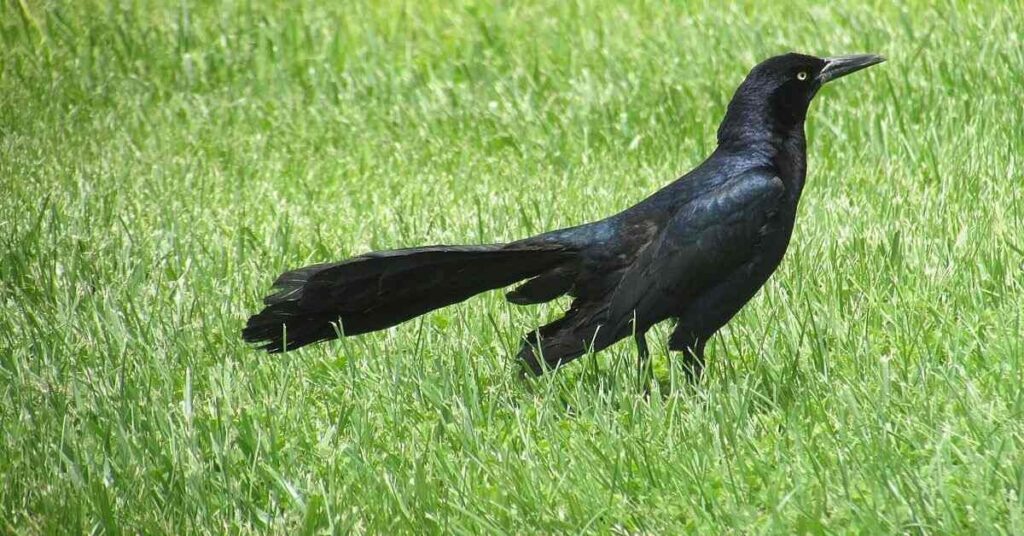
The great-tailed grackle lives up to its name with males displaying large upright tails used to attract females. Males have solid black feathers while females are mostly brown. Female populations outnumber males because females are smaller and need less food. These birds forage on the ground but will wade in water when searching for food.
Brown-headed cowbird
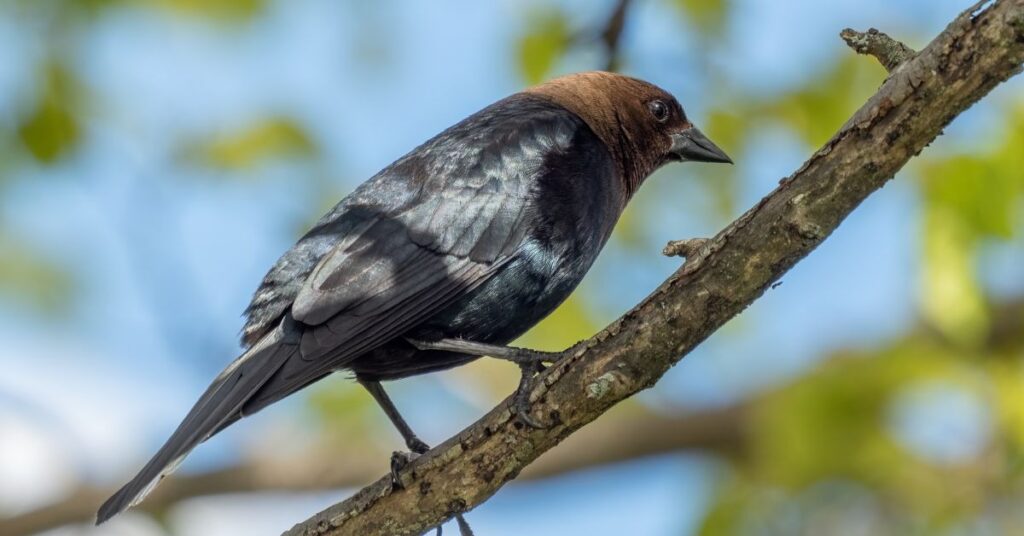
The brown-headed cowbird represents an unusual blackbird variety. Males have light brown heads with black bodies. Females are mostly light brown. These birds never build their own nests. Instead, females lay eggs in other bird species’ nests. The host birds raise the young cowbirds as their own. A single female can lay over 40 eggs per season.
Read about it more : https://www.wildlifenomads.com/blog/types-of-blackbirds-identification-guide/
European and Asian Blackbird Varieties
The Eurasian or common blackbird represents the classic blackbird of Europe and Asia. This species belongs to the thrush family and differs from American blackbirds.
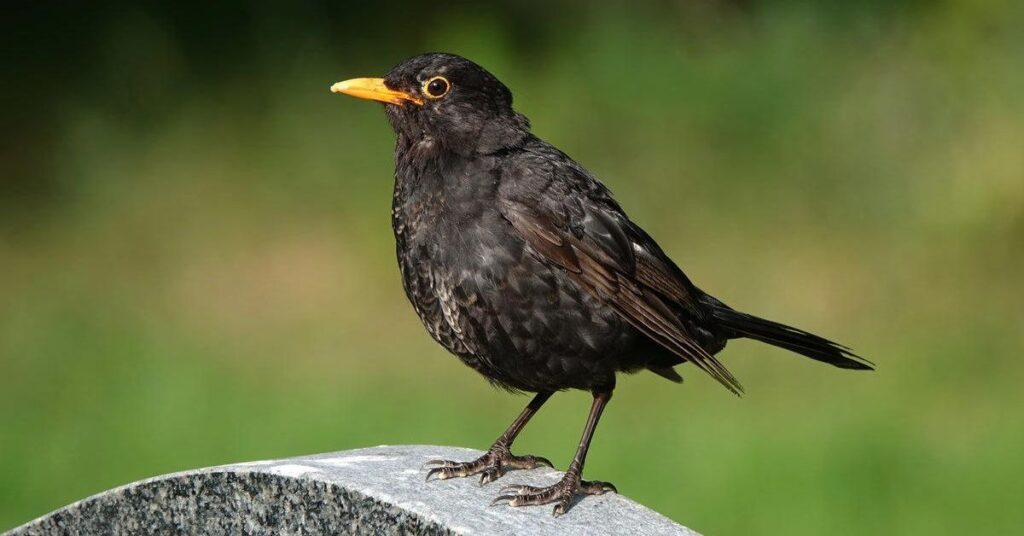
Male common blackbirds have entirely black plumage with bright yellow eye rings and bills. Their rich melodious songs fill gardens and woodlands. Females and juveniles have mainly dark brown feathers. This species breeds across Europe, western Asia, and North Africa. It has been introduced to Australia and New Zealand where it is now considered a pest.
Common blackbirds live in woods, gardens, parks, and urban areas. They build cup-shaped nests using mud to bind materials together. These birds eat earthworms, insects, berries, and seeds. They often feed on the ground, running or hopping in short bursts before pausing to look for prey.
The species has several subspecies across its range. Some live in the same area year-round while others migrate depending on climate. Pairs stay together throughout the year in areas with mild temperatures.
The common blackbird holds cultural significance in many countries. It appears on stamps and in music. The Beatles song Blackbird features the sound of this species singing. Swedish people consider it their national bird.
Asian Blackbird Species
Asia hosts several distinct blackbird varieties that were once considered subspecies of the common blackbird but are now recognized as separate species.
Chinese blackbird
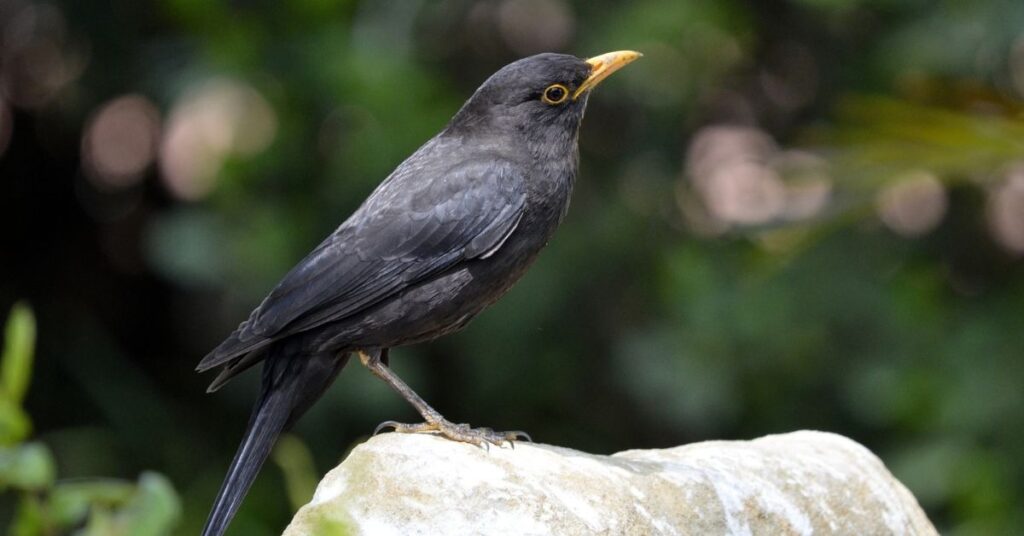
The Chinese blackbird lives in eastern and central China. Males have deep black plumage and vivid orange bills. Females often resemble males but tend to be browner with paler throats. This species is common in city gardens throughout Beijing, Shanghai, and Hong Kong. Chinese blackbirds feed on open ground and in trees. They prefer woodlands and gardens in agricultural and settled areas.
Indian blackbird
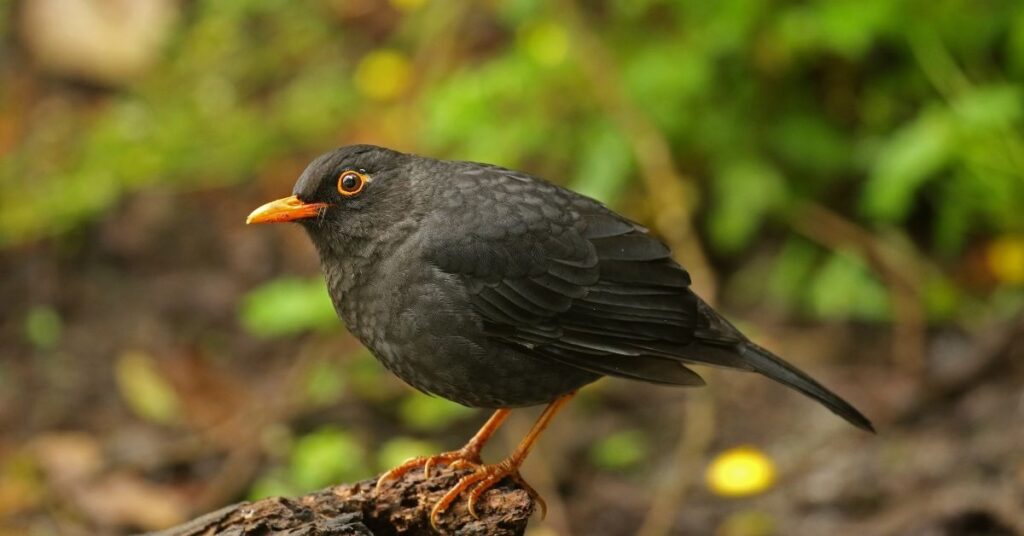
The Indian blackbird inhabits the Indian subcontinent. This species closely resembles the common blackbird but has distinct genetic differences. It lives in similar habitats including gardens, woodlands, and areas near human settlements.
Tibetan blackbird
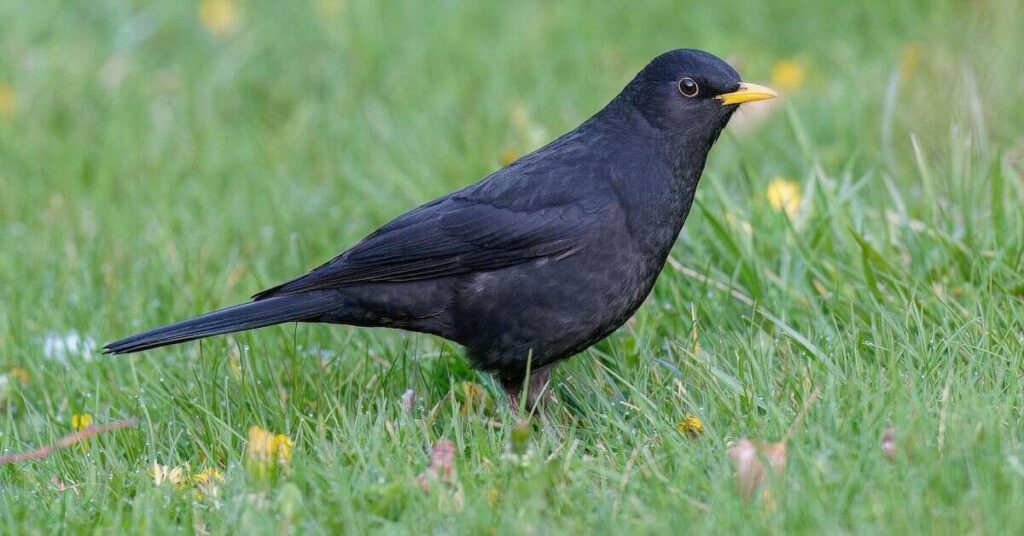
The Tibetan blackbird is one of the largest blackbird varieties. It lives in the Himalayas from Pakistan to Tibet at high elevations. Males are blackish-brown with darker plumage on the head and chest. They have dull orange-yellow bills and lack eye rings. Females show browner underparts with faint throat streaking.
This species inhabits steep grassy slopes and alpine meadows above the tree line. It typically lives between 3,200 and 4,800 meters elevation. During winter it descends to lower areas but rarely goes below 3,000 meters. The Tibetan blackbird feeds on earthworms, insects, small lizards, fruit, and seeds.
The grey-winged blackbird and white-collared blackbird are other Asian species named blackbirds. These birds live in mountain forests and have distinctive markings that set them apart from other varieties.
Corvids: The Birds Often Confused with Blackbirds
Many people call crows and ravens blackbirds, but these birds belong to a completely different family called Corvidae.
American crows
American crows are entirely black birds known for exceptional intelligence. They measure 16 to 20 inches long and have iridescent black plumage. Crows live across North America from Canada to Mexico. They adapt to many habitats including cities, farms, woodlands, and parks. Research shows crows can use tools, remember human faces, and solve complex problems.
Common ravens
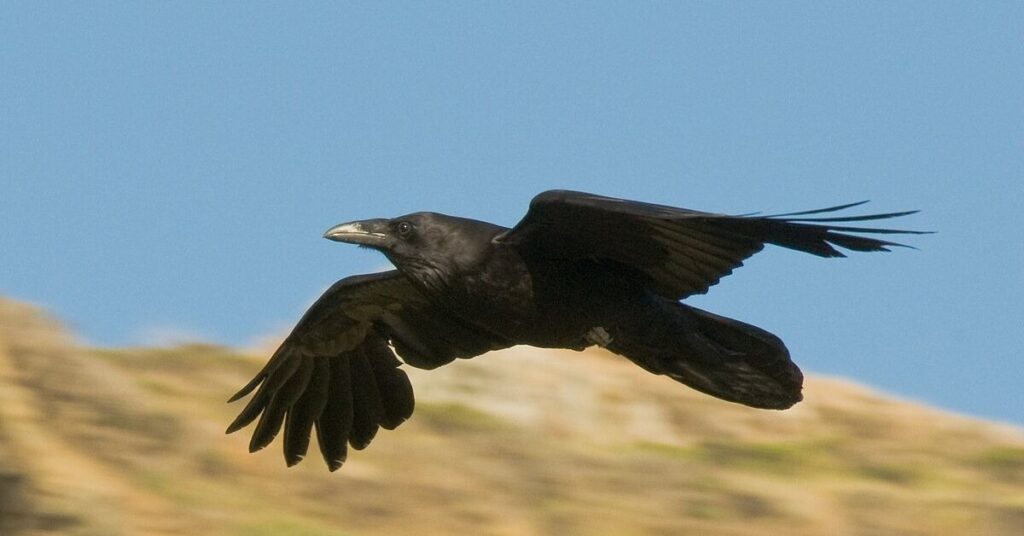
Common ravens are larger than crows and prefer wilderness areas and mountains. They have deeper calls and shaggier throat feathers. Ravens perform aerial acrobatics and mate for life. These intelligent birds appear in mythology and folklore worldwide.
The key difference between corvids and true blackbirds is family classification. Corvids are related to jays while true blackbirds connect to either the icterid or thrush families. Size also helps with identification as ravens and crows are generally larger than most blackbird varieties.
Other Black-Colored Birds
Several other bird species have predominantly black plumage but are not classified as blackbirds.
European starling
The European starling is a medium-sized bird with glossy black feathers. Their plumage shows green and purple metallic sheen. White speckles dot their feathers. Bills change from black in winter to yellow in summer. Starlings are known for noisy behavior and ability to mimic sounds. They live in open habitats and have been introduced to many countries outside their native range.
Boat-tailed grackle
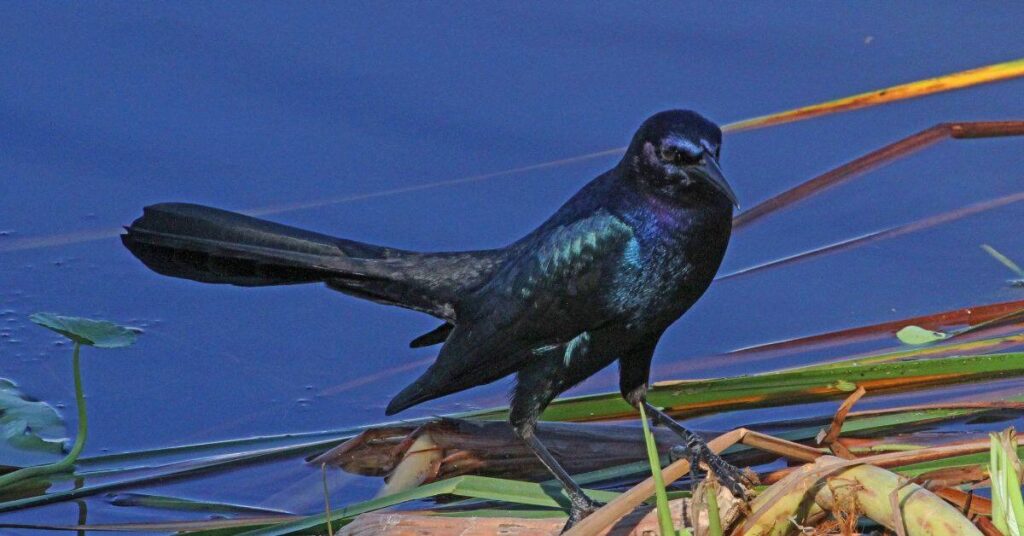
The boat-tailed grackle lives in coastal areas of the southeastern United States. Males have long boat-shaped tails and iridescent blue-black plumage. These birds make loud calls and gather in large groups.
Double-crested cormorant
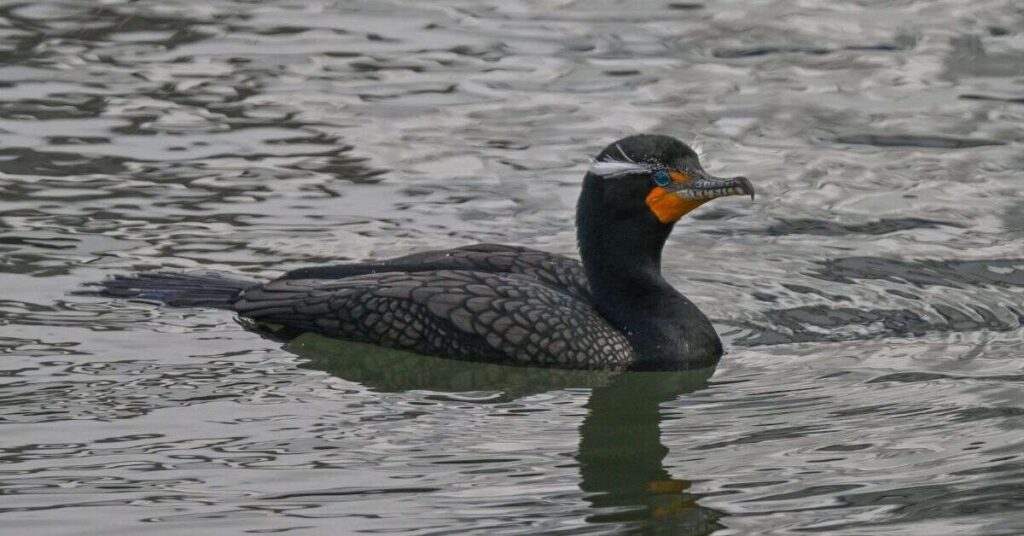
The double-crested cormorant is a water bird with dark feathers and bright orange bills. You often see these birds with wings spread while drying on shorelines. They dive underwater to catch fish.
Identifying Different Blackbird Varieties
Learning to identify blackbird varieties requires attention to several key features.
Size and shape provide the first clues. Measure overall length and note body proportions. Look at tail length and shape. Some species have long pointed tails while others have shorter rounded tails.
Plumage colors and patterns help distinguish species. Check for colorful patches on shoulders or wings. Notice whether feathers are solid black or show iridescence. Look for streaking on the breast or belly. Female and juvenile birds often have different coloring than adult males.
Bill and eye color offer important identification markers. Bills range from yellow to orange to black. Some species have bright colored eyes while others have dark eyes. Eye rings appear on some species but not others.
Habitat preferences narrow down possibilities. Some blackbird varieties prefer wetlands while others live in forests or urban areas. Elevation matters for mountain species.
Songs and calls provide definitive identification once you learn them. Each species has unique vocalizations. Red-winged blackbirds have distinct conk-la-ree calls. Common blackbirds sing melodious warbling songs. Yellow-headed blackbirds make harsh squeaking sounds.
Behavior patterns also help with identification. Watch how birds forage for food. Some hop on lawns while others probe in mud. Note whether birds are solitary or form flocks.
Where to Find Different Blackbird Varieties
Blackbird varieties live in specific habitats across different regions.
Wetland species like red-winged and yellow-headed blackbirds prefer marshes, pond edges, and areas with cattails and reeds. Visit these habitats during spring and summer to see breeding birds. Large flocks gather in agricultural fields during migration.
Urban and suburban areas host common grackles, Brewer’s blackbirds, and European starlings. Parks, gardens, and backyard feeders attract these adaptable species. Common blackbirds thrive in European cities and towns.
Forest and woodland edges provide habitat for rusty blackbirds and some corvids. Look for these birds in areas where trees meet open spaces.
Agricultural regions attract many blackbird varieties seeking insects and grain. Mixed flocks often gather in farm fields, especially during fall migration.
Mountain regions harbor specialized species like Tibetan blackbirds. These high-elevation birds need alpine meadows and rocky slopes.
The best time to observe blackbird varieties varies by species and location. Spring brings breeding plumage and territorial singing. Fall migration creates large mixed flocks. Winter concentrations occur in areas with food sources.
Conservation Status of Blackbird Varieties
Different blackbird varieties face varying conservation challenges.
Most common species like red-winged blackbirds and common grackles have stable or increasing populations. These adaptable birds thrive near human development.
Some species face serious threats. The rusty blackbird population has declined significantly. Habitat loss in breeding and wintering areas contributes to the decrease. The tricolored blackbird is listed as endangered in California due to dramatic population drops.
The Tibetan blackbird currently has a stable population and large range. It is listed as least concern by conservation organizations.
Introduced species like common blackbirds in Australia and New Zealand create ecological problems. They compete with native birds and spread seeds of invasive plants.
Climate change affects migration patterns and breeding success for many blackbird varieties. Shifting weather patterns alter food availability and nesting conditions.
Habitat destruction remains the biggest threat. Wetland drainage eliminates crucial breeding areas. Forest clearing reduces nesting sites. Agricultural intensification removes hedgerows and field margins.
Pesticides reduce insect populations that blackbirds need for food. Chemical contamination affects egg production and chick survival.
Conservation efforts focus on protecting key habitats, reducing pesticide use, and monitoring population trends. Citizen science projects help track blackbird varieties across their ranges.
Blackbird Varieties in Culture and Science
Blackbird varieties hold important places in human culture and scientific research.
The common blackbird inspired composers and writers. Olivier Messiaen transcribed male blackbird songs into musical compositions. The Beatles featured blackbird singing in their famous song. These birds appear in poetry and folklore across Europe.
The red-winged blackbird signals spring arrival in North America. Their early return from migration marks seasonal change. Many people consider their calls the sound of wetlands.
Scientists study blackbird varieties to understand intelligence, migration, social behavior, and ecology. Crows and ravens demonstrate problem-solving abilities that rival primates. Researchers track migration patterns to learn about climate change effects.
Blackbirds serve as indicator species for environmental health. Population changes often reflect broader ecosystem problems. Monitoring these birds helps conservation efforts for many species.
The brood parasitism of cowbirds raises interesting questions about evolution and parental care. Scientists study how host species respond to cowbird eggs and chicks.
Conclusion
Blackbird varieties show how diverse and adaptable birds can be. From wetlands to city parks, they thrive across the world. Each variety has unique traits, songs, and behaviors.
By learning about blackbird varieties, people build stronger connections with nature. Awareness leads to respect and protection. Simple actions can make a big difference.
Blackbirds remind us that wildlife exists all around us. Protecting them protects the planet we share.
FAQs
What is the difference between a blackbird and a crow?
True blackbirds belong to the Icteridae or Turdidae families, while crows belong to the Corvidae family. Crows are generally larger with heavier bills, and blackbirds often have colorful patches or iridescent feathers.
How many types of blackbirds are there?
There are about 25 species in the Icteridae family in North America, including red-winged, yellow-headed, and grackles. In Europe and Asia, several species exist including the common, Chinese, Indian, and Tibetan blackbirds.
Are female blackbirds black?
Most female blackbirds are not black but appear brown with streaking or dull brown coloring. Only males typically display the jet black plumage that gives these birds their name.
What do blackbirds eat?
Blackbird varieties eat insects, earthworms, caterpillars, fruits, berries, and seeds. Some species also consume grain in agricultural fields and small fish or aquatic insects.
Why do blackbirds gather in large flocks?
Blackbirds form large flocks for protection from predators and to locate food sources more efficiently. These gatherings occur especially during migration and winter months.
