

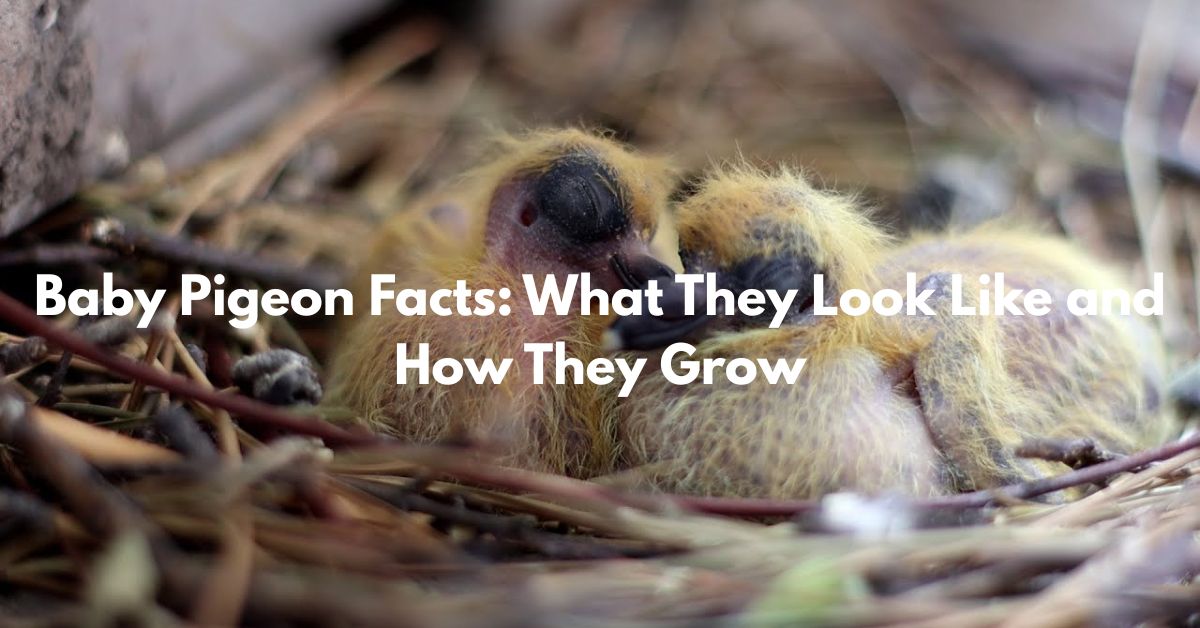
Have you ever walked through a park full of pigeons and wondered where all the babies are? You see pigeons everywhere. They sit on wires, peck at breadcrumbs, and gather in noisy flocks on busy streets. Yet you almost never spot a baby pigeon.
This is not a coincidence, and it is definitely not a myth. Baby pigeons are real, and they have a fascinating early life that most people never get to witness. In this article, we will look closely at what a baby pigeon looks like, how it grows, what it eats, and why it stays hidden from view for so long.
By the end, you will understand exactly why baby pigeons feel like a rare sight, even though pigeons are one of the most common birds on the planet.
What Does a Baby Pigeon Look Like?
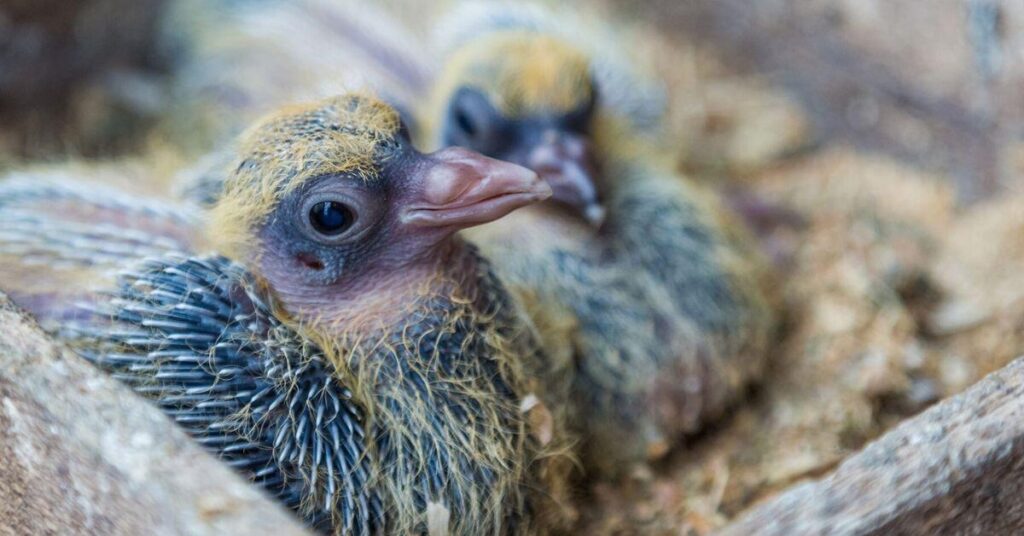
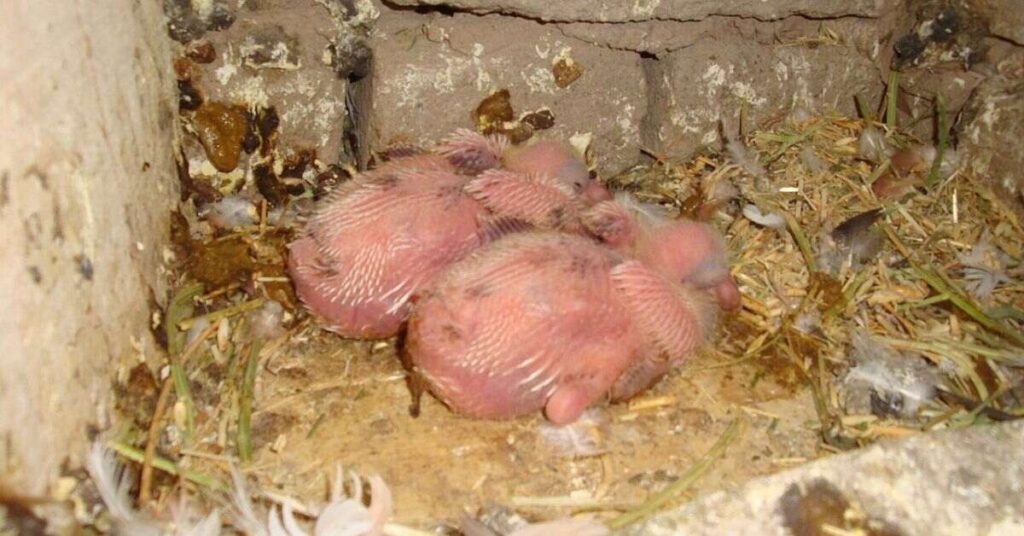
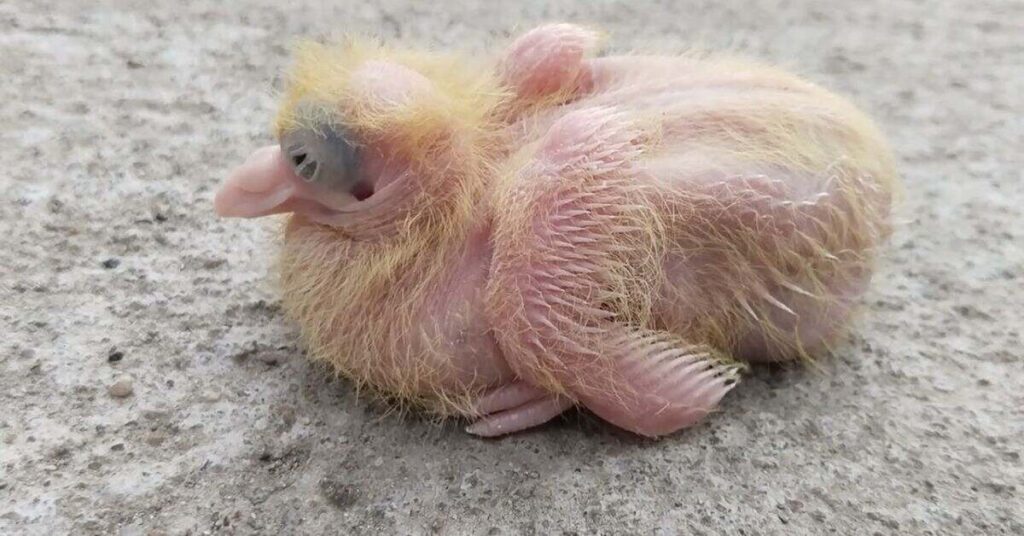
A newborn baby pigeon looks nothing like the birds you see on the sidewalk. It hatches blind and completely helpless. Its skin is pink or grayish, and it is covered only in a thin layer of soft, golden down feathers.
The bill on a baby pigeon is broad and fleshy. Its eyes stay closed for the first several days of life. At hatching, a squab weighs around 15 grams and measures about 5 centimeters long. It grows fast, gaining between 4 and 8 grams every single day.
By the end of its first month, a baby pigeon can weigh between 270 and 350 grams. That is nearly 20 times its hatching weight.
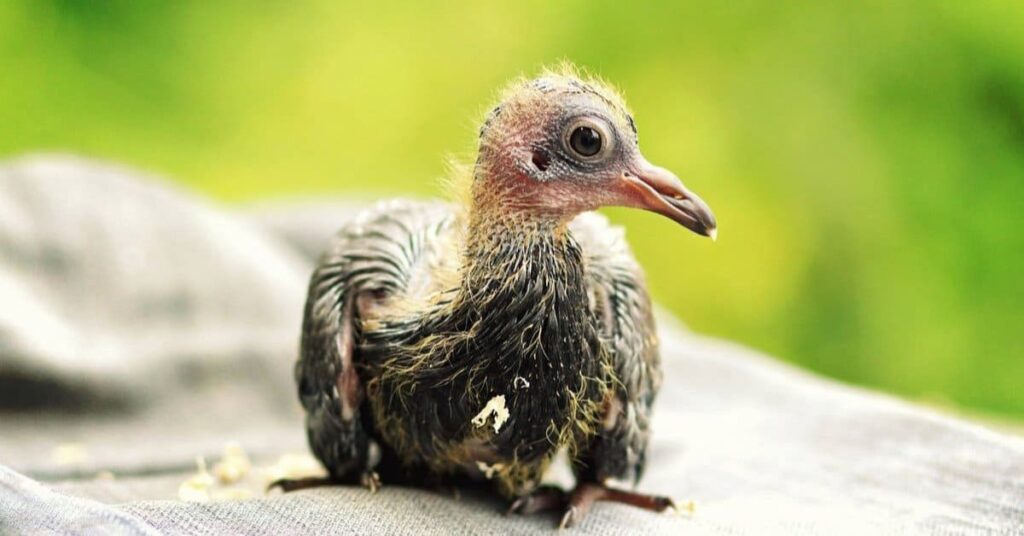
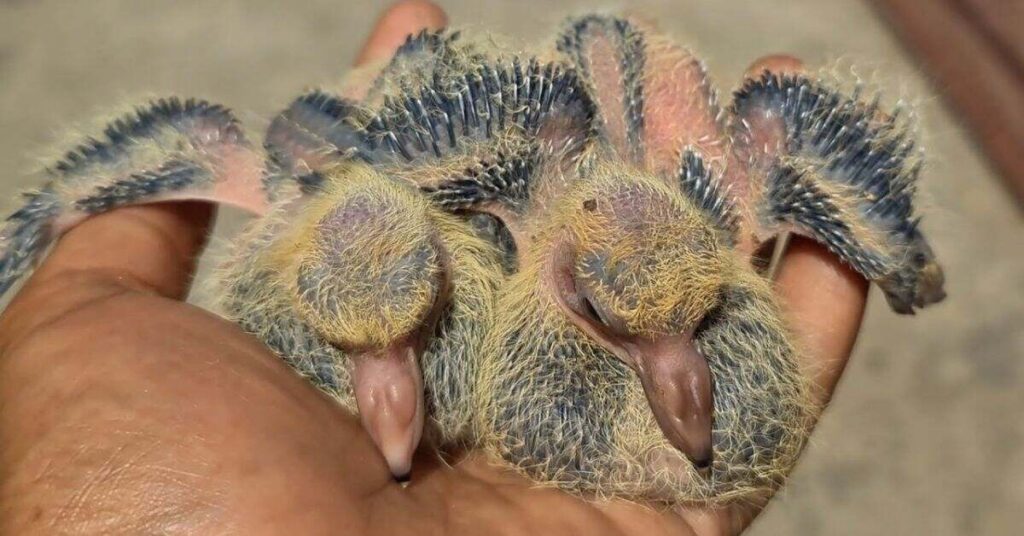
As the days pass, the squab begins to change quickly. Its eyes open within the first week, and its feathers start to darken. By the third week, it starts to resemble an adult pigeon, although it still looks smaller and patchier.
One easy way to tell a young pigeon from an adult is by checking its eyes. Juvenile pigeons under 8 months old usually have medium brown or grayish brown eyes. Adult pigeons have bright orange, yellow, or reddish eyes instead.
The Life Cycle of a Baby Pigeon
Understanding the full life cycle helps explain why a baby pigeon is so hard to spot in the wild. Pigeons move through several clear stages before they look and act like fully grown birds.
Breeding and Nesting
Pigeons form long-term pairs and are considered monogamous birds. A pair usually stays together unless one partner disappears, in which case the surviving bird finds a new mate. Pigeons can begin breeding as early as six months old.
Unlike many songbirds that only breed in spring, pigeons can nest all year round. Some pairs raise as many as five or six broods in a single year. Most nests are simple structures made from a small pile of twigs, built on ledges, rooftops, or inside quiet, sheltered spaces.
Egg Stage
A female pigeon typically lays one to three plain white eggs, though two is the most common number. The eggs are small, averaging about 38 millimeters in length. Incubation lasts around 17 to 19 days, and both parents share the job of sitting on the eggs.
When the chick is ready, it uses a small egg tooth to break out of its shell on its own. This process can take more than a full day to complete.
Growth Stage
Once hatched, the baby pigeon stays in the nest for about four weeks. During this time, it depends completely on its parents for food, warmth, and protection. Its transformation is rapid and dramatic, moving from a nearly featherless hatchling to a fully feathered juvenile in less than a month.
The table below breaks down the major milestones during this growth period.
| Age | What Happens |
| Day 1 | Hatches blind, weak, and covered in soft yellow down |
| Day 5 | Grows noticeably larger, eyes begin to open |
| Day 10 | Pin feathers appear on wings, back, and tail |
| Day 16 | Pin feathers open into proper colored plumage |
| Day 21 | Body is almost fully feathered |
| Day 28 | Bird is ready to fledge in warm weather |
Why Do You Never See a Baby Pigeon?
This is the question most people ask, and the answer is fairly simple once you understand pigeon behavior.
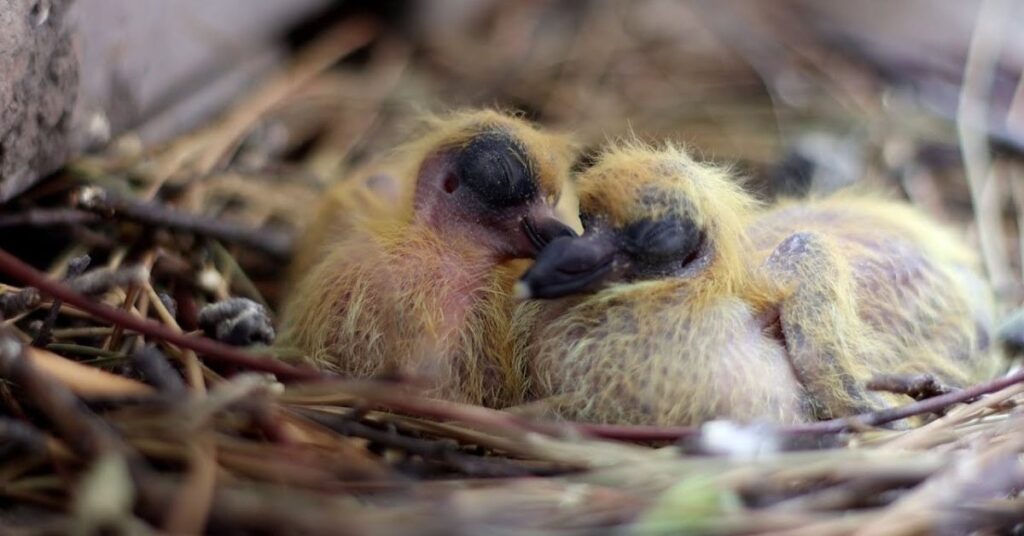
Pigeons choose nesting spots that are hidden and hard to reach. They build nests on high ledges, inside building gaps, under bridges, and in other quiet corners away from predators like cats, foxes, and birds of prey. A baby pigeon spends its entire vulnerable stage tucked away in one of these hidden locations.
By the time a young pigeon finally leaves the nest, something important has already happened. It has grown to nearly the same size as its parents and gained similar feather coloring. This means most people simply mistake a young pigeon for an adult one, since the obvious differences are already gone.
So a baby pigeon is not invisible because it does not exist. It is invisible because it grows up almost entirely out of public view, and it looks like an adult the moment it steps into the open.
Another small myth worth clearing up is the idea that baby pigeons simply do not exist at all. This idea likely spread because so few people have ever seen one in person. The truth is far less mysterious. Baby pigeons exist, but their hidden nesting habits keep them out of sight until they are nearly grown.
Read about it more:https://www.birdfact.com/articles/baby-pigeons
What Do Baby Pigeons Eat?
Pigeon parents feed their chicks in a way that is unusual among birds. Instead of bringing back insects or seeds right away, they produce a substance called crop milk.
Crop milk is made inside a pouch near the throat called the crop, and both the mother and father pigeon can produce it. This thick, nutrient rich substance is packed with protein, fat, antibodies, and vitamins. It plays a similar protective role to the milk produced by mammals, even though pigeons make it in a completely different way.
For the first week of life, crop milk is the only food a baby pigeon receives. To feed, the squab inserts its bill directly into the parent’s mouth, rather than waiting with an open beak the way many baby birds do.
During the second week, parents begin mixing in small amounts of softened plant material. By around two weeks of age, the chick is fully weaned off crop milk and starts eating softened adult food instead.
If you ever find an abandoned baby pigeon, do not attempt to feed it on your own. Its diet is highly specialized, and contacting a wildlife rehabilitator is always the safest choice for the bird.
Fledging and Learning to Fly
At around four weeks old, a young pigeon is ready to leave the nest. This stage is known as fledging, and it comes with real risks. The young bird is not yet a confident flyer, which makes it an easy target for predators.
It is common to see a recently fledged pigeon sitting on the ground for a day or two. This is completely normal behavior. The bird usually works its way onto a higher perch before attempting real flight.
Parents continue to feed their fledgling for several more days after it leaves the nest. Full flying ability usually develops by around six weeks of age, with the bird practicing short flaps and small hops in the days leading up to it.
Cold weather can slow this timeline down. In winter, young pigeons may stay in the nest for up to 45 days instead of the usual 25 to 32 days seen in warmer months.
Baby Pigeon Survival and Their Role in the Ecosystem
Life is not easy for a young pigeon. Only about half of all baby pigeons survive their first year. Common threats include birds of prey, domestic cats, collisions with windows and vehicles, extreme weather, and simple starvation.
Despite these challenges, pigeons remain one of the most successful bird families in the world, found across six continents. They play a genuine role in local ecosystems. Pigeons help spread seeds as they forage, and they serve as an important food source for predators like falcons and hawks.
Their ability to adapt to city life, using buildings in place of natural cliffs and caves, is a major reason they continue to thrive in busy urban environments where many other species struggle.
What to Do If You Find a Baby Pigeon
If you come across a young pigeon that looks fully feathered and is simply sitting on the ground, it is likely a normal fledgling learning to fly. The best thing to do is leave it alone and keep pets away for a few days.
If you find a much younger, mostly featherless baby pigeon outside the nest, try to locate the nest and gently return the chick if it is safe to do so. When returning the bird is not possible, place it in a warm, dark, and quiet container, then contact a local wildlife rehabilitator for guidance.
Caring for a baby pigeon on your own is difficult and should always be left to trained professionals whenever help is available.
Conclusion
A baby pigeon is far from a myth. It hatches blind and helpless, grows at an astonishing pace, and depends completely on crop milk and parental care during its first weeks of life. It simply stays hidden in secluded nests until it looks nearly identical to its parents.
The next time you see a flock of pigeons in the park, remember that every single one of them was once a tiny, featherless squab tucked safely out of sight. Understanding this hidden stage of their life makes these familiar city birds feel a little more remarkable.
Frequently Asked Questions
What is a baby pigeon called?
A baby pigeon is called a squab. This term is used specifically for young pigeons and doves while they are still in the nest.
Why do you never see a baby pigeon in public?
Baby pigeons stay hidden in secluded nests until they are nearly full grown. By the time they leave the nest, they look almost identical to adult pigeons.
How long does a baby pigeon stay in the nest?
Most baby pigeons stay in the nest for about 25 to 32 days in warm weather. This can extend to around 45 days during colder months.
What do baby pigeons eat?
Baby pigeons eat crop milk produced by both parents for their first week of life. They are gradually switched to softened plant food over the following two weeks.
What should I do if I find a baby pigeon on the ground?
If it is fully feathered, leave it alone since it is likely a fledgling learning to fly. If it looks very young and helpless, contact a wildlife rehabilitator for advice.
