

Imagine a country so rich in wildlife that scientists keep discovering new species every year. That country is the Philippines. Tucked in Southeast Asia, this archipelago of over 7,600 islands is home to some of the most fascinating mammals on Earth.
The Philippines mammals are unlike any you will find elsewhere. Many of them live only on these islands and nowhere else in the world. Some are tiny enough to fit in your palm. Others are powerful enough to charge a ranger up a tree.
Whether you are a wildlife lover, a nature traveler, or simply curious about animals, the mammals of the Philippines will leave you amazed. This guide covers everything you need to know about these incredible creatures, their habitats, and why protecting them matters more than ever.
Why the Philippines Is a Hotspot for Unique Mammals
The Philippines is one of only 17 “megadiverse” countries on the planet. This means it holds an extraordinary concentration of life in a relatively small area.
When it comes to mammals, the numbers are staggering. The country is home to at least 207 terrestrial mammal species. Out of these, 133 are endemic, meaning they exist only in the Philippines and nowhere else on Earth. That is one of the highest rates of mammal endemism found anywhere in the world.
Among non-flying mammals, the level of uniqueness is even more striking. Around 91% of non-flying native mammals found here are found nowhere else on the planet. Scientists from the Field Museum in Chicago have described this as “an astounding example of adaptive radiation by mammals in an oceanic archipelago.”
The reason for this remarkable diversity comes down to geography and time. The islands were formed millions of years ago and were never fully connected to mainland Asia. This isolation allowed animals to evolve separately on each island. Over thousands of generations, different species developed on different islands, each adapting to their own local environment.
The result is a wildlife paradise that continues to surprise even the most experienced researchers.
The Philippine Tarsier: The World’s Smallest Primate
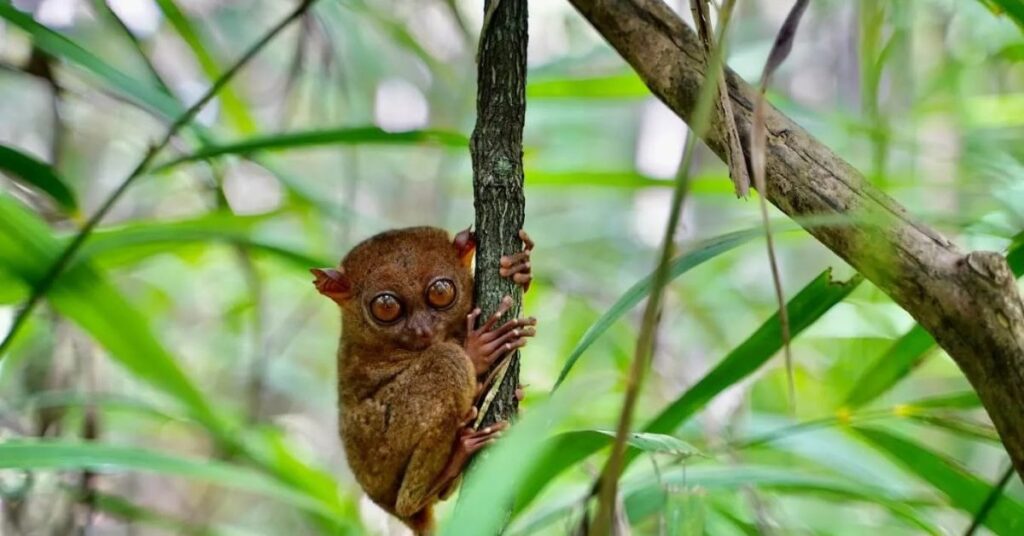
No discussion of Philippines mammals is complete without the tarsier. The Philippine tarsier (Carlito syrichta) is one of the most remarkable small animals in the world.
This tiny creature is often called the world’s smallest primate. It fits comfortably in the palm of an adult hand, weighing between 80 and 165 grams. Its body length ranges from just 85 to 160 millimeters.
But what makes tarsiers truly unforgettable are their eyes. In proportion to their body, tarsiers have the largest eyes of any mammal on Earth. These huge golden eyes are perfectly adapted for hunting at night. They also cannot move their eyes in their sockets, which is why tarsiers rotate their heads almost 180 degrees, much like an owl.
Tarsiers are found on several Philippine islands, including Bohol, Samar, Leyte, Dinagat, and Siargao. They live in tropical rainforests, clinging to trees and bamboo, leaping up to 20 feet from branch to branch in search of insects, lizards, and small frogs.
These animals are deeply sensitive to stress. Loud noises and bright lights disturb them greatly. When kept in captivity, tarsiers sometimes bang their heads against hard surfaces due to anxiety. Because of this, responsible tourism guidelines ask visitors to keep quiet and turn off camera flashes when observing them.
The Philippine tarsier is currently classified as Near Threatened by the IUCN. Habitat loss and illegal capture for the pet trade are the main threats it faces.
The Tamaraw: The Mighty Dwarf Buffalo of Mindoro
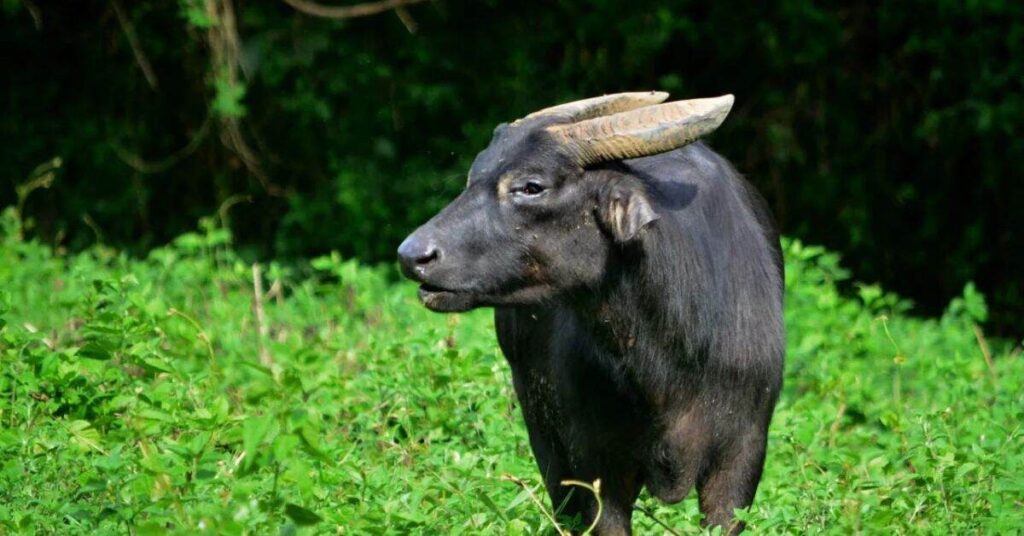
The tamaraw (Bubalus mindorensis) is the largest land animal in the Philippines. Do not let its small size fool you. This dwarf buffalo stands only about as tall as a kindergartner, but it is fierce, territorial, and one of the most iconic symbols of Philippine wildlife.
The tamaraw lives only on the island of Mindoro. It has shiny black fur, backward-curving horns, and a reputation for charging intruders without warning. Rangers who work with tamaraws describe them as truly wild animals that will wield their horns against anything they see as a threat.
Sadly, the tamaraw’s story is one of dramatic decline. In 1900, roughly 10,000 tamaraws roamed the island. By 1969, hunting, disease, and habitat loss had reduced their number to just 100 individuals. Conservation programs stepped in, and today around 480 to 600 tamaraws survive in the wild, mostly within Mounts Iglit-Baco National Park.
The tamaraw is currently listed as Critically Endangered by the IUCN. It remains one of the six priority species for conservation in the Philippines, alongside the Philippine eagle, marine turtles, dugong, Philippine cockatoo, and the Philippine pangolin.
Visitors can observe tamaraws in their natural habitat at Mounts Iglit-Baco National Park, but only from a safe distance.
Philippine Bats: The Sky Rulers of the Archipelago
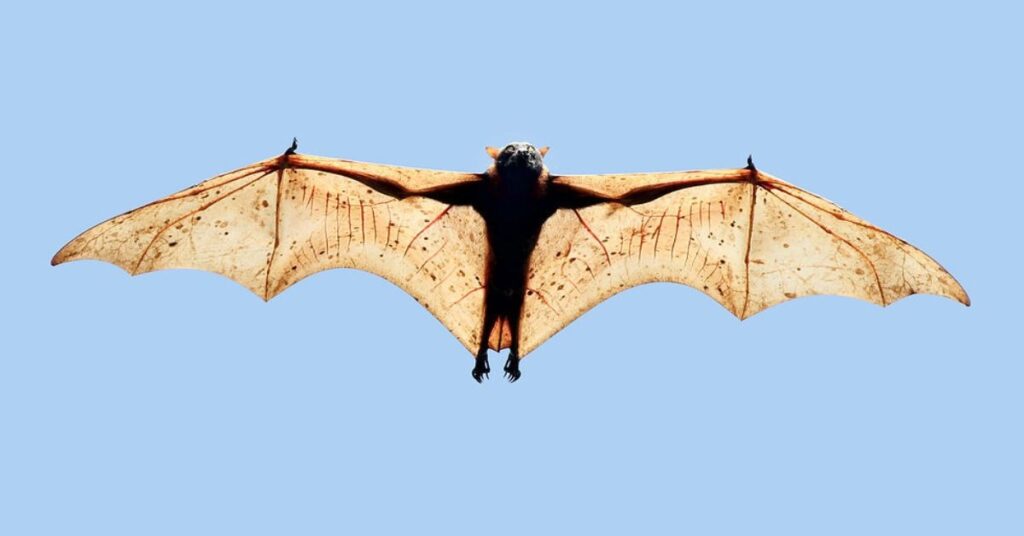
When people think of Philippines mammals, they often overlook bats. But the Philippines is home to over 50 species of bats, and many of them are found nowhere else in the world.
The most impressive of all is the golden-capped fruit bat (Acerodon jubatus), also known as the giant golden-crowned flying fox. This bat is the world’s largest bat, with a wingspan that can reach up to 1.7 meters. Despite its dramatic appearance, it is a gentle fruit-eater and plays a crucial role in pollinating trees and spreading seeds across the forest.
The golden-capped fruit bat is listed as Endangered. Large roosts that once held hundreds of thousands of bats have been devastated by hunting and forest clearing. Conservation groups are working to protect remaining colonies.
The Philippines is also home to several smaller bat species, including the Philippine dawn bat (Eonycteris robusta), the Philippine pygmy fruit bat, and numerous horseshoe bat species. Each plays an important role in the ecosystem by controlling insects and helping forests regenerate.
Key Philippines Mammals at a Glance
Here is a quick overview of some of the most notable Philippines mammals and their conservation status:
| Mammal | Scientific Name | Found On | IUCN Status |
| Philippine Tarsier | Carlito syrichta | Bohol, Samar, Leyte | Near Threatened |
| Tamaraw | Bubalus mindorensis | Mindoro | Critically Endangered |
| Golden-Capped Fruit Bat | Acerodon jubatus | Luzon, Visayas | Endangered |
| Philippine Pangolin | Manis culionensis | Palawan | Critically Endangered |
| Visayan Spotted Deer | Rusa alfredi | Negros, Panay, Masbate | Endangered |
| Calamian Deer | Axis calamianensis | Calamian Islands | Endangered |
| Philippine Warty Pig | Sus philippensis | Multiple islands | Vulnerable |
| Philippine Mouse-Deer | Tragulus nigricans | Balabac | Endangered |
The Philippine Pangolin: A Species on the Edge
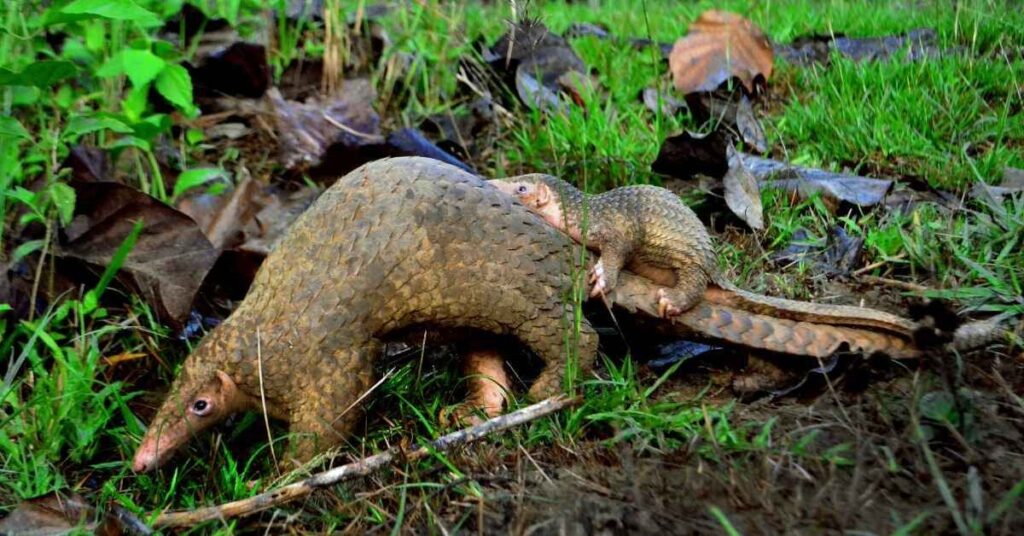
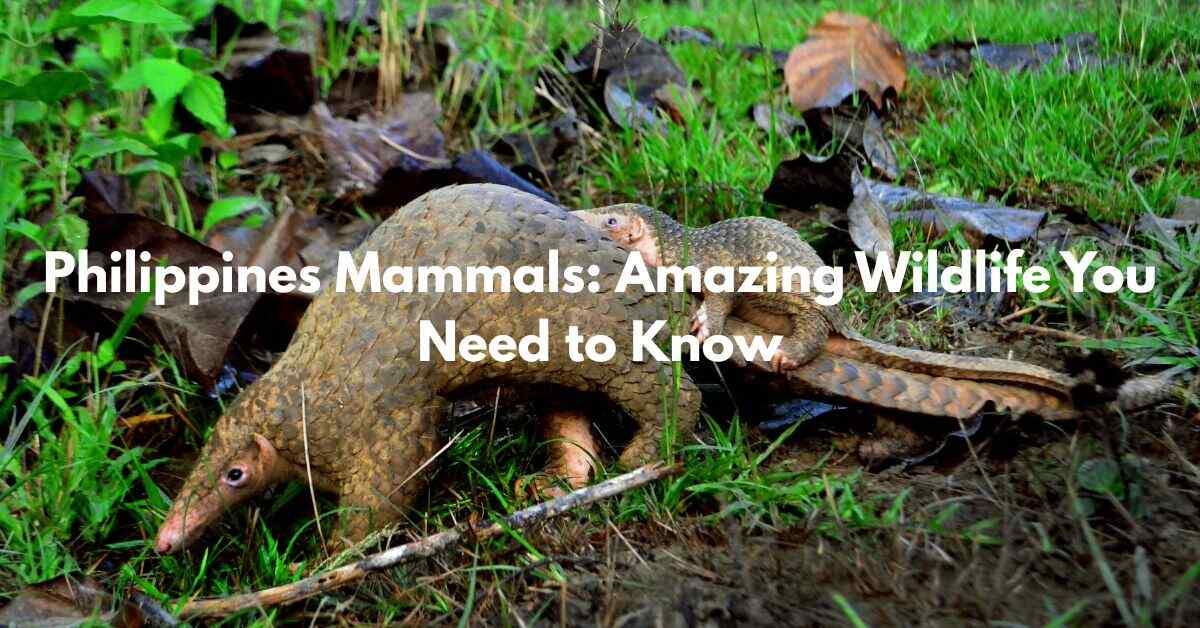
The Philippine pangolin (Manis culionensis), known locally as the balintong, is one of the most trafficked mammals in the world. It lives in the forests and grasslands of Palawan and is critically endangered.
Pangolins are covered in hard overlapping scales made of keratin, the same material as human fingernails. When threatened, they curl into a tight ball. This defense works against natural predators, but it makes them easy targets for poachers who simply pick them up.
Both their scales and meat are highly prized in illegal wildlife markets, particularly in East Asia, where they are wrongly believed to have medicinal properties. Thousands of pangolins are taken from Philippine forests every year.
The Philippine pangolin is smaller than its relatives, with a shorter head and smaller scales. It feeds mostly on ants and termites and is active mainly at night.
Conservation organizations and the Philippine government are working to crack down on the illegal pangolin trade. The species is listed under Appendix I of CITES, which bans all international commercial trade. However, enforcement remains a major challenge.
Rodents and Small Mammals: The Hidden Gems
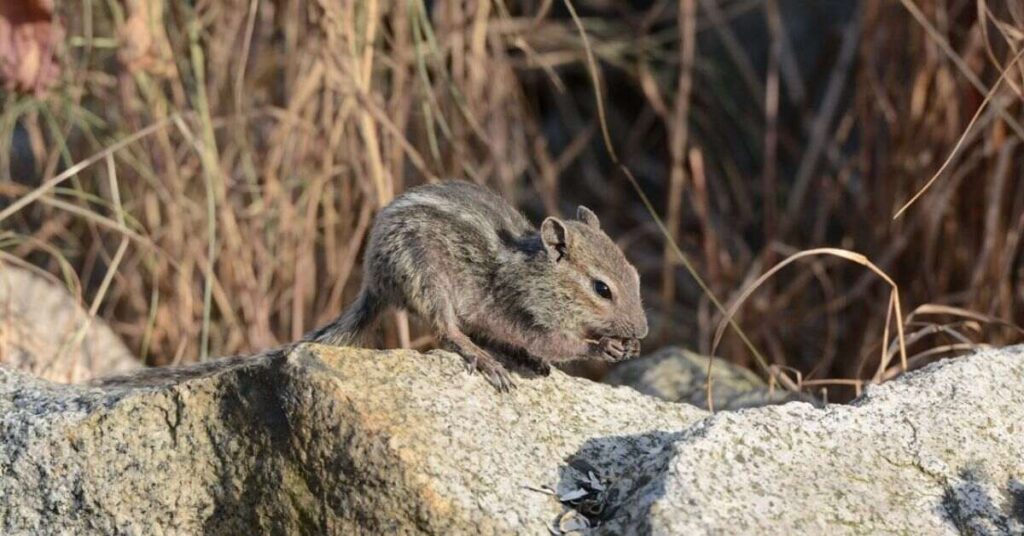
The Philippines is world-famous among mammalogists for its extraordinary diversity of rodents. This might not sound exciting at first, but these small mammals represent one of the most remarkable evolutionary stories on Earth.
The Philippine Mammal Project, run from the Field Museum in Chicago, has been studying these animals since 1981. Researchers have found that Philippine rodents have diversified in ways comparable to Darwin’s finches in the Galapagos Islands or the honeycreepers of Hawaii.
Some of these rodents have evolved to fill very unusual roles. The “earthworm mice” of the Chrotomyini group have developed specialized diets. Certain species get over 95% of their nutrition from earthworms. Others eat a broader mix of insects, frogs, and plant matter.
Luzon Island alone holds a remarkable concentration of unique small mammals. New species continue to be discovered. In 2022, a new genus of shrew-mouse named Baletemys kampalili was discovered on Mount Kampalili in eastern Mindanao. In 2023, a new soft-furred hedgehog species, Podogymnura intermedia, was described from the same region.
The Philippines has seen 16 new mammal species discovered in just the past decade. This rate of discovery is one of the highest in the world.
Deer and Ungulates of the Philippines
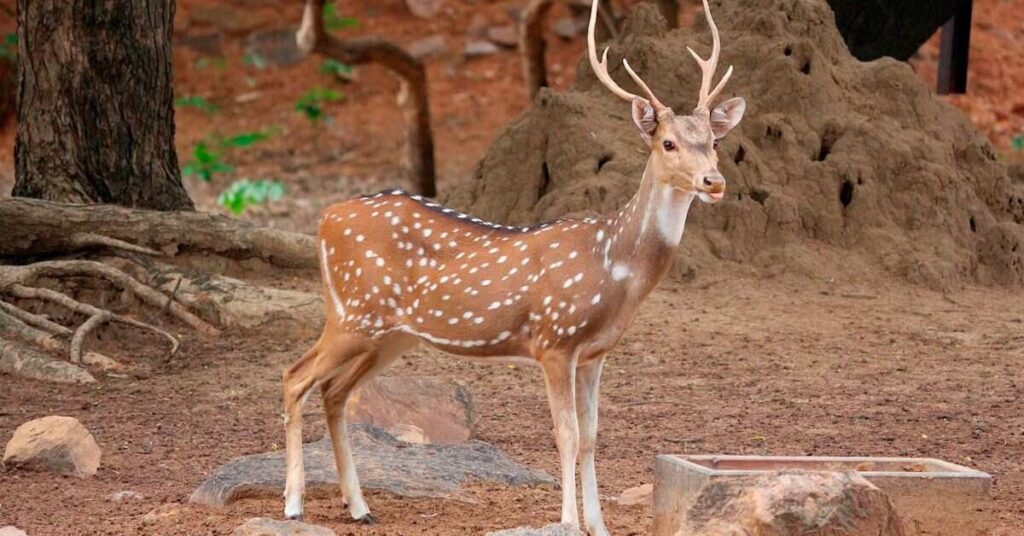
Beyond the tamaraw, the Philippines is home to several other unique hoofed mammals. These animals once roamed Philippine forests in great numbers, but their populations have fallen sharply due to hunting and habitat loss.
The Visayan spotted deer (Rusa alfredi) is one of the rarest deer on Earth. It has a beautiful reddish-brown coat dotted with pale spots. It survives in tiny fragments of forest on the islands of Negros, Panay, and Masbate, with only a few hundred individuals left in the wild.
The Calamian deer (Axis calamianensis) lives only on the Calamian Islands in Palawan Province. It is sometimes called the “hog deer” because of the way it runs low to the ground to escape danger. It is listed as Endangered.
The Philippine mouse-deer (Tragulus nigricans), also known as the pilandok, is one of the smallest deer in the world. It lives on Balabac Island in southern Palawan. It is shy, solitary, and rarely seen, making it one of the more mysterious Philippines mammals.
The Philippine brown deer (Rusa marianna) is more widespread and lives across many Philippine islands. It is an important prey species for the Philippine eagle and other predators.
Threats Facing Philippines Mammals
The rich wildlife of the Philippines faces serious and growing threats. Understanding these threats is the first step toward protecting these incredible animals.
Habitat loss is the single biggest danger. The Philippines has lost more than half of its original forest cover since the mid-20th century. Logging, farming, mining, and urban expansion continue to shrink the natural areas where mammals live.
Illegal hunting and poaching also take a heavy toll. Many species are hunted for food, sport, or the illegal wildlife trade. The tamaraw, pangolin, and various deer species are particularly targeted.
Disease has hit some species hard. Diseases transmitted from cattle and domestic livestock have affected tamaraw populations significantly.
Climate change is an increasing concern. Rising temperatures, changing rainfall patterns, and more frequent extreme weather events all affect the habitats that Philippine mammals depend on.
Experts warn that without urgent action, the Philippines could lose up to a quarter of its unique land-dwelling vertebrate species. Endemic species face the highest risks because they have nowhere else to go if their habitat disappears.
Conservation Efforts: Hope for the Future
Despite these challenges, there is real reason for hope. Conservation efforts across the Philippines are making a difference.
The Tamaraw Conservation Program has worked closely with indigenous communities and tribesmen as trackers and rangers. This partnership has helped reduce poaching and allowed the tamaraw population to slowly recover from its historic low of 100 individuals.
The Philippine Tarsier and Wildlife Sanctuary in Corella, Bohol, provides a safe and responsible space for people to observe tarsiers in a near-natural setting. The sanctuary promotes ethical wildlife tourism and educates visitors about tarsier behavior and conservation needs.
Researchers from the Philippine Mammal Project at the Field Museum continue to discover and document new species. Each discovery strengthens the case for protecting remote forests and mountain areas that have never been properly surveyed.
The Philippine government has also established national protected areas, including Mounts Iglit-Baco National Park for the tamaraw, the Northern Sierra Madre Natural Park, and several Palawan protected zones for the pangolin and other wildlife.
You can help too. Supporting reputable wildlife organizations, choosing responsible eco-tourism operators, and never buying products made from wildlife parts all make a real difference.
How to Responsibly See Philippines Mammals in the Wild
If you want to witness the magic of Philippines mammals firsthand, there are several places where you can do so responsibly.
The Philippine Tarsier and Wildlife Sanctuary in Corella, Bohol is the best place to see tarsiers. Always follow the guidelines: no flash photography, speak in hushed tones, and keep a respectful distance.
Mounts Iglit-Baco National Park in Mindoro offers the rare chance to see wild tamaraws in their natural habitat. Guided tours with park rangers are available and strongly recommended.
Palawan is home to the Philippine pangolin, the Palawan stink badger, the Calamian deer, and several unique bat species. Puerto Princesa Subterranean River National Park and the El Nido area offer excellent wildlife-watching opportunities.
For bat enthusiasts, several caves across the Philippines host massive bat colonies. Monfort Bat Cave in Samal Island, Davao del Norte, is home to one of the world’s largest bat colonies.
Always book with tour operators who prioritize animal welfare and contribute to local conservation efforts.
Conclusion
Philippines mammals are a vital part of the country’s natural heritage. They are unique, diverse, and important for the environment.
From tiny bats to rare primates, each species plays a role in nature. However, they face many challenges today.
Protecting these animals requires effort from everyone. Conservation, education, and awareness are key.
By learning about philippines mammals, we take the first step toward protecting them. These animals deserve a safe and healthy future.
FAQs
What are philippines mammals?
Philippines mammals are animals that live in the Philippines. Many of them are unique to the country.
Why are philippines mammals unique?
They are unique because many species evolved on isolated islands and are not found anywhere else.
What is the most famous philippines mammal?
The Philippine tarsier is one of the most well-known mammals due to its large eyes and small size.
Are philippines mammals endangered?
Many species are endangered due to habitat loss, hunting, and climate change.
How can we protect philippines mammals?
We can protect them by supporting conservation efforts, reducing deforestation, and spreading awareness.
