

Imagine a world without the vibrant colors of tropical birds or the songs of rare species echoing through ancient forests. That world may be closer than we think.
Right now, some birds are so rare that fewer than a dozen individuals remain on Earth. Scientists race against time to save them. Conservation teams work in remote jungles, on tiny Pacific islands, and in the forests of Brazil, all trying to answer one urgent question: can we still save them?
So, what is the rarest bird in the world? The honest answer is that there are several strong contenders. Some birds are officially extinct in the wild and survive only in captivity. Others cling on in tiny, forgotten pockets of forest. And some have not been seen for over a century, yet no one has declared them gone for good.
This article takes you deep into the world of critically endangered birds. You will meet the top 7 rarest birds alive today, learn what threatens them, and find out what is being done to give them a future.
What Makes a Bird the “Rarest” in the World?
Before we answer what is the rarest bird in the world, it is important to understand what “rarest” really means.
A bird can be rare in different ways. It might have an incredibly small wild population. It might be extinct in the wild and survive only in captivity.
The IUCN Red List is the global standard for measuring how threatened a species is. The most serious category is “Critically Endangered.” Birds that are extinct in the wild fall into a special category called “EW” (Extinct in the Wild).
When asking what is the rarest bird in the world, most experts point to species with fewer than 50 known individuals, or those with zero confirmed wild population. The birds below all meet this heartbreaking standard.
The Top 7 Rarest Birds in the World
| Bird Name | Estimated Population | Location | IUCN Status |
| Stresemann’s Bristlefront | Fewer than 15 known | Brazil | Critically Endangered |
| Spix’s Macaw | ~180 in captivity, 0 in wild | Brazil (captive) | Extinct in the Wild |
| Kakapo | 235 individuals | New Zealand | Critically Endangered |
| Hawaiian Crow | ~100 in captivity | Hawaii (captive) | Extinct in the Wild |
| Madagascar Pochard | Fewer than 150 | Madagascar | Critically Endangered |
| Cebu Flowerpecker | Fewer than 105 | Philippines | Critically Endangered |
| Blue-throated Macaw | ~450 in wild | Bolivia | Critically Endangered |
Stresemann’s Bristlefront: Possibly the Rarest Bird in the World
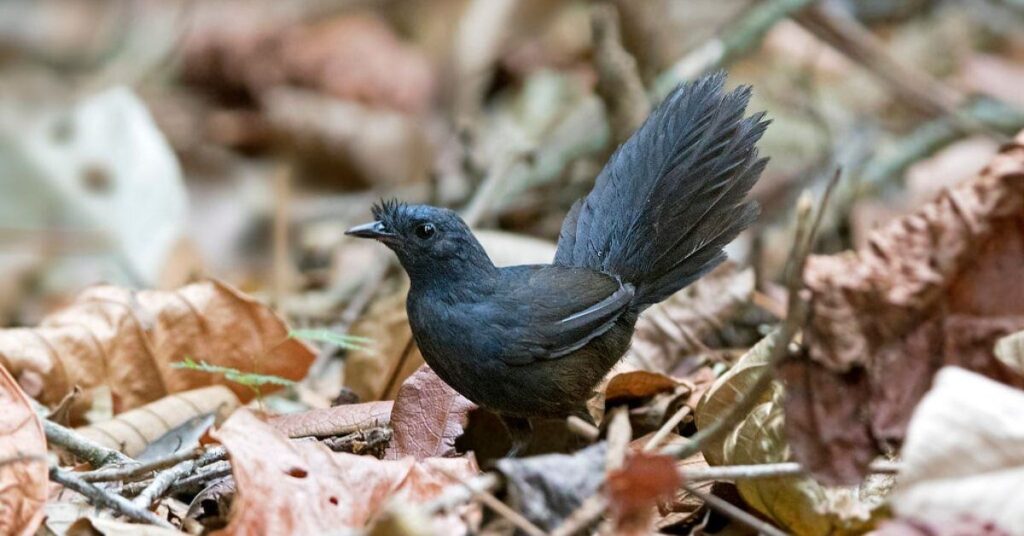
If you ask most ornithologists what is the rarest bird in the world, many will point directly to Stresemann’s Bristlefront (Merulaxis stresemanni).
This small, secretive songbird lives deep in Brazil’s Atlantic Forest. It gets its name from the unusual bristly feathers that stick out around its face. Males are a slate gray color, while females have a warm cinnamon-brown tone. Both are striking in their own quiet way.
The numbers are deeply alarming. Fewer than 15 individuals are believed to still exist. Some estimates suggest the number could be even lower. In 2018, researchers spotted a female in the Mata do Passarinho Preserve, a protected area in the Minas Gerais and Bahia border region. That sighting gave scientists hope that a tiny population might still survive.
Habitat loss is the main villain. Fires, illegal logging, and agricultural expansion have shredded the Atlantic Forest, which was already one of the world’s most threatened ecosystems. The Bristlefront needs dense, mature forest to survive, and very little of that remains.
Conservation teams have created a protected reserve specifically for this species. They continue to monitor and restore habitat, hoping to find more individuals before it is too late.
Spix’s Macaw: The “Little Blue Macaw” and a Global Symbol of Extinction
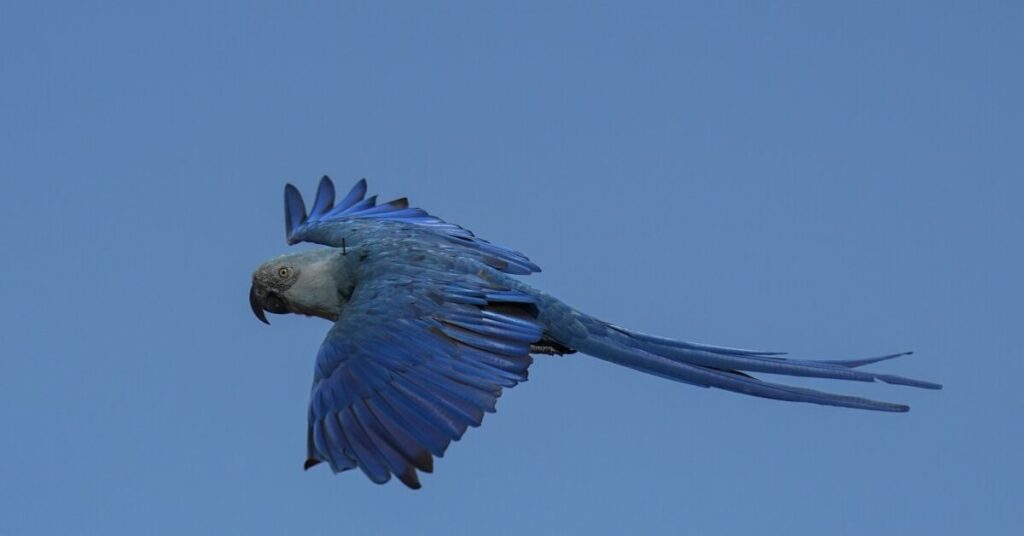
Most people know Spix’s Macaw (Cyanopsitta spixii) from the animated film Rio. The movie tells the story of a rare blue parrot, and the real bird is just as heartbreaking as the fictional one.
This vivid cobalt-blue parrot is native to the dry Caatinga forests of northeastern Brazil. It once nested in the gallery forests along the Rio São Francisco, feeding on fruits and seeds in the shade of Caraibeira trees. Sadly, its natural habitat was largely destroyed, and illegal trapping for the exotic pet trade pushed it over the edge.
The last known wild Spix’s Macaw disappeared from the forest in 2016. In 2019, it was officially declared extinct in the wild.
Today, roughly 180 individuals survive in captive breeding programs. In a hopeful development, some Spix’s Macaws were reintroduced to their native habitat in Brazil in 2022. This marked the first time the species had returned to the wild in over two decades. Baby birds were even born in the wild, creating genuine excitement among conservationists around the world.
The story of the Spix’s Macaw is both a warning and a reason for hope. It shows how quickly a species can vanish, but also how hard people will fight to bring one back.
The Kakapo: The World’s Heaviest and Strangest Parrot
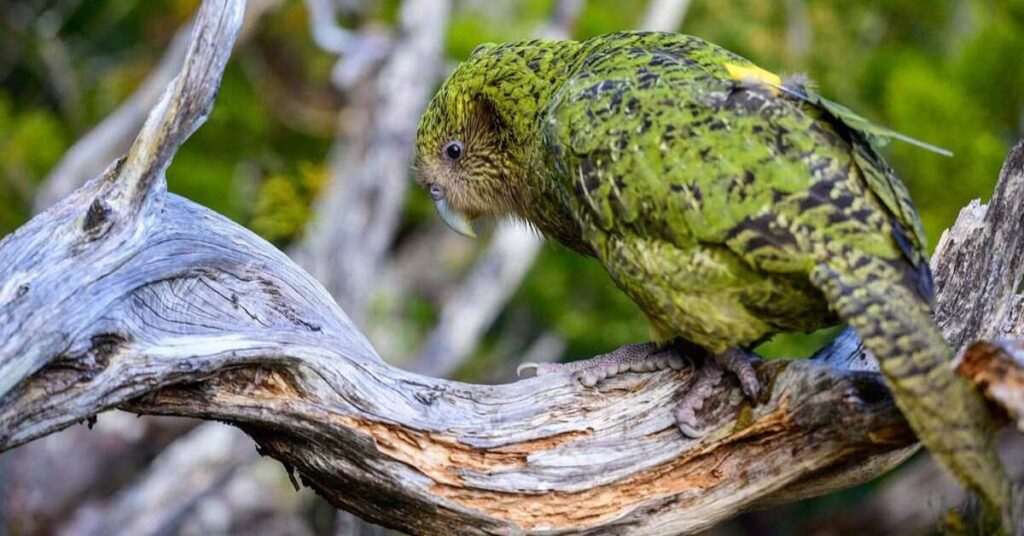
The Kakapo (Strigops habroptilus) might be the most extraordinary bird on this list. It is the world’s only flightless parrot. It is also the heaviest parrot on Earth, with males weighing up to 4 kilograms. And it is nocturnal, meaning it is active only at night.
It looks like an owl, waddles like a duck, and smells like a flower. Scientists describe its scent as sweet and musty. It can live for up to 90 years, making it one of the longest-lived birds on the planet.
The Kakapo evolved in New Zealand at a time when there were no land mammals. Without ground predators, it had no reason to fly. When humans arrived, and with them rats, cats, stoats, and ferrets, the Kakapo had no defenses. Its instinct to freeze and camouflage worked perfectly against hawks, but did nothing against mammals that hunt by smell.
Today, 235 Kakapo remain, according to New Zealand’s Department of Conservation as of 2026. Every single bird is individually named and monitored. They live on a handful of predator-free islands. In 2026, New Zealand celebrated its biggest ever Kakapo breeding season, with at least 95 chicks hatching, breaking all previous records.
The Kakapo also only breeds when the Rimu tree produces fruit, which happens every two to five years. This slow reproductive rate makes recovery a long and patient process.
The Hawaiian Crow: Extinct in the Wild, Fighting to Return
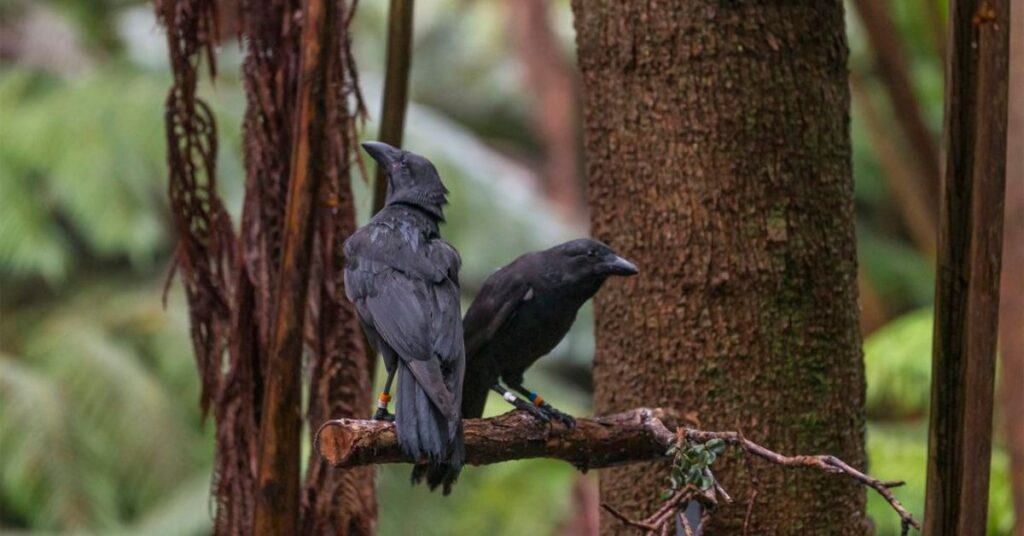
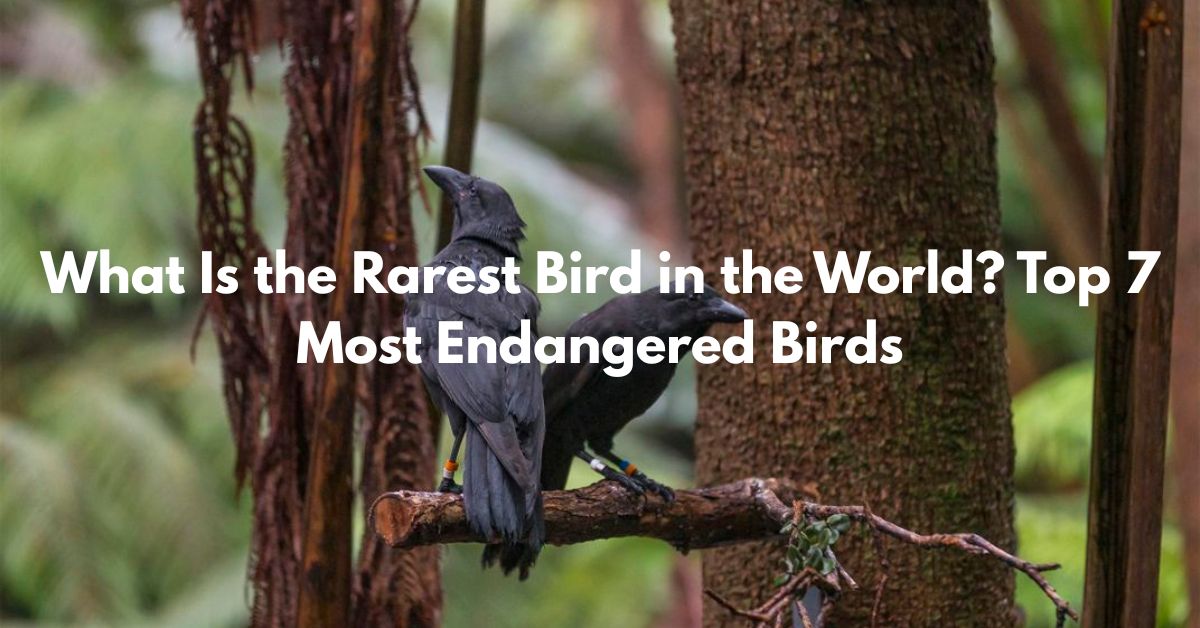
The Hawaiian Crow, or ‘Alalā (Corvus hawaiiensis), is an intelligent, coal-black bird that once filled the forests of Hawaii with its loud and distinctive calls.
It was declared extinct in the wild in 2002. The last wild individuals vanished due to habitat loss, disease, introduced predators, and human disturbance.
Around 100 Hawaiian Crows now live in captivity as part of an international conservation effort. Breeding programs have kept the species alive, and reintroduction attempts have been made. A pair was released into their native forest habitat in 2019. Although their eggs did not hatch, the fact that they built a nest and showed natural behaviors was considered a positive sign.
The Hawaiian Crow is especially significant because crows are among the most intelligent birds on Earth. They use tools, solve puzzles, and form strong social bonds. Losing this bird would mean losing a unique piece of both Hawaii’s ecosystem and the story of animal intelligence.
Madagascar Pochard: A Diving Duck That Came Back From the Brink
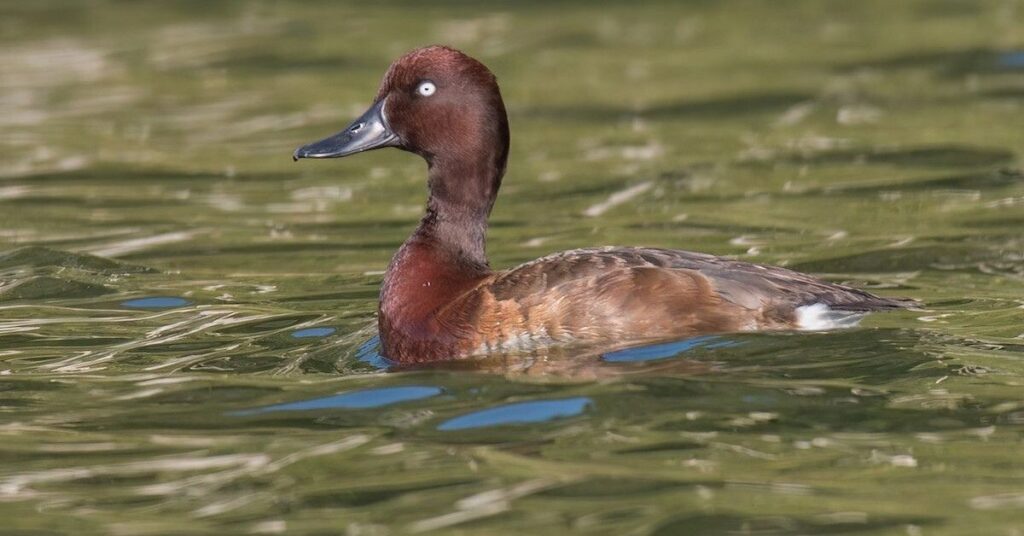
The Madagascar Pochard (Aythya innotata) was once thought to be completely extinct. It had not been seen since 1991 and was believed gone forever.
Then, in 2006, a small group of fewer than 25 birds was discovered on a remote lake in northern Madagascar. The world rejoiced, but the challenges were enormous. The birds were living in poor habitat. Their breeding success was low. And fewer than 150 individuals are now estimated to exist.
This rare diving duck feeds on aquatic invertebrates and vegetation in freshwater lakes. Its biggest threats are invasive fish species, water pollution, and habitat degradation around the lakes it calls home.
Conservation teams have been working to improve the water quality, remove invasive species, and create better breeding conditions. Captive breeding has also helped build up numbers slowly.
The Cebu Flowerpecker: A Tiny Bird With a Giant Problem
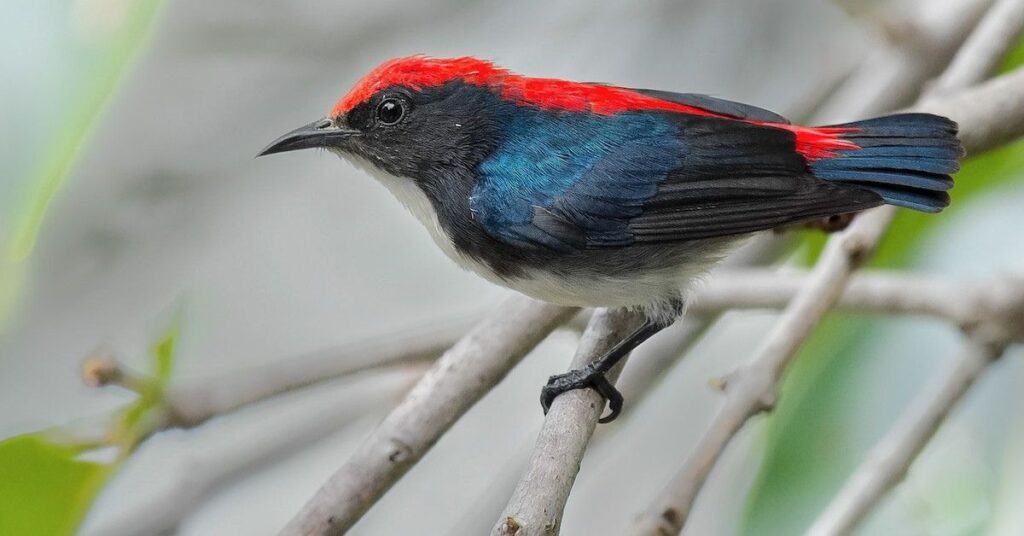
The Cebu Flowerpecker (Dicaeum quadricolor) is a small, brilliantly colored bird found only on Cebu Island in the Philippines. It was once thought to be extinct, but rediscovery in the 1990s brought fresh hope.
With fewer than 105 individuals believed to remain, it is one of the rarest birds on Earth. This tiny bird has a bright red, black, and white plumage in males that makes it one of the most visually striking of all rare birds.
The Cebu Flowerpecker depends on fruit-bearing trees in lowland forest. But Cebu is one of the most deforested islands in the Philippines, and almost no original forest remains. The bird now survives in tiny, fragmented patches of secondary growth.
Conservation efforts focus on protecting what little habitat remains and planting native trees to reconnect isolated forest patches. Community awareness programs help local people understand the value of protecting this extraordinary bird.
Blue-throated Macaw: Racing Against Extinction in Bolivia
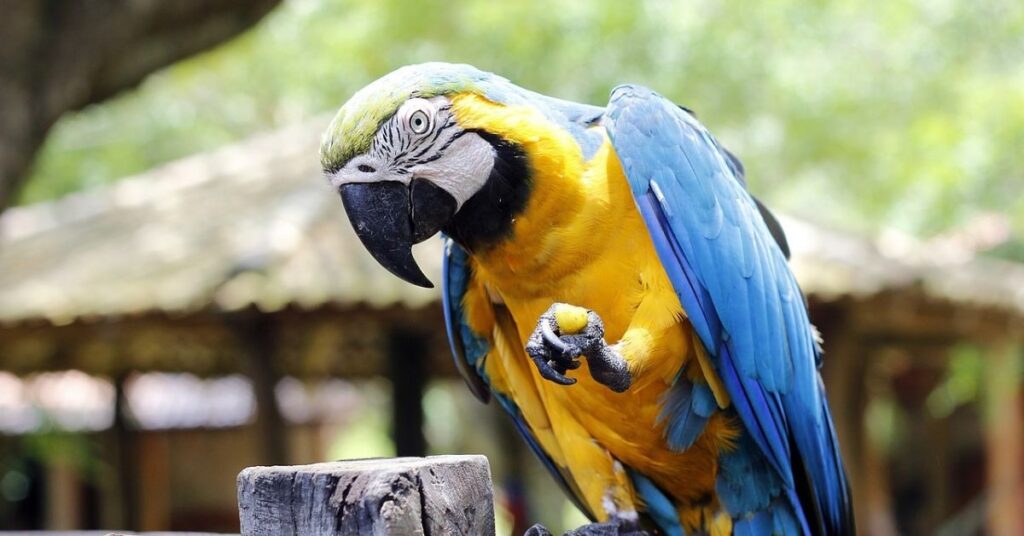
The Blue-throated Macaw (Ara glaucogularis) is one of the rarest macaw species in the world. It is found only in a small area of northern Bolivia, in a region known as the Beni savannas.
Its wild population is estimated at around 450 individuals, and it faces serious threats from the illegal pet trade and loss of the specific palm trees it needs for nesting. Cattle ranching has cleared enormous areas of its habitat, and many of the old, hollow trees it relies on for nesting have been cut down.
Conservationists have introduced artificial nest boxes to give the birds more places to breed. Community education programs teach local people about the importance of protecting this beautiful bird. And strict legal protections now ban the capture of Blue-throated Macaws for the pet trade.
Why Are So Many Birds Becoming Rare?
Understanding what is the rarest bird in the world also means understanding why so many birds are being pushed toward extinction.
Habitat loss is the number one threat. Urban development swallows up wild spaces. Birds that evolved to live in specific habitats have nowhere else to go.
Invasive species are the second major threat, especially on islands. Rats, cats, stoats, and other introduced mammals devastate birds that evolved without them. The Kakapo is a perfect example of this tragedy.
The illegal wildlife trade has also driven several species, including the Spix’s Macaw, to the brink. Rare and beautiful birds fetch high prices on the black market, making them targets for poachers.
Climate change is increasingly disrupting habitats, food supplies, and breeding cycles, adding extra pressure to birds already struggling to survive.
What Is Being Done to Save the World’s Rarest Birds?
The picture is not entirely grim. Around the world, dedicated people are working to save what is the rarest bird in the world from disappearing forever.
Captive breeding programs keep species alive when wild populations collapse. Programs for the Spix’s Macaw, Hawaiian Crow, and Kakapo have all helped buy precious time.
Habitat protection and restoration are equally important. Reserves like the Mata do Passarinho Preserve in Brazil and the predator-free islands of New Zealand show that protecting land truly saves lives.
Community involvement makes conservation sustainable. When local people understand the value of rare birds, they become the best guardians of all.
You can help too. Supporting wildlife conservation organizations, reducing your consumption of products linked to deforestation, and spreading awareness about endangered birds all make a real difference.
Conclusion
The question “what is the rarest bird in the world?” does not have just one simple answer. Several species are on the edge of extinction, each facing different threats but sharing the same fragile future. Birds like Stresemann’s Bristlefront, Spix’s Macaw, and the Kakapo remind us how quickly nature can be lost.
However, their stories also bring hope. Conservation efforts, scientific innovation, and global awareness are helping some species recover. The fight is not over, but it is far from hopeless. With continued effort and support, even the rarest birds still have a chance to survive and thrive again.
Frequently Asked Questions
Which bird has the smallest population in the wild?
Stresemann’s Bristlefront is believed to have the smallest wild population, with fewer than 15 individuals remaining.
Why are island birds more at risk of extinction?
Island birds evolved without predators, so introduced animals like rats and cats easily hunt them and destroy nests.
Are captive breeding programs effective?
Yes, they have saved species like the Kakapo and Spix’s Macaw by increasing numbers and enabling reintroduction.
How does climate change affect rare birds?
It disrupts food supply, breeding cycles, and habitats, making survival harder for already endangered species.
What can individuals do to help endangered birds?
Support conservation groups, protect forests, avoid illegal wildlife products, and spread awareness.
