

Introduction
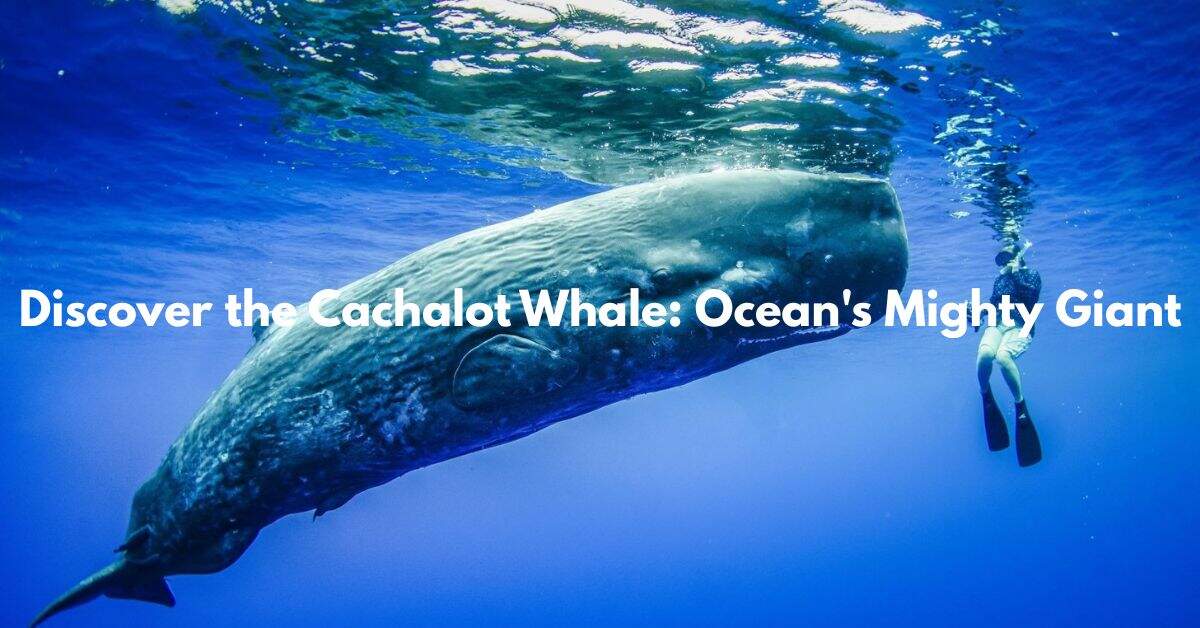
The cachalot whale, better known as the sperm whale, represents one of the ocean’s most magnificent and mysterious creatures. These enormous marine mammals have captivated human imagination for centuries, from inspiring classic literature to demonstrating remarkable adaptations for deep-sea survival. When you encounter the term cachalot whale, you’re exploring the same incredible species that holds multiple records in the animal kingdom. The name cachalot comes from old French and Portuguese words meaning “big head” or “tooth,” both perfectly describing this extraordinary animal. These gentle giants of the deep possess the largest brain of any creature on Earth and dive to depths that few other mammals can reach. Understanding the cachalot whale helps us appreciate the complexity of marine ecosystems and the urgent need for ocean conservation.
What Is the Cachalot Whale
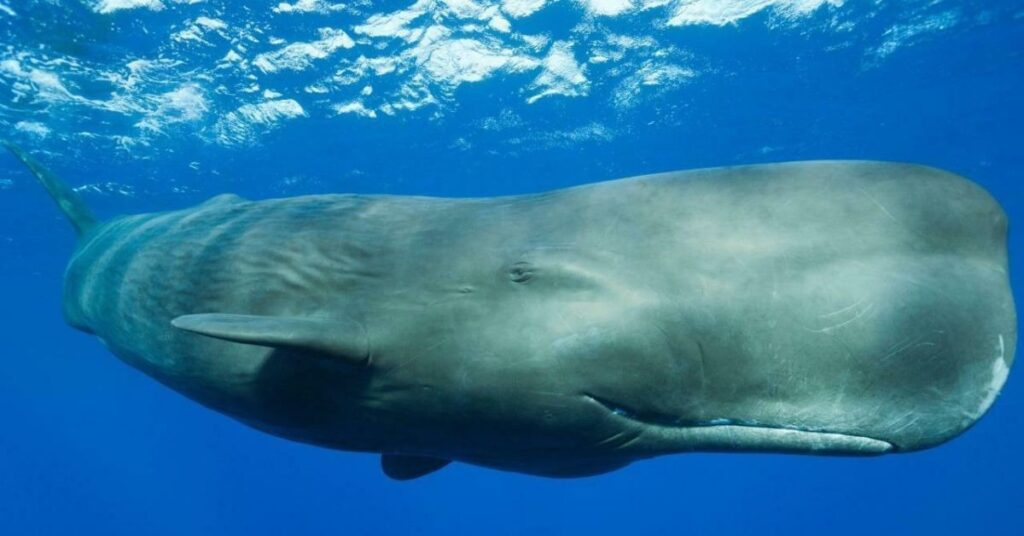
The cachalot whale is a large marine mammal found in deep oceans around the world. It belongs to the toothed whale family and uses teeth instead of baleen to hunt. Adult males are much larger than females and can grow longer than a bus.
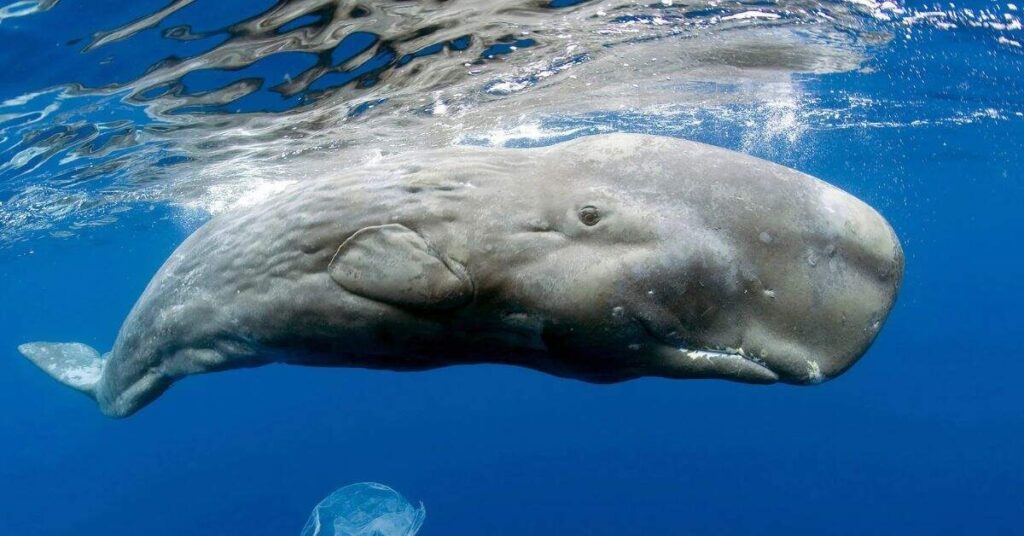
The most striking feature of the cachalot whale is its huge square head. This head holds a special organ filled with waxy oil. Scientists believe this organ helps with sound production and deep diving. The whale uses loud clicks to communicate and to find prey in dark waters.
The cachalot whale breathes air but spends most of its life underwater. It can hold its breath for over an hour during deep dives. This ability allows it to reach parts of the ocean that few animals ever see.
Why Is a Sperm Whale Called a Cachalot?
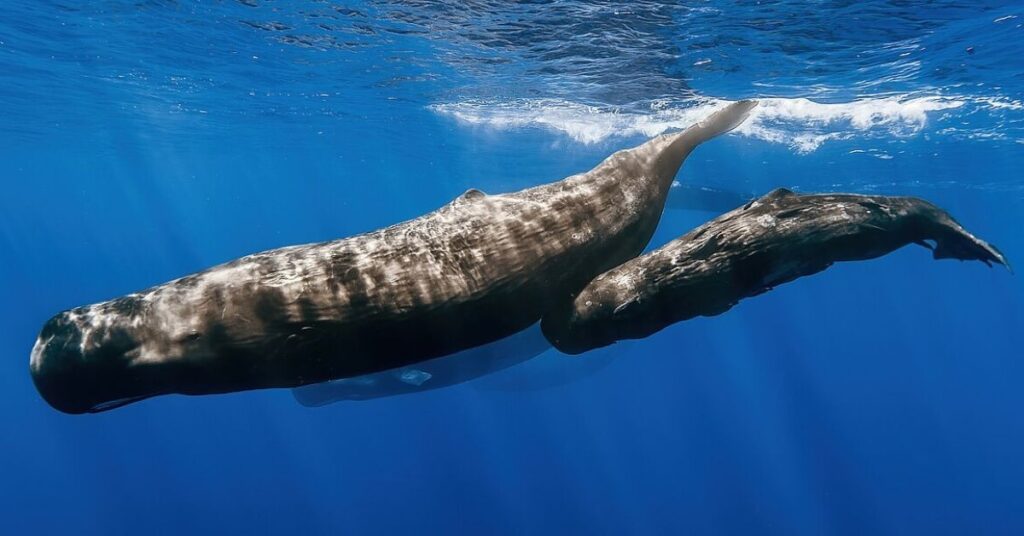
https://thewildlifecore.com/The sperm whale is called a cachalot because of its history and old naming traditions. The word cachalot comes from early European languages. Sailors used this name long before modern science existed. They noticed the whale’s huge head and strange shape. The name helped them describe this powerful ocean animal.
Another reason for the name cachalot is linked to the whale’s head oil. Early hunters found a thick, waxy substance inside the head. This substance was later called spermaceti. The unique head and this oil made the whale stand out. The name sperm whale became another common name for the sperm whale over time.
What Makes the Cachalot Whale Unique
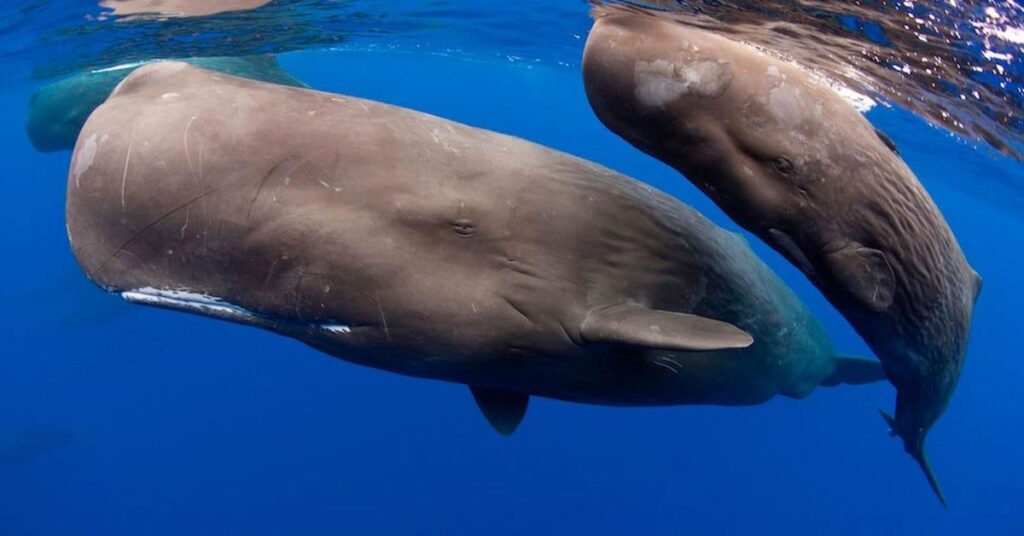
The cachalot whale, better known as the sperm whale, is the largest toothed predator on Earth. It has a massive square-shaped head that makes up about one-third of its body length. Inside this huge head sits the largest brain of any animal. These whales can dive deeper than almost any other mammal. They regularly plunge down 2,000 feet or more to hunt giant squid in the dark ocean depths. They can hold their breath for over an hour during these dives. Males can grow up to 60 feet long and weigh around 45 tons.
Sperm whales are incredibly social animals. Family groups are led by females. The mothers and calves stay together for many years. They communicate using patterns of clicks that sound like Morse code. Each whale family has its own dialect or way of clicking. They might even have names for each other, according to scientists. These whales produce the loudest sounds of any animal. Their clicks can reach 230 decibels, which is louder than a jet engine. Young males eventually leave their family groups. They travel alone or with other males to colder waters.
Are Cachalot Whales Aggressive?
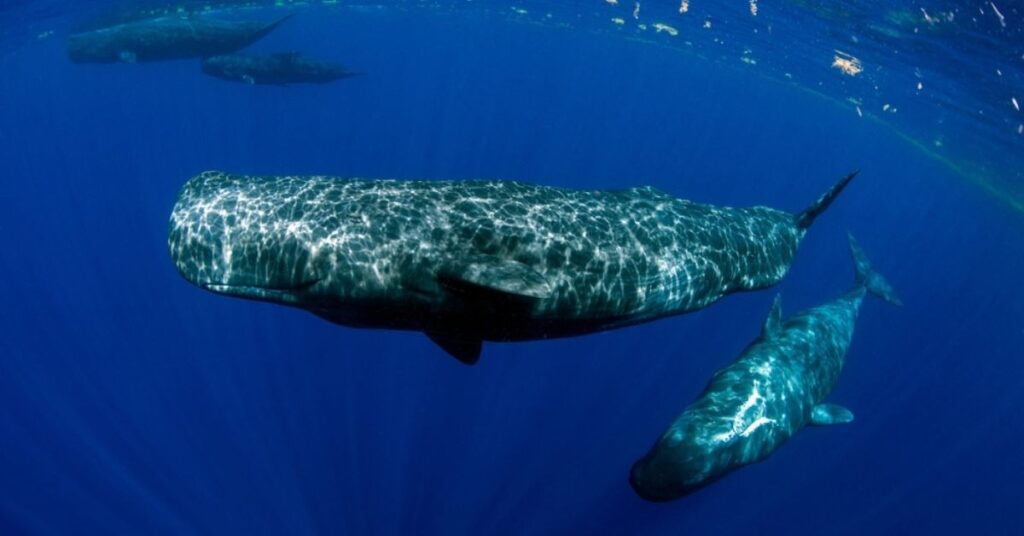
Cachalot whales are not naturally aggressive toward humans. They are calm animals that prefer to avoid conflict. Most of the time, they focus on hunting and caring for their groups. Encounters with people usually happen by chance in open oceans.
However, cachalot whales can defend themselves if they feel threatened. Loud noise, ships, or harassment can cause stress. In rare cases, a whale may react strongly to danger. Respecting their space helps keep both humans and whales safe.
The Cachalot Whale’s Deep-Diving Abilities
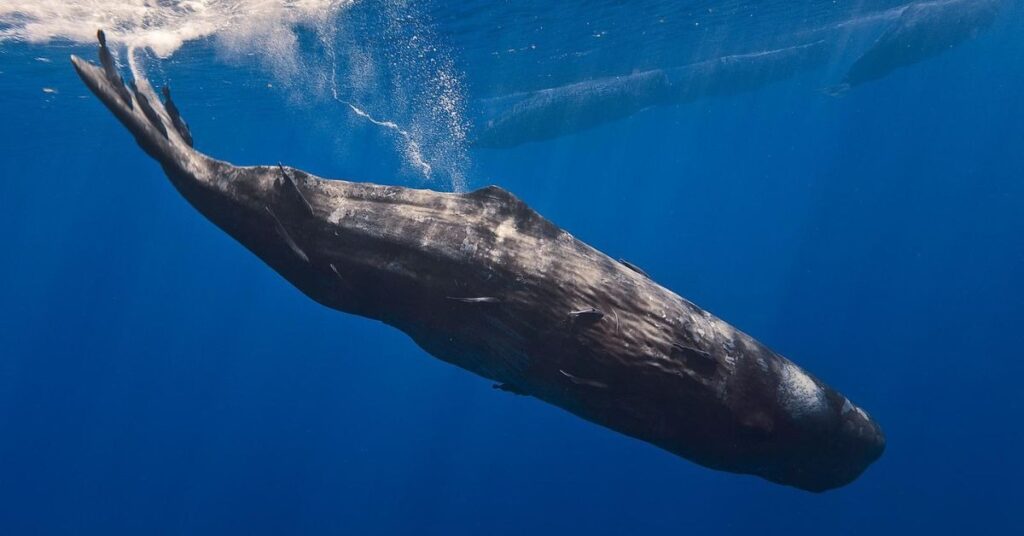
Sperm whales are champion divers of the ocean. Over 3,000 feet below the surface, they can dive. Some have been recorded going down nearly 10,000 feet deep. That’s almost two miles straight down into darkness. They spend most of their lives hunting in these deep, cold waters. A typical dive lasts about 45 minutes. But they can stay underwater for 90 minutes or even longer if needed. When they dive, their heart rate slows down dramatically. This helps them save oxygen during the long descent.
Their bodies have special features that help them dive so deep. They can collapse their lungs to avoid pressure damage. Their ribs are flexible and bend inward as they go deeper. Sperm whales store oxygen in their muscles and blood, not just their lungs. They have a special organ in their heads filled with waxy oil called spermaceti. Scientists think this helps them control their buoyancy while diving. After a deep dive, they must rest at the surface. They take several breaths to recover oxygen. Then they’re ready to dive again. These remarkable abilities let them hunt prey that few other animals can reach.
What the Cachalot Whale Eats
The sperm whale’s favorite food is giant squid. These mysterious creatures live in the deep, dark parts of the ocean. A single giant squid can weigh hundreds of pounds. Sperm whales hunt them in complete darkness thousands of feet below the surface. They use echolocation to find their prey. The whales make clicking sounds that bounce off objects around them. This helps them “see” with sound in the pitch-black water. Adult sperm whales eat around 2,000 pounds of food every day. That’s about one ton of squid and fish daily.
Besides giant squid, they eat many other sea creatures. They consume octopuses, smaller squid species, and various deep-sea fish. Sometimes they eat rays and sharks too. Sperm whales don’t chew their food. They grab prey with their teeth and swallow it whole. Their lower jaw has 20 to 26 large cone-shaped teeth on each side. Interestingly, their upper jaw has no functional teeth. The teeth are mainly used for gripping slippery prey. Scientists have found giant squid beaks inside whale stomachs. Some whales have scars from squid tentacles on their heads. This shows that their prey sometimes fights back during these deep-ocean battles.
Read about it more: https://www.wildlifenomads.com/blog/cachalot-sperm-whale-facts/
Where Cachalot Whales Live
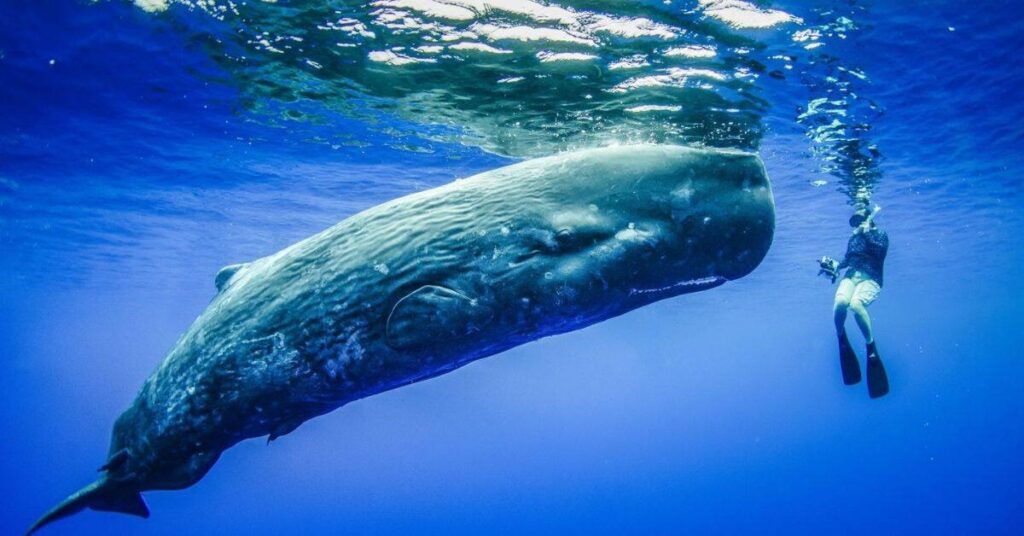
The cachalot whale has one of the widest distributions of any marine mammal species. These adaptable creatures inhabit all the world’s major oceans, from tropical waters near the equator to the edges of polar ice in both hemispheres. They prefer deep, ice-free waters of at least 1,000 meters depth.
Male and female cachalot whales have different distribution patterns. Adult males venture into colder waters near the poles, while females and young whales typically remain in warmer tropical and subtropical regions. This separation relates to their different social structures and breeding behaviors.
You can find cachalot whales in areas where deep ocean canyons come close to shore. Popular viewing locations include Kaikōura in New Zealand, where a deep underwater canyon sits just a few kilometers from the coast. The Azores islands off Portugal offer excellent opportunities to see female cachalot whales and calves. Dominica in the Caribbean hosts a resident population that attracts wildlife enthusiasts from around the world.
Diet and Hunting Behavior
The cachalot whale is a skilled hunter. Its diet mainly includes squid, especially giant and deep sea squid. It also eats fish and other marine animals found in deep waters.
The cachalot whale uses echolocation to hunt. It sends out powerful clicking sounds that bounce off prey. These echoes help the whale understand size, distance, and movement. This system works even in complete darkness.
During a single dive, the cachalot whale may travel thousands of feet below the surface. It swallows prey whole and relies on its strong stomach to digest tough parts.
Social Life of the Cachalot Whale
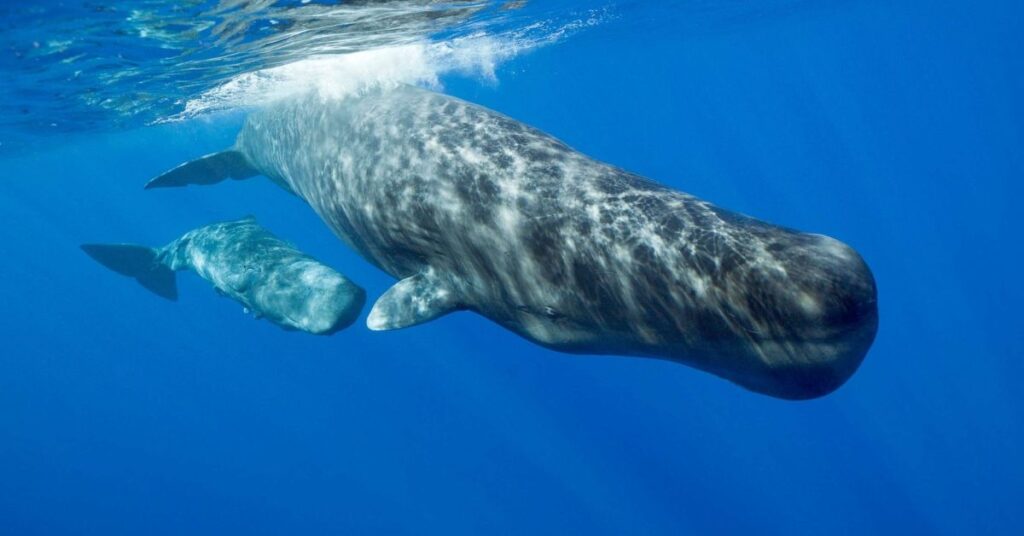
Cachalot whales have complex social lives. Females and calves live in stable family groups. These groups share food areas and protect each other from danger.
Communication is very important for the cachalot whale. It uses clicks, patterns, and rhythms called codas. Different groups have unique coda patterns, similar to dialects.
Adult males communicate less often but still use sound to locate others and navigate. These vocal skills make the cachalot whale one of the loudest animals on Earth.
The Cachalot Whale in History and Culture
Sperm whales have played a huge role in human history. For centuries, people hunted them for their valuable resources. The spermaceti oil from their heads burned cleanly in lamps. It was considered the finest lamp oil in the world. Whalers also valued their blubber for making soap and candles. Ambergris, a waxy substance from their intestines, was used in expensive perfumes. The whaling industry was massive in the 1800s. Thousands of ships sailed the oceans hunting these giants. This hunting nearly drove sperm whales to extinction. Today they are protected by international laws.
These whales became famous through stories and literature. Herman Melville’s novel “Moby-Dick” tells the story of a white sperm whale. The book was published in 1851 and remains a classic today. It was inspired by real events involving whaling ships. The story of the Essex, a ship destroyed by a sperm whale in 1820, shocked the world. Sperm whales appear in art, films, and documentaries. Many coastal communities have museums dedicated to whaling history. Indigenous peoples in various cultures have legends about these mighty creatures. Now we see them differently than our ancestors did. We work to protect them instead of hunt them. They’ve become symbols of ocean conservation and the mysteries of the deep sea.
Conservation Status and Threats to the Cachalot Whale
Sperm whales are currently listed as vulnerable by conservation groups. This means they face threats but are not immediately in danger of extinction. Commercial whaling nearly wiped them out in the past. Millions were killed between the 1700s and 1900s. A global ban on commercial whaling came in 1986. This ban helped their numbers recover slowly. Scientists estimate there are around 200,000 to 300,000 sperm whales left today. That sounds like a lot, but it’s much fewer than before whaling began. Some populations are recovering better than others. They still face many modern dangers in our oceans.
Today’s biggest threats come from human activities at sea. Ship strikes kill many whales each year. Large cargo ships often hit whales that surface to breathe. Ocean noise pollution disrupts their communication and hunting. Military sonar and oil exploration create loud sounds underwater. These noises can confuse whales and damage their hearing. Fishing nets and lines accidentally trap and drown some whales. Plastic pollution is another serious problem. Whales sometimes swallow plastic bags and other trash. Climate change affects the ocean temperatures and their prey populations. Scientists continue monitoring sperm whale groups around the world. Conservation efforts focus on reducing ship speeds in whale areas. Creating marine protected areas also helps keep them safe. We still have much work to do to ensure their survival.
How We Can Help Protect the Cachalot Whale
Everyone can contribute to cachalot whale conservation through various actions. Supporting marine protected areas and advocating for stronger ocean conservation policies helps safeguard critical cachalot whale habitat. These protected zones limit harmful activities in important feeding and breeding grounds.
Reducing plastic consumption and properly disposing of waste prevents marine debris from entering the ocean. Every piece of plastic kept out of the water is one less potential threat to cachalot whales and other marine life. Participating in beach cleanups and supporting organizations that remove ocean plastics makes a measurable difference.
Choosing sustainable seafood helps maintain healthy ocean ecosystems. Overfishing depletes prey species that cachalot whales depend on and increases the risk of entanglement in fishing gear. Looking for seafood certified by sustainable fishing programs supports practices that minimize harm to marine mammals.
Being a responsible whale watcher matters too. When viewing cachalot whales in the wild, maintain a safe distance of at least 100 yards and limit observation time to 30 minutes or less. Never attempt to touch or feed wild whales. These practices reduce stress on the animals and help ensure positive interactions.
Supporting whale research and conservation organizations provides crucial funding for scientific studies that improve our understanding of cachalot whale populations, behavior, and threats. Many organizations work directly on cachalot whale conservation projects around the world.
Finally, staying informed and sharing knowledge about the cachalot whale helps build public support for conservation efforts. The more people understand and care about these magnificent creatures, the stronger the momentum for protecting them and their ocean home.
Conclusion
The cachalot whale is one of the most remarkable animals on the planet. Its size, intelligence, and deep sea skills set it apart from all other whales. It plays a vital role in ocean health and biodiversity.
Understanding the cachalot whale helps us see the importance of marine conservation. By protecting this species, we protect the ocean itself. The survival of the cachalot whale is closely tied to the future of life in our seas.
FAQs
How big is the cachalot whale?
The cachalot whale is the largest toothed whale and can grow up to 60 feet long.
Why is the cachalot whale also called the sperm whale?
It is called the sperm whale because of the waxy oil found in its large head.
How long can the cachalot whale stay underwater?
The cachalot whale can stay underwater for more than one hour during deep dives.
Where can the cachalot whale be found?
The cachalot whale lives in deep oceans around the world, mostly far from land.
What makes the cachalot whale important for the ocean?
The cachalot whale helps move nutrients in the ocean and supports healthy marine life.
