

Have you ever looked up at the sky and watched a flock of birds fly by? Have you ever wondered just how many birds are actually out there in the world? You are not alone.
Scientists have asked the same question. And after years of research, they finally have an answer. Well, at least a range.
The number of birds in the world is far bigger than most people expect. It is also more fragile than most people realize. In this article, we will explore exactly how many birds are in the world, which species are the most common, which are the rarest, and why their numbers matter so much.
How Many Birds Are in the World?
The short answer is: roughly 50 billion to 428 billion birds live on Earth today.
That is an enormous range. Scientists at the University of New South Wales in Sydney, Australia published this estimate in the journal Proceedings of the National Academy of Sciences in 2021. It was the first study to estimate bird populations species by species across the entire planet.
The lead researcher, biologist Corey Callaghan, was inspired by a massive flock of tree swallows he saw in the Florida Everglades in 2015. He counted over half a million birds in that single flock. That moment sparked a much bigger question.
The reason the range is so wide is due to real scientific uncertainty. Birds are small, fast, and they travel across huge distances. Many parts of the world also lack enough scientific monitoring data. Still, most scientists agree that around 50 billion wild birds is the most likely estimate.
It is worth noting that this count only covers wild birds. If you add domestic chickens, the number shoots up dramatically. There are around 25 billion chickens in the world, making them the most numerous bird on the planet by far.
How Did Scientists Count All the Birds in the World?
Counting billions of birds is not easy. You cannot simply line them all up.
Researchers used a smart mix of professional scientific data and citizen science observations. They pulled data from three major organizations: Partners in Flight, the British Trust for Ornithology, and BirdLife International.
They also used eBird, which is the world’s largest citizen science bird database. Amateur birdwatchers around the world record their sightings on eBird every single day. This massive collection of data helped scientists fill in the gaps where professional monitoring was missing.
The study covered 92 percent of all bird species known to science. Researchers estimated population sizes for thousands of species by feeding all this data into a computer model. They also made sure to measure the uncertainty in their estimates and report it honestly.
This kind of transparency is rare in science. It makes the study especially trustworthy, even if the range is very wide.
How Many Species of Birds Exist in the World?
The question of how many birds in the world also includes how many species there are.
Currently, scientists recognize around 10,000 to 11,000 bird species on Earth. The exact number depends on which classification system you use. Some scientists split closely related birds into separate species, while others group them together.
New bird species are still being discovered every year, particularly in remote tropical forests and island habitats. At the same time, some species are disappearing before scientists even get the chance to study them properly.
Here is a quick look at how bird species are distributed:
| Category | Approximate Number |
| Total known bird species | 10,000 to 11,000 |
| Species with population below 5,000 | Around 1,180 (12% of total) |
| Species considered endangered (under 2,500) | Hundreds |
| Species with over 1 billion individuals | 4 |
This table shows just how unequal bird populations are. A small number of species are incredibly common, while thousands of others teeter on the edge of survival.
What Are the Most Common Birds in the World?
When asking how many birds are in the world, it helps to know which birds make up the bulk of that number.
Researchers found that just a handful of species dominate the global bird population. These are sometimes called the “billion-bird club.”
The most common wild bird in the world is the house sparrow, with an estimated population of 1.6 billion individuals. House sparrows are tiny brown birds that live alongside humans on almost every continent. They thrive in cities, farms, and suburbs.
Second place goes to the European starling, with around 1.3 billion birds. Starlings are known for their stunning murmurations, those breathtaking swirling flocks that move like a single liquid shape across the sky.
Here is the full list of the most common birds in the world:
| Rank | Bird Species | Estimated Population |
| 1 | House Sparrow | 1.6 billion |
| 2 | European Starling | 1.3 billion |
| 3 | Ring-billed Gull | 1.2 billion |
| 4 | Barn Swallow | 1.1 billion |
| 5 | Glaucous Gull | 949 million |
| 6 | Alder Flycatcher | 896 million |
These numbers are remarkable. They show how adaptable some bird species are. House sparrows and starlings, for example, have learned to live near humans and take advantage of our buildings, food sources, and open landscapes.
House Sparrow
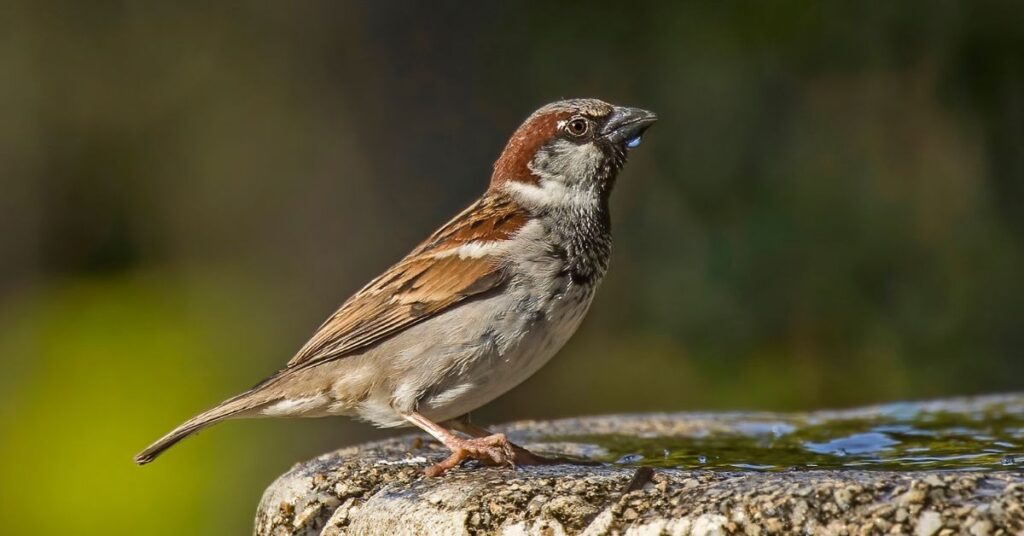
The House Sparrow is one of the most common birds in the world. You can find it in cities, towns, and villages. It lives close to people and feels comfortable around homes and buildings. This small bird has brown and grey feathers. The male has a black patch on its throat, while the female looks softer in color. The House Sparrow eats seeds, grains, and small insects. It often searches for food near markets, streets, and houses.
The House Sparrow plays an important role in nature. It helps control insects and keeps the environment balanced. Even though it is common, its numbers are falling in some areas. Pollution and lack of green spaces are the main reasons. Many people now build bird feeders and plant trees to help them survive. Protecting the House Sparrow also helps protect other wildlife around us.
European Starling
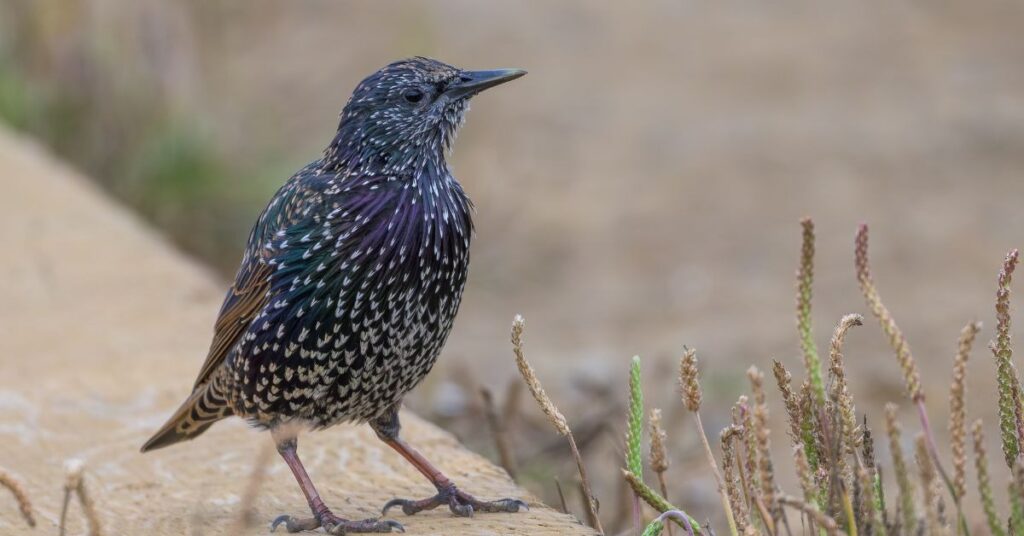
The European Starling is a small to medium bird with shiny black feathers. In sunlight, its feathers look green and purple. This bird has a short tail and a pointed beak. It lives in many parts of the world, especially in cities and farmlands. The European Starling is very social. It often flies in large groups called flocks. These flocks create beautiful patterns in the sky.
The European Starling eats insects, fruits, and seeds. It helps farmers by eating harmful insects. This bird can also copy sounds from its surroundings. It may imitate other birds, alarms, or even human sounds. Even though it is common, it sometimes competes with other birds for space. Still, it plays an important role in the balance of wildlife and ecosystems.
Ring-billed Gull
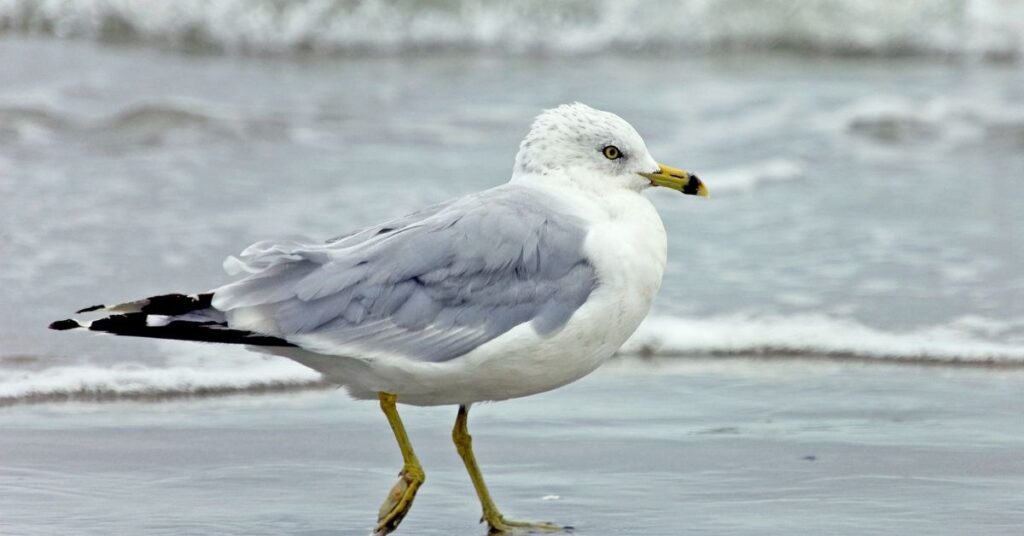
The Ring-billed Gull is a medium-sized bird with white feathers and grey wings. It has a yellow beak with a black ring near the tip. This is how it gets its name. You can often see this bird near lakes, rivers, and coastal areas. It also lives near cities and parks where food is easy to find. The Ring-billed Gull is a strong flyer and can travel long distances.
The Ring-billed Gull eats many types of food. It feeds on fish, insects, and small animals. It also eats leftover food from humans. This bird is very smart and can adapt to different environments. It often gathers in large groups, especially near water. The Ring-billed Gull helps clean the environment by eating waste. It plays a useful role in keeping nature balanced.
Barn Swallow
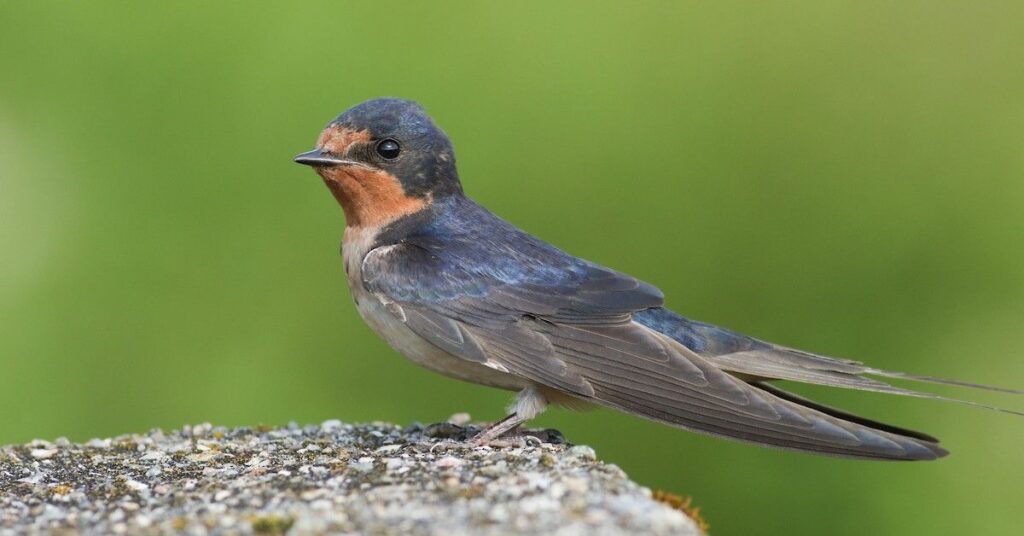
The Barn Swallow is a small and graceful bird. It has a shiny blue back and a light brown chest. Its long forked tail makes it easy to recognize. This bird lives in open areas like farms, fields, and near water. It often builds nests under roofs, bridges, and barns. The Barn Swallow is known for its fast and smooth flight. It spends most of its time flying in the air.
The Barn Swallow eats insects while flying. It helps control flies and mosquitoes. This makes it very useful for farmers and people. The Barn Swallow travels long distances during migration. It moves between continents to find food and warm weather. This bird returns to the same place every year. It is a symbol of change and new seasons in many cultures.
Glaucous Gull
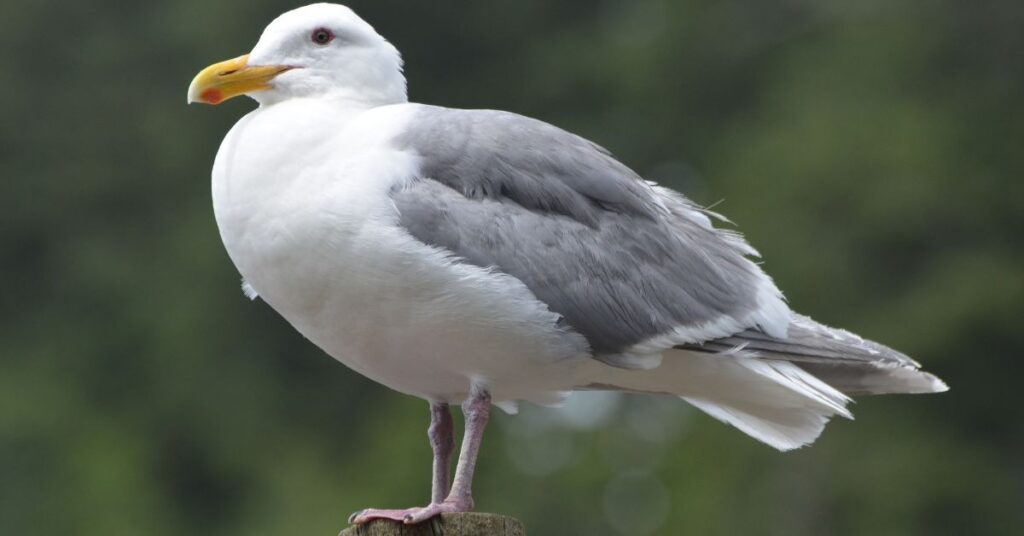
The Glaucous Gull is a large and powerful seabird. It has pale grey and white feathers. Its wings look light with no dark tips. This bird lives in cold regions like the Arctic. You can often see it near icy coasts and open seas. The Glaucous Gull has a strong yellow beak. It uses it to catch food and defend itself. It is a slow but steady flyer.
The Glaucous Gull eats fish, small birds, and eggs. It also feeds on dead animals. This bird is a scavenger and helps clean the environment. It can survive in harsh weather and cold winds. The Glaucous Gull is very strong and adapts well to its habitat. It often stays alone or in small groups. This bird plays an important role in Arctic wildlife.
Alder Flycatcher
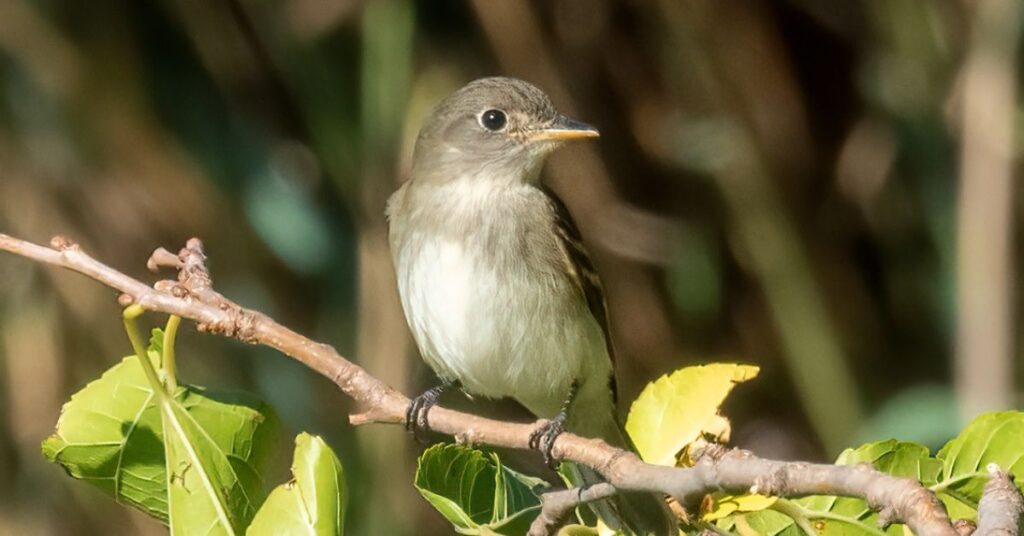
The Alder Flycatcher is a small and quiet bird. It has olive green feathers and a light belly. Its beak is short and flat, which helps it catch insects. This bird lives in wet areas like shrubs, marshes, and forest edges. It often hides in thick plants, so it is not easy to see. The Alder Flycatcher is known more by its sound than its look. It makes a sharp “fee-bee-o” call.
The Alder Flycatcher eats flying insects. It sits on a branch and quickly flies out to catch its prey. This feeding style is called flycatching. It helps control insect populations in nature. The Alder Flycatcher travels long distances during migration. It breeds in North America and moves to South America in winter. Even though it is small, it plays an important role in keeping ecosystems balanced.
What Are the Rarest Birds in the World?
On the other end of the spectrum, some birds exist in heartbreakingly small numbers.
Scientists found that about 1,180 bird species, which is around 12 percent of all species, have total populations below 5,000 individuals. Under International Union for Conservation of Nature rules, any species with fewer than 2,500 individuals is classified as endangered.
Some of the rarest birds in the world include:
The great spotted kiwi of New Zealand has an estimated population of just 377 individuals. The Javan hawk eagle in Indonesia has around 630 birds left. And the Seychelles kestrel, a tiny island falcon, has fewer than 100 individuals remaining.
These are not just numbers on a page. They represent entire species on the edge of disappearing forever.
As for the tree swallows that inspired Callaghan’s research, there are around 24 million of them worldwide. That sounds like a lot, but even this species has seen declines in recent decades.
Are Bird Populations Declining?
This is one of the most important questions tied to how many birds are in the world. And the answer is deeply concerning.
A major 2019 study found that North America alone has lost 3 billion birds since 1970. That is a staggering decline over just five decades. The losses cut across almost every type of bird, from songbirds and shorebirds to grassland birds and aerial insect eaters.
The causes are well understood. Habitat destruction is the biggest driver. As forests are cleared, wetlands drained, and grasslands converted to farmland, birds lose the places they need to feed, nest, and raise their young.
Pesticide use kills insects that birds depend on for food. Climate change is shifting the timing of seasons, which throws off the delicate balance between when birds breed and when their food is available.
Cats are also a major threat. Domestic and feral cats kill an estimated 1 to 4 billion birds in the United States alone every year. That is a number that surprises most people.
Glass collisions kill hundreds of millions of birds annually as well. Birds cannot always see transparent or reflective glass in windows and buildings.
The good news is that these causes are things humans can address. Conservation efforts, habitat protection, and simple actions like keeping cats indoors can all make a real difference.
Why Does Knowing How Many Birds Are in the World Matter?
Understanding how many birds in the world exist is not just an exercise in curiosity. It has real, practical importance for conservation.
Without a reliable baseline, we cannot track whether bird populations are increasing or decreasing over time. We cannot know which species need protection most urgently. And we cannot measure whether conservation efforts are actually working.
Corey Callaghan put it well. He said we spend enormous effort counting human populations, but we also need to keep close tabs on the biodiversity we share this planet with.
Birds also play crucial roles in ecosystems. They pollinate plants, spread seeds, control insect populations, and serve as indicators of environmental health. When bird populations crash, it is often a warning sign that something is deeply wrong in the broader ecosystem.
Healthy bird populations mean healthy forests, wetlands, and grasslands. That is good for every living thing on Earth, including us.
How You Can Help Protect Birds
Learning about how many birds are in the world is the first step. Taking action is the next.
There are simple things everyone can do to help. You can put window decals or bird-safe film on glass at home to prevent collisions.
You can also support conservation organizations that protect critical bird habitats around the world. And you can participate in citizen science programs like eBird, where your own bird sightings contribute to the global scientific record.
Every bird you help protect adds to the overall number of birds in the world. Small actions, done by many people, really do add up.
Conclusion
So, how many birds are in the world? The best answer science can give us right now is somewhere between 50 billion and 428 billion wild birds, with 50 billion being the most likely estimate.
That sounds like a lot. But when you consider that North America alone has lost 3 billion birds in just the last 50 years, the picture becomes more serious. Many of the 10,000-plus bird species on Earth are struggling. Some are on the very edge of extinction.
The good news is that we now have a better baseline than ever before. Scientists, citizen birdwatchers, and conservation organizations are all working together to monitor and protect the birds of the world.
Every person who plants a native garden, hangs a bird feeder, or simply pays attention to the birds outside their window plays a small but real role in the bigger story of bird conservation.
The birds are still out there. And with the right care and attention, they can stay there for generations to come.
FAQs
What is the total number of birds in the world?
Scientists estimate there are about 50 billion birds in the world.
How many bird species are there globally?
There are over 10,000 bird species worldwide, with some estimates reaching 11,000.
Why is it hard to count how many birds in the world?
Birds move a lot and live in remote areas, which makes counting them difficult.
Which bird is the most common in the world?
The domestic chicken is the most common bird, with over 20 billion individuals.
How can people help increase bird populations?
People can plant trees, reduce pollution, and support conservation efforts to protect birds.
